
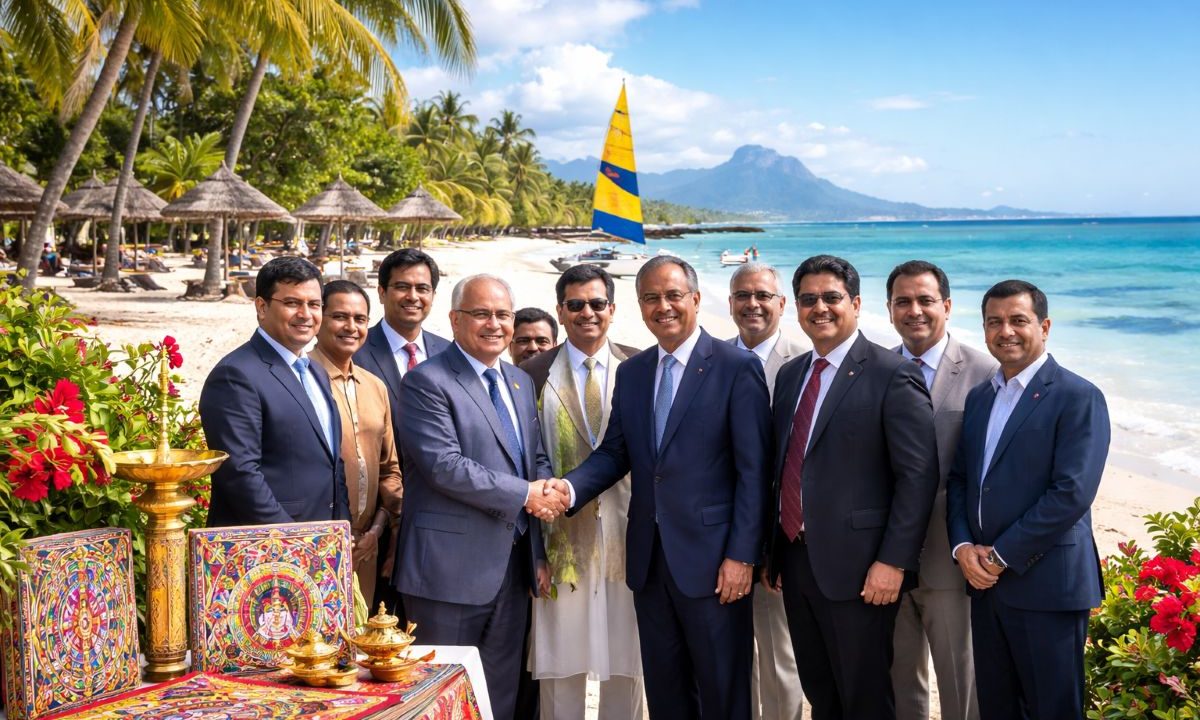
Bihar is taking its ancient culture well beyond the borders of India — and the island nation of Mauritius is now part of that story. The Bihar state government has formally expanded the celebration of Bihar Diwas to Mauritius, marking a significant step in the state’s push to build a genuine international cultural and tourism presence.
This isn’t a symbolic gesture. A formal delegation traveled to Mauritius to meet with senior government officials — including the President and ministers responsible for culture, tourism, and agriculture — to lay the groundwork for a lasting partnership built on shared heritage, manuscript preservation, and expanded tourism ties.
For a state long associated with the birthplace of Buddhism and some of the world’s oldest centers of learning, the move signals a new kind of ambition: one measured not just in domestic visitor numbers, but in diplomatic relationships and global recognition.
What Bihar and Mauritius Are Actually Building Together
The delegation to Mauritius was led by Pranav Kumar, Secretary of the Department of Art and Culture, and Nand Kishore, Managing Director of the Bihar State Tourism Development Corporation (BSTDC). Their talks with Mauritian officials covered several areas of mutual interest, but the most substantive focus was on cultural identity and heritage preservation.
A central theme of the discussions was the preservation of ancient manuscripts — documents that both Bihar and Mauritius recognize as vital to their cultural identities. This shared concern for protecting historical records gives the partnership a concrete foundation, rather than leaving it as a vague expression of goodwill.
The expansion of Bihar Diwas to Mauritius is also strategically significant. Bihar Diwas, celebrated on March 22 each year to mark the state’s formation, has historically been an internal celebration. Taking it international — particularly to a country with deep Indian-origin roots in its population — is a deliberate act of cultural diplomacy.
Why Mauritius Makes Sense as Bihar’s First Major Partner
The choice of Mauritius is not arbitrary. A substantial portion of the Mauritian population traces its ancestry to the Indian subcontinent, including significant communities with roots in the Bihar and eastern UP regions. This demographic connection means Bihar’s cultural exports — its festivals, classical arts, and Buddhist heritage — already have a natural audience on the island.
Mauritius is also a well-established international tourism hub, which makes it a strategically useful partner for a state trying to raise its global profile. A presence in Mauritius gives Bihar access to a broader network of international visitors who might otherwise never consider the state as a travel destination.
Officials have noted that the goal is to solidify both cultural and heritage connections, while simultaneously boosting Bihar’s global tourism profile — two objectives that reinforce each other when approached together.
Key Details of the Bihar-Mauritius Cultural and Tourism Initiative
| Element | Detail |
|---|---|
| Initiative | Expansion of Bihar Diwas celebration to Mauritius |
| Lead Officials | Pranav Kumar (Secretary, Dept. of Art and Culture); Nand Kishore (MD, BSTDC) |
| Mauritian Counterparts | President of Mauritius; senior ministers for culture, tourism, and agriculture |
| Key Focus Areas | Heritage preservation, ancient manuscript conservation, tourism promotion |
| Cultural Anchor | Bihar Diwas (celebrated March 22 annually) |
| Organizing Body | Bihar State Tourism Development Corporation (BSTDC) |
- The delegation held talks at the highest levels of the Mauritian government, including with the President
- Ancient manuscript preservation was identified as a shared cultural priority by both sides
- The initiative is part of Bihar’s broader strategy to build strong diplomatic and tourism ties internationally
- BSTDC is playing a central organizational role in coordinating the international cultural outreach
What This Means for Bihar’s Tourism Ambitions
Bihar has long been underleveraged as a tourism destination despite holding extraordinary historical assets. The state is home to Bodh Gaya — where the Buddha attained enlightenment — as well as Nalanda, site of one of the ancient world’s greatest universities, and Rajgir, a center of both Buddhist and Jain pilgrimage. These are not minor attractions. They are world-class heritage sites that draw international visitors, particularly from Southeast Asia and East Asia.
The challenge has always been awareness and connectivity. By establishing formal cultural ties with Mauritius and expanding Bihar Diwas into an international event, the state government is attempting to address the awareness gap directly. Cultural diplomacy, when done consistently, builds the kind of soft recognition that eventually translates into tourism interest.
For travelers — particularly those of Indian-origin heritage living abroad — this kind of initiative makes Bihar a more visible and emotionally resonant destination. It reframes the state not just as a place on a map, but as a living culture actively seeking to connect with its diaspora.
What Comes Next for Bihar’s International Outreach
The Mauritius visit appears to be part of a larger, ongoing strategy rather than a one-time event. The delegation’s engagement at the presidential and ministerial level suggests that both governments are treating this as the beginning of a formal relationship, not a ceremonial exchange.
Supporters of the initiative argue that preserving ancient manuscripts and expanding cultural celebrations internationally creates lasting infrastructure for tourism — the kind that doesn’t depend on advertising budgets alone, but on genuine cultural resonance and diplomatic goodwill.
Whether additional countries will be added to Bihar’s international cultural calendar has not yet been confirmed, but the Mauritius initiative sets a clear template: identify countries with strong cultural or demographic ties to Bihar, engage at the government level, anchor the relationship around shared heritage, and use that foundation to grow tourism visibility over time.
Frequently Asked Questions
What is Bihar Diwas, and why is it significant?
Bihar Diwas is celebrated on March 22 each year to mark the formation of the state of Bihar. Expanding it to Mauritius marks the first time the celebration has been taken to an international stage as part of a formal diplomatic initiative.
Who led the Bihar delegation to Mauritius?
The delegation was led by Pranav Kumar, Secretary of the Department of Art and Culture, and Nand Kishore, Managing Director of the Bihar State Tourism Development Corporation (BSTDC).
What did Bihar and Mauritius agree to focus on?
Based on the discussions reported, both sides identified the preservation of ancient manuscripts and the strengthening of cultural and tourism ties as key priorities for the partnership.
Why was Mauritius chosen for this cultural outreach?
Mauritius has a large population of Indian-origin heritage, including communities with roots in the Bihar and eastern India region, making it a natural partner for cultural diplomacy and a useful gateway for international tourism promotion.
Which Mauritian officials were involved in the talks?
The Bihar delegation met with the President of Mauritius and senior ministers responsible for culture, tourism, and agriculture.
Will Bihar expand this initiative to other countries?
This has not yet been confirmed in the available information, but the Mauritius visit is described as part of Bihar’s broader efforts to build strong international diplomatic and tourism ties.


Leave a Reply