
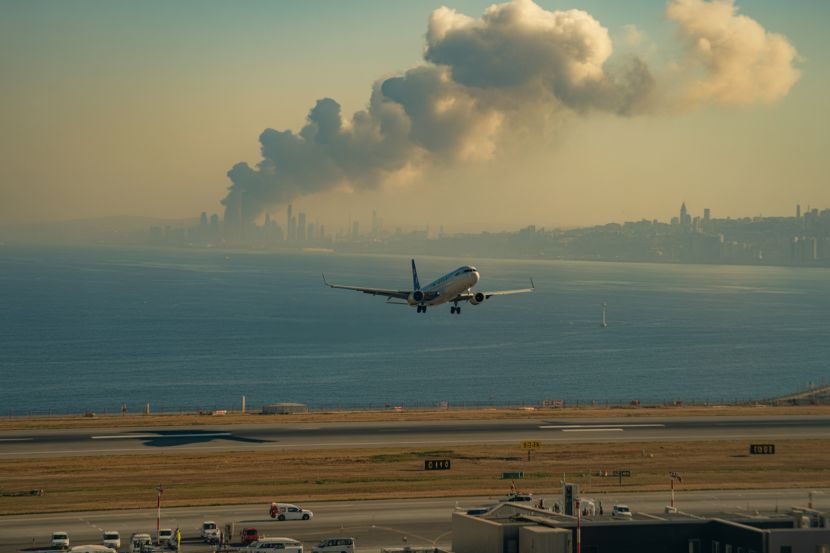
Beirut’s Rafic Hariri International Airport is still open — and for millions of travelers navigating the Middle East right now, that single fact carries enormous weight. As conflict between Israel and Hezbollah intensifies across southern Beirut and nearby coastal zones along the Mediterranean, Lebanon’s only international gateway continues to operate, albeit at reduced capacity.
That’s a striking development in a region where air travel has become increasingly complicated. Airlines across the globe have suspended or rerouted services, and what were once routine flight paths connecting Turkey, Egypt, Australia, and the broader Mediterranean corridor are now subject to disruption, delay, or outright cancellation.
For anyone with travel plans touching this part of the world — whether you’re flying through the region or trying to reach it — the situation on the ground is evolving fast, and the decisions airlines are making right now will directly affect your journey.
What’s Actually Happening at Beirut Airport
The conflict between Israel and Iran-backed Hezbollah has escalated across southern Beirut and coastal areas along the Mediterranean, creating a volatile environment that has prompted most major carriers to reassess their operations in the region.
Despite this, Beirut’s airport has not shut down. Officials have maintained it as a functioning hub, recognizing that Lebanon has no alternative international airport — closing it entirely would effectively cut the country off from the world. Operations are running at reduced capacity, meaning fewer flights, fewer airlines, and less flexibility for travelers who need to get in or out.
The broader regional picture involves a complex web of actors: Israel, Lebanon, Iran-backed Hezbollah, Turkey, and Egypt are all part of a geopolitical situation that has fundamentally altered the aviation map of the eastern Mediterranean and beyond.
How Regional Flight Routes Are Being Disrupted
The ripple effects of this conflict extend well beyond Lebanon’s borders. Flight corridors that have historically served as efficient links between continents — connecting Turkey southward through the Levant, bridging Egypt with Mediterranean destinations, and routing long-haul services from Australia through Middle Eastern hubs — are all under pressure.
Airlines operating in or through the region have been forced into difficult choices: suspend services entirely, reroute over longer and more expensive flight paths, or continue with added risk. Many have chosen suspension or rerouting, which translates directly into longer travel times and higher fares for passengers.
| Region / Route Corridor | Status | Key Impact |
|---|---|---|
| Beirut (Lebanon) | Operational at reduced capacity | Fewer flights; Lebanon’s only international gateway remains open |
| Israel | Significantly disrupted | Widespread airline suspensions linked to active conflict |
| Turkey–Mediterranean corridor | Rerouting reported | Flight paths altered due to regional instability |
| Egypt connections | Affected by regional disruptions | Links to Mediterranean and Levant routes under pressure |
| Australia long-haul routes | Impacted by Middle East hub disruptions | Longer routings required as key transit hubs face uncertainty |
What This Means for Global Travelers Right Now
If your itinerary touches any of the affected corridors — even indirectly — you need to pay close attention. Travelers flying from Australia to Europe via Middle Eastern hubs, for example, may find their preferred routing unavailable or significantly extended. Those connecting through Turkish airports on southbound legs face similar uncertainty.
The situation is particularly acute for anyone with plans to visit Lebanon. The country remains accessible by air, but the reduced number of operating airlines means booking options are limited, and schedules are subject to change with little warning. Travel advisories from multiple governments have flagged the region as high-risk.
For Egypt-bound travelers using Mediterranean routing, the disruption adds complexity to what were previously straightforward connections. Airlines are making operational decisions day by day, and a route that is available when you book may not be available when you fly.
- Check your airline’s current status before any travel to or through the eastern Mediterranean
- Monitor government travel advisories — multiple countries have updated warnings for Lebanon and surrounding areas
- Build flexibility into your itinerary — connection times that worked before may be insufficient under rerouted schedules
- Understand your rebooking rights — many airlines are offering fee waivers for affected routes; confirm your options before the situation changes
- Consider alternative hubs — travelers routing through the Middle East to reach Europe or Asia may need to look at different transit points
What Happens Next for Aviation in the Region
The trajectory of the conflict will ultimately determine how quickly — or slowly — normal aviation operations resume. Airlines typically restore suspended routes only once security assessments indicate stable conditions, and in an active conflict environment, those assessments can shift within days.
Beirut’s airport continuing to function is seen as strategically significant. It signals that Lebanon’s government is committed to maintaining the country’s connection to the outside world even under pressure. But “open” and “fully operational” are very different things, and the reduced capacity currently in place reflects just how serious the situation has become.
For the broader regional network — the Turkey-to-Mediterranean links, the Egypt connections, the Australia long-haul corridors — a return to pre-conflict routing patterns depends entirely on how the security situation develops. Aviation analysts generally expect that any de-escalation would trigger a relatively swift restoration of suspended routes, given the commercial incentive airlines have to resume profitable services.
Until then, travelers are advised to treat flexibility as a non-negotiable part of any journey touching this part of the world.
Frequently Asked Questions
Is Beirut airport open right now?
Yes, Beirut’s Rafic Hariri International Airport is currently operational, though it is functioning at reduced capacity due to the ongoing conflict between Israel and Hezbollah.
Which travel routes are most affected by the Israel-Hezbollah conflict?
Corridors linking Turkey, Egypt, Australia, and Mediterranean destinations have all been disrupted, with airlines suspending or rerouting services across the region.
Is it safe to fly into Lebanon?
Multiple governments have issued high-risk travel advisories for Lebanon. The airport remains open, but airstrikes have been reported in southern Beirut and nearby coastal areas, making the situation volatile.
Will my connecting flight through a Middle Eastern hub be affected?
Potentially yes — travelers using Middle Eastern transit hubs for long-haul journeys, including routes from Australia, may face rerouting, cancellations, or extended travel times.
Are airlines offering refunds or rebooking for affected routes?
Many airlines operating in the region have introduced fee waivers and flexible rebooking policies for affected routes, but travelers should confirm directly with their carrier as policies vary.
When might normal flight operations resume in the region?
This has not been confirmed — a return to normal routing depends on how the security situation evolves, and no timeline has been established.



Leave a Reply