
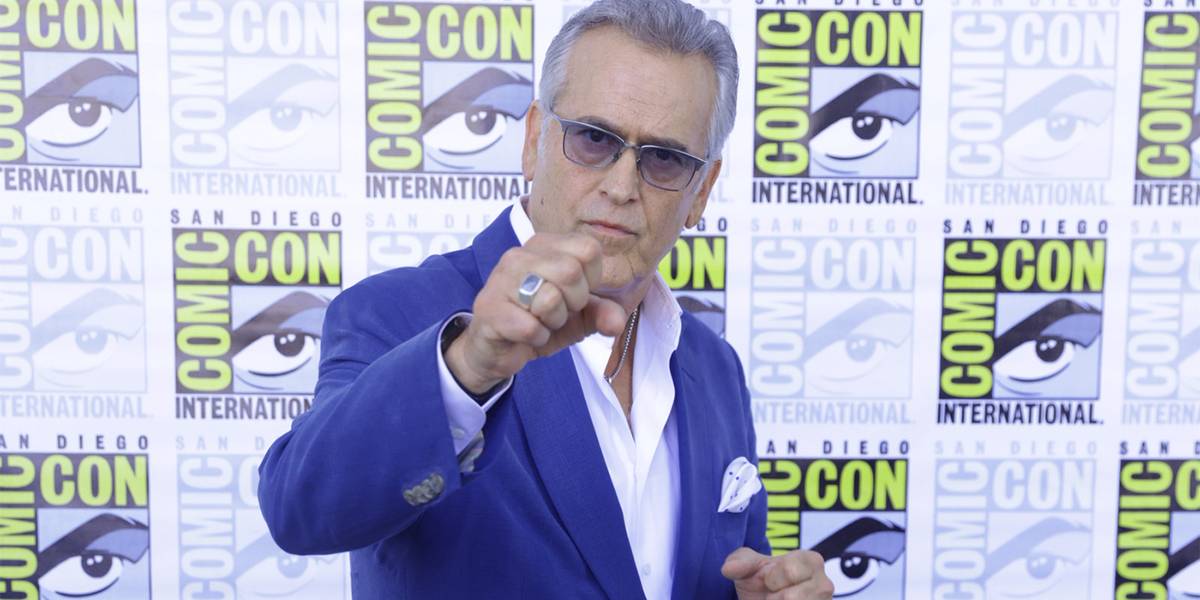
What happens when one of Hollywood’s most beloved cult icons plays the most famous musician who ever lived — and somehow makes it work? That’s exactly what Bruce Campbell pulled off in 2002 with Bubba Ho-Tep, a film so strange, so unexpectedly sincere, and so genuinely moving that it has outlasted dozens of bigger-budget releases from the same era.
More than two decades later, the film remains a touchstone for horror fans, Campbell devotees, and anyone who appreciates the kind of filmmaking that swings for something completely different and actually connects. If you’ve never seen it, the premise alone should tell you everything: an elderly Elvis Presley — who faked his own death and swapped places with an impersonator — teams up with a Black man who believes he is President John F. Kennedy to fight a soul-sucking Egyptian mummy terrorizing a Texas nursing home.
Yes, that’s the real plot. And no, it shouldn’t work as well as it does.
The Film That Shouldn’t Exist — But Does, Gloriously
Bubba Ho-Tep was directed by Don Coscarelli, the filmmaker behind the Phantasm series, and is based on a novella by Joe R. Lansdale. Campbell plays Sebastian Haff, an Elvis impersonator who claims — and the film plays completely straight — that he is the real Elvis, having traded lives with an impersonator years before his 1977 death. The twist: the contract proving the swap burned in a fire, leaving him trapped in obscurity, aging in a rundown East Texas care facility.
Ossie Davis co-stars as Jack, a man who insists he is JFK, claiming the government dyed his skin Black and replaced part of his brain with a bag of sand to cover up his survival. The film never winks at the audience about any of this. It simply asks you to follow these two old men as they shuffle toward a genuinely terrifying supernatural threat — and somehow, you do.
Why Bruce Campbell Was the Only Person for This Role
Campbell is best known as Ash Williams from Sam Raimi’s Evil Dead franchise — a character defined by physical comedy, bravado, and a chin that became iconic. Bubba Ho-Tep asked him to do something almost entirely opposite: play a man hollowed out by regret, obscurity, and old age, who finds one last reason to fight.
The performance is widely considered among the best of Campbell’s career, precisely because it strips away the winking self-awareness he’s known for. This Elvis is not a parody. He’s a man who lost everything — fame, identity, the woman he loved — and is now watching his body fail him in a nursing home where nobody believes who he is. Campbell plays every beat of that with genuine weight.
The physical transformation helped too. Buried under prosthetics and costuming, Campbell committed to the role in a way that went far beyond the premise’s inherent absurdity.
Key Facts About Bubba Ho-Tep
| Detail | Information |
|---|---|
| Release Year | 2002 |
| Director | Don Coscarelli |
| Based On | Novella by Joe R. Lansdale |
| Lead Actor | Bruce Campbell as Elvis Presley |
| Co-Star | Ossie Davis as JFK |
| Setting | East Texas nursing home |
| Antagonist | Soul-sucking Egyptian mummy (Bubba Ho-Tep) |
| Genre | Supernatural horror/comedy |
- The film is based on Joe R. Lansdale’s novella of the same name
- Don Coscarelli, known for the Phantasm franchise, directed
- Ossie Davis plays a man who believes he is President John F. Kennedy
- The mummy of the title feeds on the souls of nursing home residents
- Campbell’s performance is widely regarded as one of his career best
- The film developed a significant cult following after its release
What Makes It More Than a Gimmick
The easy read on Bubba Ho-Tep is that it’s a novelty — a one-joke premise stretched to feature length. That reading misses almost everything the film is actually doing.
At its core, this is a story about aging, invisibility, and the indignity of being forgotten. The nursing home setting isn’t just a backdrop for monster attacks. It’s a place where society has quietly warehoused people it no longer wants to think about. The residents are dying slowly, ignored, stripped of their identities. The fact that one of them might actually be Elvis — or at least believes he is — becomes a metaphor for how we treat the elderly more broadly.
The mummy works on a similar level. It doesn’t just kill people. It feeds on their souls, erasing them completely. For residents already living in near-total anonymity, it’s the final insult. Campbell’s Elvis deciding to fight back isn’t played for laughs. It’s played as a man reclaiming the only thing he has left: the willingness to stand up.
That tonal balance — absurd premise, genuine emotional core — is extraordinarily difficult to pull off. Coscarelli and Campbell manage it consistently across the film’s runtime.
The Cult That Grew Up Around It
The film found its audience slowly, as cult films tend to do. Word of mouth spread through horror communities and among Campbell’s existing fanbase, and the film’s reputation has only grown in the years since. It’s regularly cited as an underappreciated gem of early 2000s genre cinema.
Part of what keeps it alive is how specific it feels. There’s nothing generic about Bubba Ho-Tep. Every element — the setting, the characters, the monster, the tone — is precisely what it is and nothing else. Films like that tend to endure because they can’t be replicated or replaced by something shinier.
Twenty-four years on, it still holds up. And Bruce Campbell’s performance at the center of it remains the reason why.
Frequently Asked Questions
What is Bubba Ho-Tep about?
It follows an elderly man claiming to be the real Elvis Presley who teams up with a man claiming to be JFK to fight a soul-sucking Egyptian mummy at their Texas nursing home.
Who directed Bubba Ho-Tep?
The film was directed by Don Coscarelli, best known for the Phantasm horror franchise.
Is Bubba Ho-Tep based on a book?
Yes, it is based on a novella of the same name written by Joe R. Lansdale.
Who plays JFK in the film?
The late Ossie Davis plays Jack, a man who believes he is President John F. Kennedy and that the government dyed his skin Black to conceal his survival.
When was Bubba Ho-Tep released?
The film was released in 2002, making 2026 its 24th anniversary.
Is Bubba Ho-Tep considered a good film?
It has developed a strong cult following and is widely regarded as one of Bruce Campbell’s finest performances, praised for balancing genuine emotion with its absurd premise.

Leave a Reply