
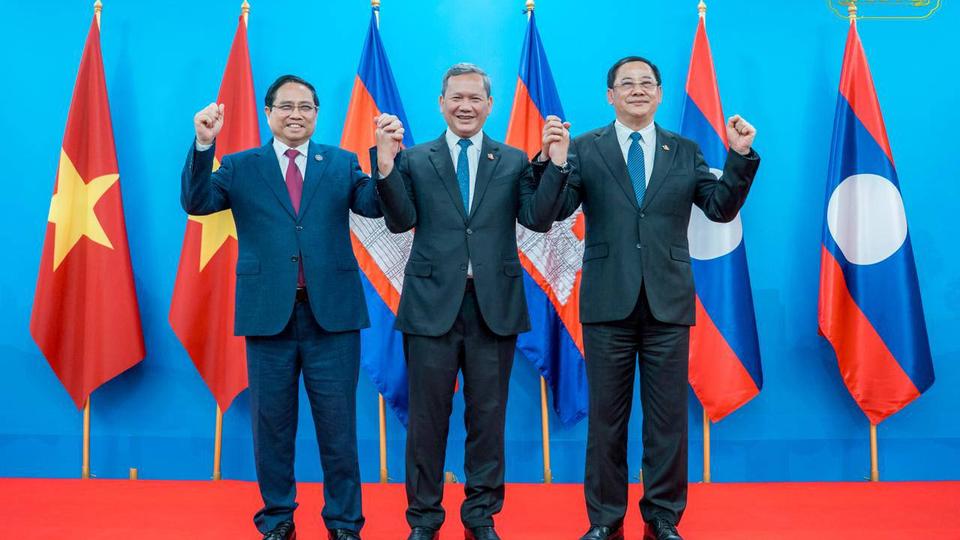
Two neighboring nations are setting their sights on a $20 billion trade target — and tourism is at the center of the plan. Cambodia and Vietnam are deepening their economic partnership in ways that could reshape travel patterns, border commerce, and regional integration across Southeast Asia for years to come.
The push comes at a moment when both countries are actively working to strengthen their standing within ASEAN and the broader Asia-Pacific region. Leaders from both nations have come together with a shared vision: expand bilateral trade, grow cross-border tourism, and build a relationship that goes well beyond short-term economic convenience.
For travelers, investors, and anyone watching Southeast Asia’s rise, this partnership is worth paying attention to. The signals coming out of Phnom Penh and Hanoi suggest this is a long-term commitment, not a diplomatic formality.
What Cambodia and Vietnam Are Actually Building Together
At the heart of this partnership is a dual ambition — trade and tourism growing in tandem. The two countries are not treating these as separate goals. Instead, the logic appears to be that stronger economic ties create the infrastructure and goodwill that makes tourism flourish, and more tourism drives local economies in ways that reinforce trade relationships.
The $20 billion trade target is the headline figure, but the tourism dimension may be just as significant in practical terms. Both Cambodia and Vietnam draw millions of international visitors each year, and each country sits on travel routes that naturally flow through the other. Angkor Wat, the beaches of Sihanoukville, Ho Chi Minh City, Ha Long Bay — these destinations already attract overlapping audiences of regional and international tourists.
Officials have noted that the partnership reflects a deep-rooted tradition of solidarity and good neighbourliness between the two countries — language that signals this cooperation has cultural and historical dimensions beyond simple economic calculation.
Why This Matters for Southeast Asia’s Regional Economy
Cambodia and Vietnam share more than a border. They share membership in ASEAN, a bloc that has been working for decades to build the kind of seamless regional connectivity that makes trade and travel easier for everyone inside it.
When two neighboring ASEAN members commit to this level of economic integration, the effects ripple outward. Supply chains become more efficient. Tourism infrastructure gets upgraded to handle cross-border flows. And the precedent encourages other neighboring pairs within the region to pursue similar frameworks.
Supporters of the partnership point to evidence suggesting that regional economic integration, when driven by genuine bilateral cooperation rather than top-down mandates, tends to produce more durable results. The Cambodia-Vietnam relationship, rooted in shared history and geographic proximity, fits that profile.
Both nations are also clearly aware of the competitive landscape. Southeast Asia is attracting growing attention from global investors, and countries that can demonstrate stable, cooperative partnerships with their neighbors tend to draw more sustained interest than those operating in isolation.
Key Facts About the Cambodia–Vietnam Partnership
| Focus Area | Detail |
|---|---|
| Trade Target | $20 billion (bilateral trade goal) |
| Key Sectors | Trade and tourism |
| Regional Framework | ASEAN and Asia-Pacific integration |
| Relationship Foundation | Solidarity, good neighbourliness, shared history |
| Broader Goal | Sustainable regional economic growth and connectivity |
- Both countries are actively working to raise their profiles within ASEAN
- The partnership is framed as long-term and sustainability-focused, not transactional
- Cultural exchange is identified as a key pillar alongside economic cooperation
- Greater connectivity — physical, commercial, and cultural — is a stated priority
Who Stands to Benefit — and How
For travelers, a stronger Cambodia-Vietnam partnership could mean smoother border crossings, better-coordinated visa arrangements, improved transport links, and tourism packages that treat both countries as a single destination rather than two separate trips. That’s a meaningful practical shift for the millions of visitors who already move between the two countries each year.
For businesses operating in either country, a clear path toward $20 billion in bilateral trade signals opportunity. Exporters, logistics companies, and hospitality operators on both sides of the border stand to gain from a more integrated economic environment.
Local communities near border regions — often among the last to benefit from national-level economic agreements — could see real improvements in market access, infrastructure investment, and tourism foot traffic if the partnership delivers on its ambitions.
And for the region as a whole, this kind of bilateral momentum helps build the case that ASEAN integration is not just a political talking point but an economic reality taking shape on the ground.
What Comes Next for Cambodia and Vietnam
The partnership between Cambodia and Vietnam appears to be in an active development phase, with leaders from both nations engaged in direct dialogue about how to move the relationship forward. The $20 billion trade target provides a concrete benchmark against which progress can be measured.
Tourism cooperation is expected to develop alongside trade, with both countries looking to build on their existing cultural exchange and shared regional identity. The framing of the partnership as sustainable — rather than purely growth-focused — suggests both sides are thinking about long-term structural development rather than short-term wins.
How quickly the two countries can translate high-level commitments into on-the-ground changes — better border infrastructure, coordinated tourism promotion, streamlined trade logistics — will determine how much of this ambition becomes reality. The foundation, by all accounts, is solid. The work ahead is in the details.
Frequently Asked Questions
What is the trade target between Cambodia and Vietnam?
The two countries have set an ambitious bilateral trade goal of $20 billion as part of their expanded economic partnership.
How does tourism factor into the Cambodia–Vietnam partnership?
Tourism is identified as a key pillar of the partnership, with both nations working to foster cross-border travel that benefits their economies and strengthens cultural ties.
How does this partnership connect to ASEAN?
Both Cambodia and Vietnam are ASEAN members, and their bilateral cooperation is framed as part of a broader effort to strengthen regional economic integration across Southeast Asia.
What is the foundation of the relationship between the two countries?
Officials have described the partnership as rooted in a deep tradition of solidarity and good neighbourliness, reflecting shared history and geographic proximity.
Will this affect travelers visiting both countries?
The partnership is expected to improve connectivity and tourism cooperation between the two nations, though specific details about new travel arrangements have not yet been confirmed.




Leave a Reply