
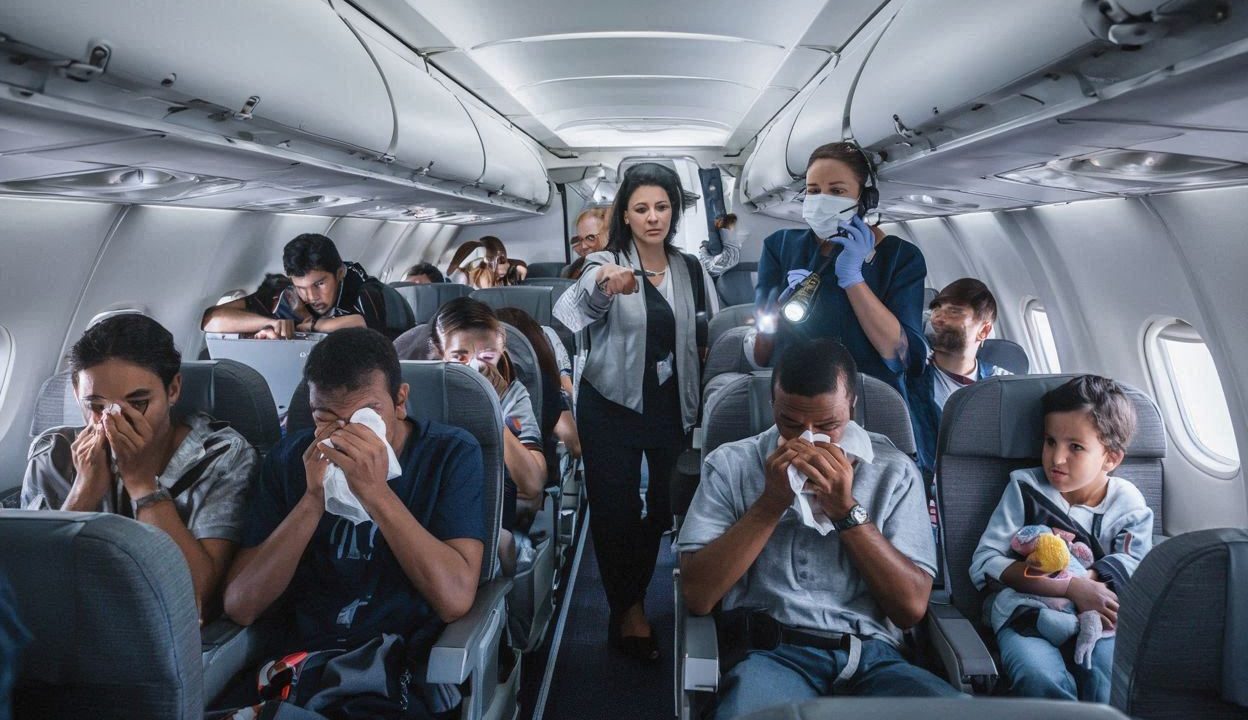
A routine Qantas flight from Canberra to Perth took an unexpected turn in the early hours of April 8, 2026, when an unidentified smell on board forced the aircraft to divert hundreds of kilometres off course — touching down in Adelaide well past the city’s airport curfew.
Qantas flight QF857 was operating a standard domestic route when crew detected the unexplained odour mid-flight. Following established aviation safety protocols, the decision was made to divert the Boeing 737 to Adelaide Airport rather than continue to Perth. The aircraft landed at approximately 1:00 AM local time — after Adelaide Airport’s normal curfew hours had passed.
While the diversion caused obvious disruption for passengers on board, aviation safety guidelines are clear: any unidentified smell or potential hazard in the cabin is treated as a priority situation, and crews are trained to act quickly and decisively rather than wait to see if the issue resolves itself.
Why a Smell on a Plane Is Treated as a Serious Emergency
It might sound like a minor inconvenience, but an unexplained odour inside an aircraft cabin is never taken lightly. In aviation, unusual smells can signal a range of serious issues — from electrical faults and overheating components to smoke in hidden compartments or fumes entering the cabin through the air conditioning system.
Pilots and cabin crew follow strict protocols in these situations. The priority is always to land the aircraft at the nearest suitable airport as quickly as possible, rather than continuing to the original destination. This is exactly what happened with QF857 — Adelaide was the closest viable option, and the crew acted accordingly.
The fact that the Boeing 737 landed after Adelaide’s curfew is a reflection of how seriously the situation was treated. Curfew exceptions exist precisely for priority and emergency diversions, and airport authorities moved quickly to accommodate the arriving flight.
Key Facts About the QF857 Diversion
Here is a breakdown of the confirmed details surrounding the incident:
- Flight number: QF857
- Airline: Qantas Airways
- Aircraft type: Boeing 737
- Original departure point: Canberra Airport (CBR)
- Intended destination: Perth Airport (PER)
- Diversion airport: Adelaide Airport (ADL)
- Date of incident: Friday, April 8, 2026
- Landing time in Adelaide: Approximately 1:00 AM local time
- Reason for diversion: Unidentified smell detected on board
- Classification: Priority landing
| Detail | Information |
|---|---|
| Flight Number | QF857 |
| Route | Canberra (CBR) to Perth (PER) |
| Diversion Airport | Adelaide Airport (ADL) |
| Aircraft | Boeing 737 |
| Incident Date | Friday, April 8, 2026 |
| Landing Time | Approximately 1:00 AM local time |
| Cause | Unidentified smell on board |
| Landing Type | Priority landing |
What This Meant for Passengers on Board
For the passengers of QF857, the diversion meant arriving in a city that wasn’t their destination — in the middle of the night. Anyone connecting to other flights, relying on ground transport, or with early-morning commitments in Perth would have faced significant disruption.
Diversions of this kind place passengers in a difficult position. They are typically accommodated by the airline while the aircraft is inspected and cleared, or alternative travel arrangements are made. The inconvenience is real, but the alternative — continuing a flight with an unresolved potential hazard — is never an acceptable option under aviation safety standards.
Adelaide Airport’s cooperation in accepting the flight past its normal curfew hours was essential. Without that flexibility, the crew’s options would have been far more limited. The swift response from airport authorities helped ensure passengers were on the ground safely and as quickly as possible.
For frequent flyers, this incident is a reminder that diversions — while rare — are a built-in feature of a safety-first aviation system. When something unusual happens mid-flight, you want the crew to act exactly the way QF857’s crew did: immediately, and without hesitation.
What Comes Next After a Diversion Like This
Once an aircraft lands following an unidentified smell diversion, the process is methodical. Ground crews and maintenance engineers inspect the aircraft to identify the source of the odour. Until the cause is found and cleared, the plane does not return to service.
Passengers are typically re-booked on the next available flight to their original destination, or provided with accommodation if the wait extends into daylight hours. Given that QF857 landed in Adelaide at around 1:00 AM, the disruption to passengers’ schedules would have been considerable.

Qantas, as one of Australia’s most prominent carriers, has well-established procedures for handling diversions and passenger rebooking. The airline’s reputation for prioritising safety above schedule adherence is consistent with how this incident was managed — a diversion is always preferable to pressing on with an unresolved concern at altitude.
The nature of the smell has not been confirmed in available information, and whether it was traced to a specific mechanical or environmental source has not been publicly disclosed. What is confirmed is that the crew made the right call, the airport responded appropriately, and all passengers were brought safely to the ground.
Frequently Asked Questions
What flight was diverted and where was it going?
Qantas flight QF857 was travelling from Canberra Airport (CBR) to Perth Airport (PER) when it was diverted to Adelaide Airport (ADL).
Why was the flight diverted to Adelaide?
An unidentified smell was detected on board the Boeing 737, prompting the crew to initiate a priority landing at the nearest suitable airport.
What time did the flight land in Adelaide?
The aircraft touched down in Adelaide at approximately 1:00 AM local time on April 8, 2026, after the airport’s normal curfew hours.
Was the cause of the smell ever identified?
The specific source of the smell has not been confirmed in available information at this time.
Is it normal for an airport to accept flights after curfew?
Yes — airports maintain provisions for priority and emergency diversions that allow flights to land outside standard curfew hours when passenger safety is at stake.
What happens to passengers after a diversion like this?
Passengers are typically re-booked on the next available flight to their original destination, with the airline responsible for managing alternative arrangements.




Leave a Reply