
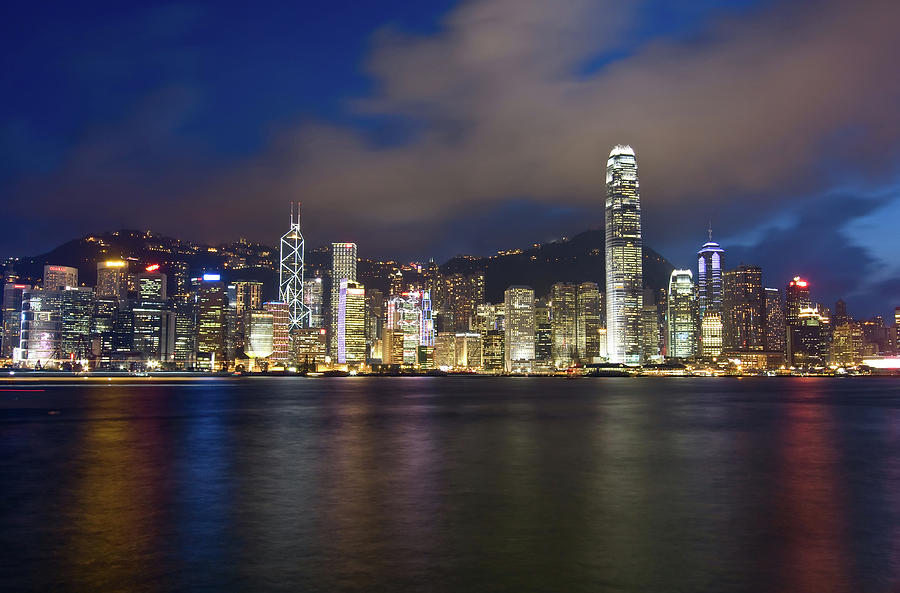
What does it take to convince the world to care about a destination again?
That’s the question Hong Kong’s tourism planners are quietly wrestling with. After years of political turbulence, a pandemic, and shifting global travel patterns, the city has launched a sweeping new strategic tourism revival plan. It targets global markets, business travel, and what officials are calling “high-value visitors.”
On paper, the ambition is clear. In practice, the debate is just beginning.
The Setup: A City Divided on Its Own Future
Hong Kong’s numbers tell a complicated story. International visitor arrivals reached 49.9 million in 2025, which sounds impressive until you compare it to the 2018 peak of 65.3 million. That’s a 23.6% decline that no amount of optimistic press releases can paper over.
Even more telling is the composition of those arrivals. According to current projections, mainland Chinese travelers make up approximately 76% of all visitors, while international arrivals account for just 24%. Mainland China alone recorded 34 million visits in 2024.
| Visitor Origin | 2024 Total Arrivals | Feb 2026 Arrivals |
|---|---|---|
| Mainland China | 34,043,127 | 7,893,820 |
| Taiwan | 1,244,610 | 285,989 |
| South Korea | 854,873 | 225,343 |
| Southeast Asia | 3,210,445 | 612,780 |
| Western Markets | 2,890,210 | 498,330 |
This over-reliance on a single market is precisely what the new plan aims to fix. But not everyone agrees on whether this is the right strategy, or even the right time to attempt it.
Side A: The Case for Bold Global Expansion
Supporters of Hong Kong’s revival plan argue that diversification is not just smart — it’s survival. Expanding outreach beyond traditional markets is expected to reduce reliance on a single region and create a more resilient tourism ecosystem.
The logic is compelling. When 76% of your visitors come from one neighboring territory, you’re not running a global tourism strategy. You’re running a regional day-trip service with branding aspirations. The new plan attempts to change that by targeting high-spending visitors from Europe, North America, the Middle East, and emerging markets across Southeast Asia and South Asia.
Advocates also point to Hong Kong’s infrastructure advantages. The city retains world-class connectivity, a sophisticated financial services sector, and deep expertise in trade and logistics. These are not tourism features in isolation — they are reasons why business travelers choose destinations repeatedly and why conference organizers return year after year.
According to the World Travel and Tourism Council (WTTC), Hong Kong SAR can re-establish itself as a go-to destination for international travelers by investing strategically in key source markets. The emphasis on business travel is particularly astute. Business travelers spend more per day than leisure visitors, stay longer on average, and often return multiple times within the same year. Targeting this segment could accelerate revenue recovery faster than chasing leisure volume alone.
Then there’s the events strategy. Plans include using sports and cultural events to reestablish Hong Kong as a regional hub. The new Kai Tak Stadium represents a genuine infrastructure investment in this vision, capable of hosting international concerts, sporting competitions, and large-scale exhibitions. Major international events generate media coverage, business opportunities, and the kind of organic social media content that no paid campaign can replicate. A single globally broadcast event can shift perception in ways that years of advertising cannot.
The plan also emphasizes experiential tourism — positioning Hong Kong not merely as a shopping destination but as a place where visitors can engage with a genuinely unique cultural identity. From the hiking trails of Lantau Island to the culinary depth of its Michelin-starred restaurant scene, Hong Kong has always had more to offer than its commercial reputation suggested. The revival plan attempts to surface these layers for a new generation of travelers who prioritize experience over transaction.
Side B: The Case for Skepticism
Critics of the plan aren’t necessarily pessimistic about Hong Kong. They’re skeptical about execution.
The first concern is competition. Southeast Asia has spent the last five years aggressively courting exactly the same high-value international travelers Hong Kong wants. Singapore has deepened its MICE (meetings, incentives, conferences, exhibitions) dominance with new integrated resorts and expanded convention facilities. Thailand has invested heavily in luxury tourism infrastructure across Bangkok, Phuket, and Chiang Mai. Japan remains a magnetic draw for visitors across every spending category, buoyed by a favorable exchange rate and an almost unmatched cultural offering. Against this backdrop, Hong Kong is not entering an empty field — it’s trying to carve out space in an increasingly crowded arena.
The second concern is perception. International travelers, particularly from Western markets, carry impressions of Hong Kong shaped by news cycles that have not always been flattering over the past several years. Changing that perception requires more than a new tourism slogan. It requires consistent, credible storytelling over an extended period — and a willingness to acknowledge the complexity of what the city has been through rather than simply papering over it with glossy promotional content.
The third concern is structural. Hong Kong’s cost base remains extremely high. Hotel rates, dining costs, and retail prices position the city firmly in the premium tier, which aligns with the “high-value visitor” strategy on paper. But premium pricing only works when visitors feel the value proposition is justified. If travelers perceive better value in Singapore, Tokyo, or even Dubai for a comparable experience, the pricing strategy becomes a liability rather than an asset. Several hospitality industry analysts have pointed out that Hong Kong’s hotel occupancy rates, while recovering, have not kept pace with rate increases — a sign that demand elasticity remains a real constraint.
There is also the question of what “high-value visitor” actually means in practice. If the strategy prioritizes spending over volume, it needs to be matched by a hospitality ecosystem — from boutique hotels to guided cultural experiences to premium retail — that genuinely caters to that segment. Critics argue that parts of Hong Kong’s tourism infrastructure remain oriented toward high-volume, transactional tourism rather than the immersive, curated experiences that premium international travelers increasingly expect.
What the Numbers Don’t Tell You
Behind every tourism statistic is a more complicated human story. Hong Kong’s identity as a travel destination has always been layered — simultaneously a global financial hub, a Cantonese cultural heartland, a colonial-era architectural palimpsest, and one of the world’s great food cities. The challenge for tourism planners is not inventing a new identity but communicating an existing one more effectively to audiences who may have stopped paying attention.
There are genuine reasons for cautious optimism. Hong Kong International Airport remains one of the busiest cargo and passenger hubs in the world, with direct connections to over 180 destinations. The city’s public transportation network is widely regarded as among the best on the planet. Its restaurant scene continues to earn international recognition. And for travelers interested in the intersection of Eastern and Western culture, Hong Kong offers something genuinely irreplaceable — a city where those influences have been layering and colliding for over a century.
The question is whether those assets are being communicated in ways that resonate with today’s traveler, who is simultaneously more globally mobile and more selective than ever before.
The Road Ahead: Realistic Targets or Wishful Thinking?
Tourism boards rarely set conservative targets, and Hong Kong’s is no exception. The ambition to close the gap with pre-2019 visitor numbers while simultaneously shifting the composition toward higher-spending international travelers is a dual challenge that few destinations have managed simultaneously. It requires not just marketing investment but policy coherence, private sector alignment, and a stable operating environment that gives international travelers and event organizers the confidence to commit.
What makes Hong Kong’s situation genuinely interesting — and genuinely uncertain — is that the city is attempting this reset during a period of broader geopolitical flux. Global travel patterns are being reshaped by everything from currency movements to airline route decisions to the evolving preferences of post-pandemic travelers who have fundamentally reconsidered what they want from a trip. Hong Kong is not just competing for visitors. It is competing for relevance in a world that has more choices than ever before.
Whether the revival plan delivers on its ambitions will depend less on the strategy document itself and more on the consistency and creativity of its execution over the next three to five years. Tourism recovery is rarely linear, and the cities that succeed tend to be those that adapt quickly when early assumptions prove wrong.
For Hong Kong, the window is open. Whether the city walks through it remains to be seen.
Hong Kong Tourism Recovery: Key Metrics at a Glance
Frequently Asked Questions



Leave a Reply