
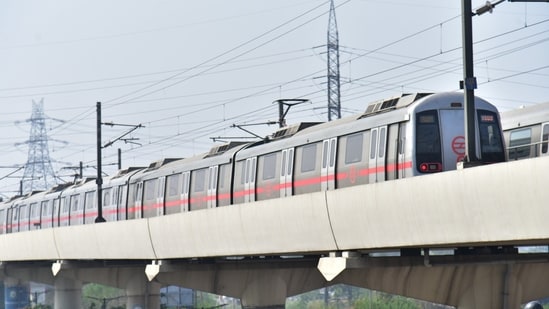
The clock is already running. Delhi Metro’s DMRC has set a hard deadline of November 2027 to complete upgrades across 70 trains on both the Blue and Red Lines. That window is tighter than it sounds, and for the millions of commuters and tourists who rely on the Blue Line daily, the stakes couldn’t be higher.
In 2025, Delhi Metro handled a record 235.8 crore passenger journeys, cementing its status as the backbone of India’s urban mass transit network. The Blue Line sits at the heart of that number, threading through some of Delhi’s most congested and tourist-dense corridors. When it struggles, the city feels it.
So what exactly is changing? We ranked the five most consequential upgrades happening right now, in order of impact on your next Delhi commute.
The Blue Line’s Role in Delhi’s Record 235.8 Crore Journeys
Before the countdown begins, it helps to understand what’s at stake. The Blue Line is not just one of Delhi Metro’s busiest corridors. It is a critical artery connecting Dwarka in the west to Noida and Vaishali in the east, passing through tourist magnets like Rajiv Chowk, Mandi House, and the areas surrounding India Gate.
Tourists flying into Delhi, students heading to universities, office workers crossing the city — all of them funnel through this line. When DMRC reported 235.8 crore passenger journeys in 2025, a significant chunk of that load rode on Blue Line tracks. Aging trains on such a high-demand corridor are not just an inconvenience. They are a safety and efficiency risk that compounds with every passing month.
| Upgrade Area | Scope | Deadline | Impact Level |
|---|---|---|---|
| Safety Systems | 70 trains, Blue + Red Lines | Nov 2027 | Critical |
| Interior Comfort | Full mid-life refurbishment | Nov 2027 | High |
| Modern Technology | Across refurbished fleet | Nov 2027 | High |
| Operational Speed | Schedule optimization | Ongoing | Moderate–High |
| Fleet Reliability | Reduced breakdowns | Post-2027 | High |
Upgrade 5: Smarter Passenger Information Systems Inside Train Cabins
It sounds minor until you’ve missed your stop. One of the first visible changes riders will notice in refurbished Blue Line trains is the upgraded in-cabin passenger information systems. Older trains relied on static route maps and audio announcements that often got swallowed by peak-hour noise.
The mid-life refurbishment includes improved digital displays and announcement systems calibrated for clarity in crowded, noisy conditions. For international tourists navigating Delhi’s dense network for the first time, this change alone reduces friction considerably. It’s the kind of low-glamour, high-utility upgrade that pays off in thousands of micro-moments every single day.
Upgrade 4: Improved Air Conditioning and Cabin Comfort Across 70 Trains
Delhi’s summers are not negotiable. Temperatures regularly exceed 44°C, and a malfunctioning air conditioning unit inside a packed metro car is a genuine health concern. The mid-life refurbishment program specifically targets HVAC systems, seating materials, and overall cabin ergonomics.
This matters most during the April-to-June travel peak, when tourist volumes spike alongside summer temperatures. Families visiting monuments along the Blue Line corridor — from Dwarka’s temples to the markets near Rajiv Chowk — now have a more reliable climate-controlled ride in either direction. Refreshed seating and interior surfaces also reduce the visual wear that accumulates on aging rolling stock over a decade of daily use.
Upgrade 3: Fire Safety and Emergency Response Technology Overhaul
This is where the stakes escalate from comfort to survival. The mid-life refurbishment includes a comprehensive overhaul of fire safety systems and emergency response technology across the aging fleet. DMRC confirmed the revamp is actively in progress, not just planned on paper.
Modern fire detection and suppression systems are being integrated where older analog setups previously existed. Emergency communication between trains and control centers is being upgraded to reduce response lag. In a network that carries hundreds of millions of passengers annually, these changes are not incremental. They are foundational to the system’s right to operate at the scale it does.
Upgrade 2: Modern Traction and Braking Systems for Faster, Smoother Rides
Speed without smoothness is just aggression. The refurbishment program is addressing both by upgrading traction and braking systems on aging Blue Line trains. These are the mechanical guts of the ride experience, and on a train that’s been running for well over a decade, wear on these systems translates directly to jerky acceleration, longer stopping distances, and reduced top speeds.
Updated traction systems allow trains to reach cruising speed more efficiently, cutting journey times on longer stretches of the Blue Line. Improved braking technology also makes station dwell times more predictable, which cascades into better schedule adherence across the entire line. According to reports, the November 2027 deadline covers the full 70-train scope across both lines, meaning these mechanical improvements will roll out progressively rather than all at once.
For regular commuters, the tangible result is a ride that feels less like an aging workhorse and more like the newer Phase IV rolling stock that’s already drawing positive comparisons on other corridors.
Frequently Asked Questions

Leave a Reply