
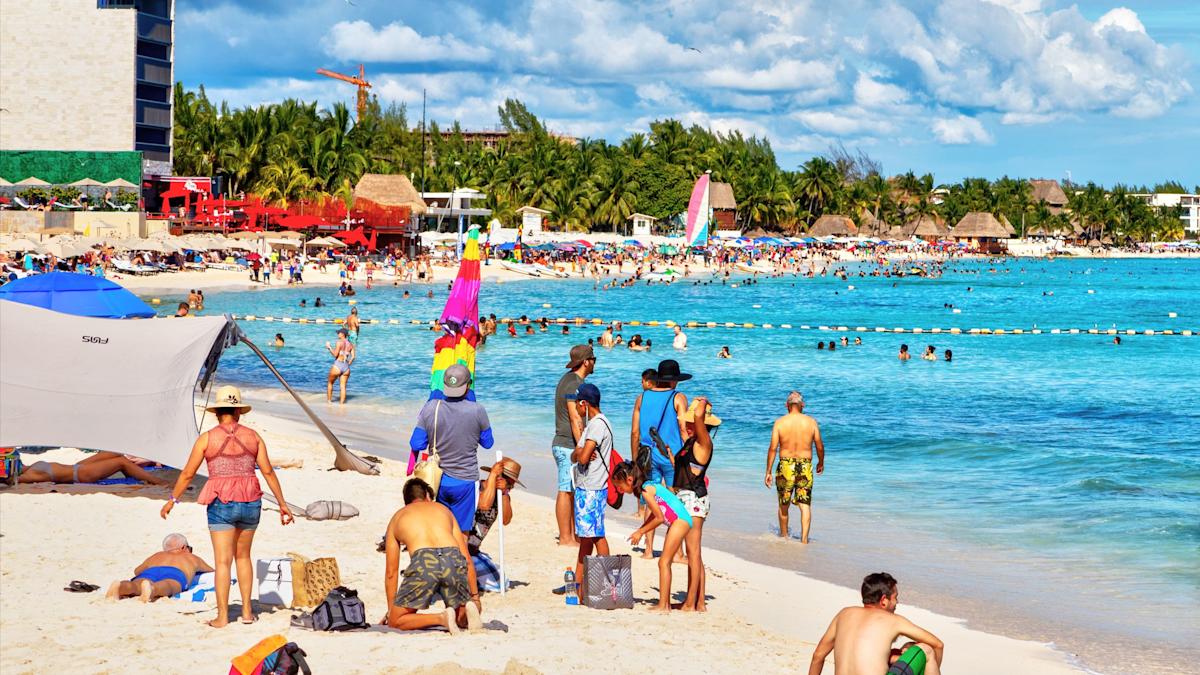
Everyone assumed the travel advisories would do the damage. The headlines were grim, the warnings were loud, and the conventional travel wisdom said Canadians would pivot to Portugal or pivot home. They didn’t.
In early 2026, while pundits were predicting a tourism slowdown in Mexico, Canadian travelers were quietly booking flights to Los Cabos at a pace that left resort managers scrambling for inventory. The data, when it finally came together in March 2026, told a story nobody in the travel industry had been prepared for.
Mexico wasn’t losing Canadian tourists. It was gaining them, in record numbers, and keeping them longer than ever before.
The Numbers That Changed the Conversation
Marcus Delacroix, a 41-year-old logistics coordinator from Edmonton, had been planning his February trip to Los Cabos since the previous August. When travel advisories started circulating in late 2025, his coworkers urged him to rebook somewhere else. His wife wavered. His mother called twice.
He went anyway. And so did millions of others.
A Leger poll published in early 2026 found that about 46 percent of Canadians who had planned Mexico trips intended to stick with their itineraries despite publicized safety concerns. That number, already significant, told only part of the story.
Among Canadians who had visited Mexico before, that commitment rate jumped to nearly 64 percent. First-timers hesitated. Veterans booked. The distinction mattered enormously to the destinations counting on that winter revenue.
Los Cabos, perched at the southern tip of the Baja California Peninsula, became the focal point of this quiet surge. Its combination of desert landscape, Pacific swells, and year-round warmth had already positioned it as a premium destination. By early 2026, Canadian arrivals were helping it reach numbers that surprised even optimistic projections.
| Visitor Profile | Intent to Visit Mexico | Behavior Pattern |
|---|---|---|
| All Canadian travelers polled | 46% committed to original plans | Cautious, researching alternatives |
| Repeat Canadian visitors | ~64% committed to original plans | Loyal, longer stays, higher spend |
| First-time Canadian travelers | Lower commitment rate | More likely to reroute to Europe or Caribbean |
What Actually Happens When You’ve Been There Before
Marcus had been to Cabo three times. He knew which neighborhoods to avoid, which taxi services to trust, and which beachfront restaurants had been operating since before the area exploded into mainstream tourism. That knowledge, accumulated over years, made the difference.
He described his February trip as his best yet. Fewer Americans. Better table availability at the spots he loved. A slightly more relaxed energy at the resort, which had quietly updated its security protocols without advertising the fact.
He spent roughly CAD $4,800 over nine days, including flights from Edmonton, a mid-tier resort in the Corridor, and several day trips. That figure was higher than any previous visit, driven partly by inflation but also by a deliberate choice to upgrade experiences he’d previously done on a budget.
That pattern, spending more on return visits, is consistent with what Mexico’s tourism sector has been tracking. Returning visitors don’t just show up in larger numbers. They invest more deeply in the experience, supporting local vendors, booking longer stays, and choosing mid-to-premium tier accommodations over budget packages.
Los Cabos had positioned itself specifically to capture this demographic. New infrastructure, expanded direct flight routes from Canadian cities including Calgary, Toronto, and Vancouver, and resort partnerships with Canadian tour operators had steadily built the relationship over the previous five years.
The Friction Points Nobody Mentions in Brochures
Not every Canadian traveler in 2026 found the experience seamless. CTV News reporting from early in the year noted that roughly one in three Canadians who had been planning Mexico trips changed their plans entirely after reviewing updated government advisories. That third matters. It represents real revenue lost to competing destinations.
Elena Marchetti, 38, a nurse from Hamilton, Ontario, had booked a trip to Puerto Vallarta for March. Her husband pulled the plug in January after reading about incidents near a particular tourist corridor. She didn’t fight the decision, though she quietly resented it.
They went to Costa Rica instead. It was beautiful. She still looked at Los Cabos photos occasionally and thought about rescheduling for next winter.
The complexity of land border crossings, combined with 2026’s announced increases in cross-border fees and tighter vehicle permit processes, pushed more Canadians toward fly-in resort destinations rather than independent overland adventures. Los Cabos, accessible almost exclusively by air, actually benefited from this. The friction that discouraged road trippers concentrated demand on air-accessible resort zones.
The Turning Point in How Canada Sees Mexico
Somewhere around mid-2025, a quiet cultural shift began inside Canadian travel communities. Mexico stopped being a monolithic destination in popular conversation. People started distinguishing between regions, corridors, resort zones, and independent travel contexts. The distinction between “Mexico” as an abstraction and “Los Cabos” or “the Riviera Maya” as specific, mappable experiences became mainstream.
“Mexico has witnessed a significant rise in visitor numbers, with both U.S. and Canadian travellers leading arrivals” as of early 2026, according to Travel and Tour World’s coverage of the Los Cabos tourism surge.
— Travel and Tour World, 2026
That granularity changed behavior. Travelers who once said they were nervous about “Mexico” began making specific decisions about specific places. And specific places, particularly those with established Canadian tourism infrastructure, won that recalibration decisively.
Los Cabos spent years cultivating Canadian relationships through direct route development and tour operator deals. In 2026, that investment paid dividends in a season when other destinations saw softening demand.
What the Record Numbers Actually Mean for Real Travelers
Marcus came home from his February trip with a sunburn, about 400 photos on his phone, and a clear plan to return in 2027. He upgraded his resort category based on what he’d observed: the higher-end properties had notably better security protocols, more attentive staff, and were located in corridors with lower incident reports.
The upgrade cost him roughly CAD $600 more than his previous stays. He considered it the best $600 he’d spent on travel.
Elena, back in Hamilton, eventually started researching Puerto Vallarta again for the following year. She read forums, watched recent traveler videos, and discovered that the specific corridor her husband had read about was far from the tourist zones she’d originally booked. She filed that information away.
Both travelers represent something the aggregate data can’t fully capture. The relationship between Canadian tourists and Mexico isn’t purely transactional. It’s layered with memory, familiarity, anxiety, reassessment, and ultimately something that looks a lot like loyalty, even when that loyalty gets complicated by fear.
The record tourism figures coming out of Los Cabos in early 2026 aren’t just a statistic about airplanes and hotel rooms. They’re a portrait of a decision made over and over again by people weighing real risk against real desire, and arriving at different conclusions.
The 64 percent who kept going had usually been before. That experience gave them something no advisory could provide: a reference point. A memory of a specific street, a specific sunset, a specific meal that made the abstracted fear feel less concrete than the remembered pleasure.
Whether that calculation holds through the next news cycle, the next advisory, the next season of geopolitical noise, nobody in the travel industry can honestly say. But the Canadians currently building those memories in Los Cabos in 2026 are, statistically, the most likely group to come back, and bring someone with them, next year.
Loyalty built from experience is harder to shake than fear built from headlines. Mexico is counting on that, and so far, it’s right.




Leave a Reply