
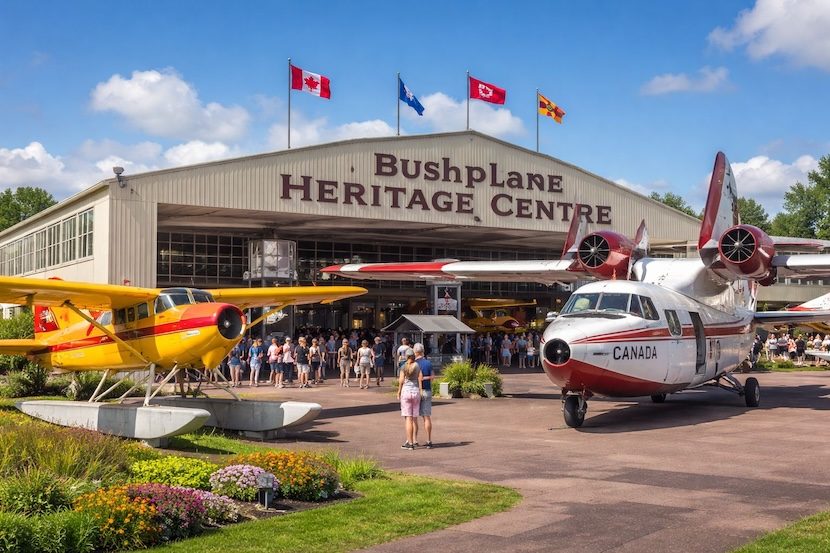
There are not many museums in Canada where you can climb into the cockpit of a historic aircraft, stand inside a working waterfront hangar, and walk away with a genuine understanding of how an entire country was built — one remote supply run at a time. The Canadian Bushplane Heritage Centre in Sault Ste. Marie is that kind of place.
Northern Ontario is famous for its lakes, forests, and wilderness — but it holds an aviation story that most travellers never hear. For decades, bush pilots were the only reliable link between isolated northern communities and the rest of Canada. This museum exists to make sure that story is never forgotten.
The centre is described as one of the most distinctive cultural attractions in the region, bringing together history, science, and hands-on adventure in a single destination. It draws visitors who want something more than a standard sightseeing stop — and it delivers.
A Hangar With a History That Still Breathes
The museum is housed in a restored waterfront hangar in Sault Ste. Marie. This is not a purpose-built exhibition space — it is the real thing. The building once supported government aviation services operating across Northern Ontario, and it has been carefully preserved as a working landmark rather than converted into a generic gallery.
That authenticity matters. When you walk through the doors, you are stepping into the same physical space where mechanics once prepared aircraft for flights into the Canadian wilderness. The scale of the hangar, the smell of aged metal, the sight of restored planes — it all adds up to something that a replica simply could not replicate.
The museum focuses on bush flying, a form of aviation that was uniquely Canadian in its scope and necessity. Bush planes connected communities that had no roads, no railways, and no other practical access to the outside world. They carried mail, medical supplies, food, and passengers across terrain that would have taken weeks to cross on foot.
What the Canadian Bushplane Heritage Centre Actually Offers
The experience is designed to be accessible and engaging for all age groups. It is not a passive walk-through exhibit — it is built around interaction and discovery. Visitors are encouraged to engage with the aircraft and the stories behind them rather than simply observe from a distance.
The centre is positioned as a destination that turns aviation history into a hands-on journey, making it suitable for families, solo travellers, history enthusiasts, and anyone with a curiosity about how Canada’s remote north was developed and sustained.
| Feature | Details |
|---|---|
| Location | Sault Ste. Marie, Northern Ontario, Canada |
| Building Type | Restored waterfront hangar with historical significance |
| Original Purpose | Government aviation services across Northern Ontario |
| Focus | Bush flying history and Canada’s remote community connections |
| Visitor Experience | Hands-on, interactive, suitable for all age groups |
| Appeal | History, science, and adventure combined in one destination |
Why This Museum Matters Beyond Aviation Fans
It would be easy to assume that a bushplane museum is strictly for aviation enthusiasts — people who already know the difference between a Beaver and an Otter, or who can name Canadian pilots from memory. But that assumption would be wrong.
The Canadian Bushplane Heritage Centre is fundamentally a museum about nation-building. The aircraft on display are not just mechanical objects — they are evidence of how Canada managed to develop and sustain communities in one of the most geographically challenging environments on earth. That story resonates well beyond aviation circles.
For families, the interactive elements make it genuinely engaging for children who might otherwise lose interest in a traditional history museum. For travellers with a broader interest in Canadian culture and history, the centre offers context that most guidebooks skip entirely. And for anyone who has ever looked at a map of Northern Ontario and wondered how people actually lived and worked in that vastness — this museum answers that question in a vivid, tangible way.
Planning a Visit to Sault Ste. Marie
Sault Ste. Marie sits at the junction of Lake Superior and Lake Huron, making it a natural stopping point for travellers moving through Northern Ontario. The city itself offers access to wilderness experiences alongside cultural attractions — a combination that is increasingly rare and increasingly sought after by travellers looking to move beyond tourist-trail destinations.
The Canadian Bushplane Heritage Centre fits naturally into a broader Northern Ontario itinerary. It can serve as a half-day stop or a longer exploration depending on how deeply a visitor wants to engage with the exhibits. Either way, it rewards the time spent.
For those planning a first visit, the recommendation from those familiar with the attraction is simple: go in without assumptions. Whether or not you have any prior interest in aviation, the story told inside that hangar is one worth hearing.
Frequently Asked Questions
Where is the Canadian Bushplane Heritage Centre located?
It is located in Sault Ste. Marie, Northern Ontario, Canada, inside a restored waterfront hangar.
What was the hangar used for before it became a museum?
The building originally supported government aviation services that operated across Northern Ontario.
Is the museum suitable for children and families?
Yes — the experience is described as hands-on, interactive, and suitable for all age groups.
Do I need to be interested in aviation to enjoy this museum?
No. The centre focuses on the broader story of how bush planes connected remote Canadian communities, which has wide appeal beyond aviation enthusiasts.
What makes this museum different from a standard history museum?
It combines history, science, and adventure in a single destination, with an emphasis on interactive engagement rather than passive observation.
Is there an admission fee or specific opening hours?
Specific pricing and hours are not confirmed in the available information — visitors are advised to check directly with the centre before planning their trip.


Leave a Reply