
Cross-border travel between Canada and the United States has now fallen for 13 consecutive months — and the economic ripple effects are starting to hit places most travelers never think about until they’re standing in line at one of them.
Statistics Canada recorded a 22% drop in return trips from the United States in January 2026 compared to the same month the previous year. That’s not a blip. That’s a sustained, deepening trend that is reshaping border communities, straining small businesses, and forcing an entire industry to fight for its survival.
If you’ve driven across the Canadian-American border in the past year — or planned to — this shift is already affecting what you’ll find when you get there, and what might not be there much longer.
(function(){var wrp=document.getElementById(“paap_stat_69c6cb3ddfaf40.46385065”);if(!wrp)return;var ids=[“paap_stat_69c6cb3ddfaf40.46385065_c0″,”paap_stat_69c6cb3ddfaf40.46385065_c1”];var dur=1800;function ease(t){return 1-Math.pow(1-t,3);}function anim(){ids.forEach(function(id){var el=document.getElementById(id);if(!el)return;var tgt=parseFloat(el.getAttribute(“data-target”))||0;var pfx=el.getAttribute(“data-prefix”)||””;var sfx=el.getAttribute(“data-suffix”)||””;var dec=parseInt(el.getAttribute(“data-decimals”))||0;var st=null;function step(ts){if(!st)st=ts;var p=Math.min((ts-st)/dur,1);var v=ease(p)*tgt;el.textContent=pfx+v.toFixed(dec)+sfx;if(p<1)requestAnimationFrame(step);}requestAnimationFrame(step);});}if("IntersectionObserver" in window){var obs=new IntersectionObserver(function(e){e.forEach(function(en){if(en.isIntersecting){anim();obs.disconnect();}});},{threshold:0.2});obs.observe(wrp);}else{anim();}})();
Why Canadians Are Staying Home — And What’s Driving the Decline
The term circulating in border communities is blunt: a travel boycott. Canadians, in growing numbers, are choosing to skip trips south of the 49th parallel. The reasons are layered — geopolitical tensions, shifting national sentiment, economic concerns around currency exchange, and a broader reassessment of what cross-border travel means right now.
Whatever the specific motivations for individual travelers, the data tells a clear story. Thirteen straight months of decline means this isn’t seasonal variation or a one-time disruption. The historical flow of people across the border — one of the busiest shared boundaries in the world — remains significantly suppressed.
For the towns, businesses, and workers who depend on that flow, the consequences are not abstract. They’re showing up in revenue figures, staffing decisions, and urgent calls to government for help.
The Duty-Free Industry Is Taking the Hardest Hit
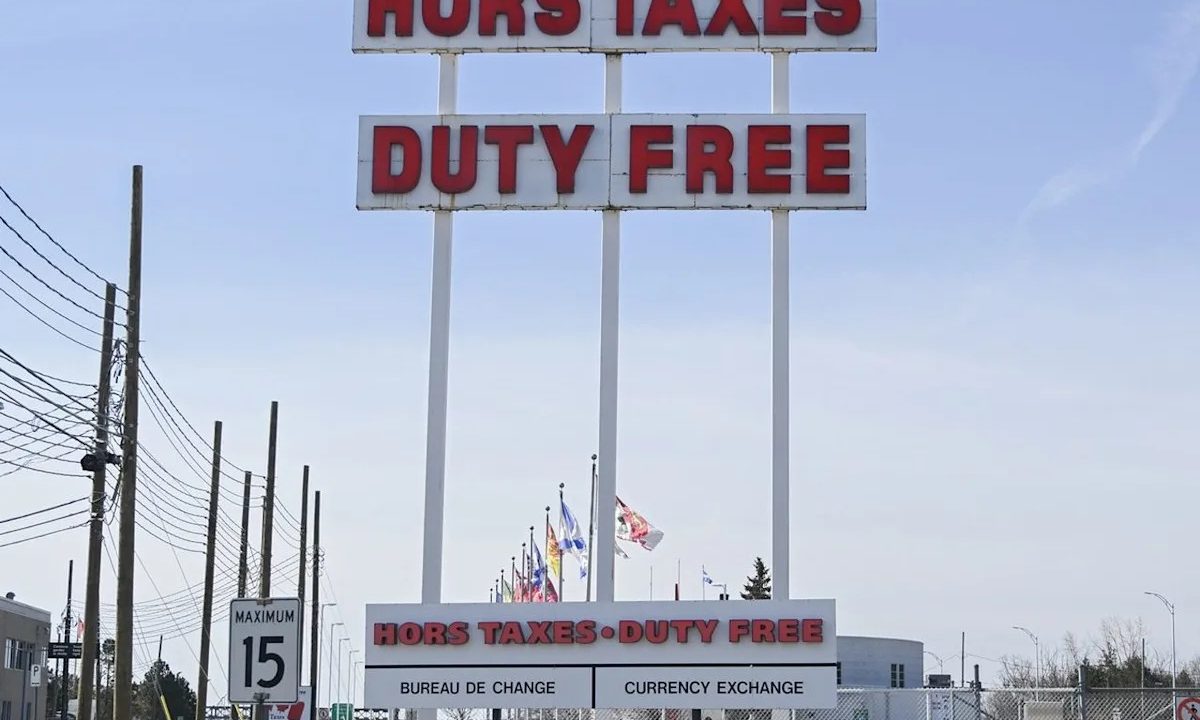
When travelers cross a land border, many of them stop at a duty-free shop. These stores — selling everything from spirits and perfume to snacks and gifts — depend almost entirely on cross-border foot traffic. No travelers means no customers. It’s that simple, and that devastating.
The Frontier Duty Free Association (FDFA) has become the leading voice for an industry under severe financial pressure. These are not corporate chains with deep pockets to absorb a prolonged downturn. Many duty-free shops along the Canadian land border are independently owned, family-run businesses that have operated for decades serving travelers moving in both directions.
The FDFA is now actively pushing for regulatory changes — seeking government intervention that could help these businesses survive a consumer drought they did not cause and cannot control on their own.
| Indicator | Detail |
|---|---|
| Decline in Canadian return trips from U.S. | 22% drop in January 2026 vs. January 2025 |
| Duration of travel decline streak | 13 consecutive months of reduction |
| Primary data source | Statistics Canada |
| Industry most affected | Canadian land border duty-free shops |
| Industry advocacy group | Frontier Duty Free Association (FDFA) |
| FDFA response | Actively seeking regulatory changes to support independently owned stores |
What This Means for Your Next Road Trip Across the Border
If you’re a Canadian planning a road trip into the United States — or an American hoping to head north — this trend matters in practical terms. Here’s what the current environment means on the ground:
- Fewer duty-free options: Shops that were staples of the cross-border driving experience are under financial stress. Some may reduce hours, scale back inventory, or in the worst cases, close entirely if the downturn continues.
- Quieter border crossings: With significantly fewer Canadian travelers heading south, wait times at many land ports of entry have shifted. The bustling border experience many road-trippers are used to looks different right now.
- Border community economies are shrinking: The towns and services that grew up around high-traffic crossings — gas stations, restaurants, motels — all feel the absence of travelers who once stopped regularly.
- Industry advocacy may change what’s available: The FDFA’s push for regulatory relief could reshape what duty-free shopping looks like in the future, including potential changes to purchase limits or product availability aimed at attracting any travelers who do still make the crossing.
The broader tourism sector is watching closely. Border communities have long served as economic connectors between two countries, and when that connection weakens, the effects spread further than most people realize — well beyond the duty-free counter.
What Comes Next for the Border and the Businesses That Depend on It
The FDFA’s push for regulatory relief is the most concrete next step in this story. The association is making the case to policymakers that independently owned duty-free businesses need structural support — not just short-term relief — to weather a downturn that has now lasted more than a year with no confirmed end in sight.
Advocates argue that without meaningful regulatory changes, the damage to border communities could become permanent. Businesses that close don’t automatically reopen when travel eventually recovers. Workers who leave border towns don’t always come back. The infrastructure of cross-border tourism, once dismantled, takes years to rebuild.
Officials and industry groups are framing this as a critical moment. The question isn’t just whether Canadians will start crossing the border again — it’s whether the businesses and communities that make those crossings worthwhile will still be there when they do.
For travelers on either side of the border, the situation is worth watching. The next time you plan a road trip across the 49th parallel, the landscape you encounter may look noticeably different from the one you remember.
Frequently Asked Questions
How much has Canadian cross-border travel to the U.S. declined?
Statistics Canada recorded a 22% drop in return trips from the United States in January 2026 compared to January 2025.
How long has the cross-border travel decline been going on?
The decline has lasted 13 consecutive months, making it a sustained trend rather than a short-term disruption.
Which businesses are most affected by Canadians avoiding U.S. trips?
Canadian land border duty-free shops are among the hardest hit, as they depend almost entirely on cross-border traveler traffic to generate revenue.
Who is advocating for the duty-free industry?
The Frontier Duty Free Association (FDFA) is actively seeking regulatory changes to help independently owned duty-free businesses survive the downturn.
Will duty-free shops close because of this decline?
The FDFA has indicated these businesses are under tremendous financial strain, but specific closures have not been confirmed in available reporting.
Could this affect road trip planning for travelers?
Yes — reduced traffic at border crossings and financial pressure on duty-free shops and surrounding border-community businesses could change the cross-border road trip experience for both Canadian and American travelers.



Leave a Reply