
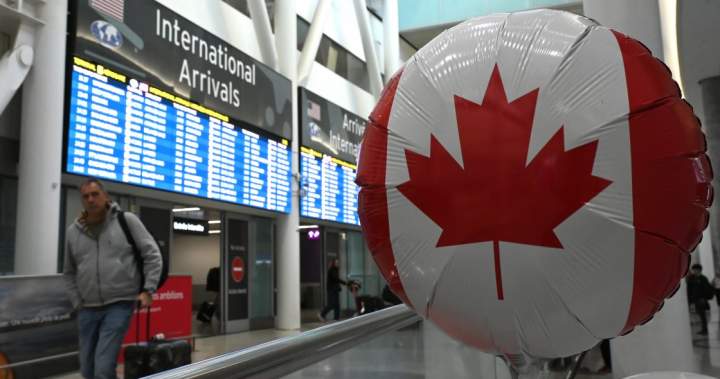
Canadian trips to the United States have fallen for thirteen consecutive months — and the latest numbers suggest the slide is accelerating rather than slowing down.
In January 2026, the number of Canadian residents returning from trips to the US dropped by 22% compared to January of the previous year. That is not a blip or a seasonal quirk. It is the latest data point in a prolonged downturn that is reshaping cross-border travel, straining small businesses, and pushing industry groups to demand urgent policy changes on both sides of the border.
For the communities that depend on Canadian visitors crossing into the United States — and the businesses that serve travelers heading in both directions — the numbers tell a story that is hard to ignore.
(function(){var wrp=document.getElementById(“paap_stat_69c46e0a6cd214.37784587”);if(!wrp)return;var ids=[“paap_stat_69c46e0a6cd214.37784587_c0″,”paap_stat_69c46e0a6cd214.37784587_c1”];var dur=1800;function ease(t){return 1-Math.pow(1-t,3);}function anim(){ids.forEach(function(id){var el=document.getElementById(id);if(!el)return;var tgt=parseFloat(el.getAttribute(“data-target”))||0;var pfx=el.getAttribute(“data-prefix”)||””;var sfx=el.getAttribute(“data-suffix”)||””;var dec=parseInt(el.getAttribute(“data-decimals”))||0;var st=null;function step(ts){if(!st)st=ts;var p=Math.min((ts-st)/dur,1);var v=ease(p)*tgt;el.textContent=pfx+v.toFixed(dec)+sfx;if(p<1)requestAnimationFrame(step);}requestAnimationFrame(step);});}if("IntersectionObserver" in window){var obs=new IntersectionObserver(function(e){e.forEach(function(en){if(en.isIntersecting){anim();obs.disconnect();}});},{threshold:0.2});obs.observe(wrp);}else{anim();}})();
Why Canadian Travel to the US Has Been Falling for Over a Year
The 22% drop in January 2026 did not happen in isolation. It is the thirteenth month in a row that cross-border travel figures have come in lower than the same month a year earlier. That kind of sustained, unbroken decline points to something structural — not just a bad weather month or a holiday timing issue.
The pressure is being felt most acutely at land border crossings. These are the busiest corridors for everyday cross-border movement — shopping trips, day visits, weekend getaways — the kind of travel that may not make headlines but quietly underpins the economies of dozens of communities on both sides of the border.
Industry representatives argue that the downturn reflects a combination of economic pressures, policy misalignment, and a broader shift in Canadian consumer sentiment toward traveling within Canada rather than south of the border. The result is a tourism ecosystem under real strain.
The Numbers Behind the Decline
The data available from Here is what the figures show:
| Metric | Detail |
|---|---|
| January 2026 decline | 22% drop in Canadian return visits from the US year-over-year |
| Consecutive months of decline | 13 months of unbroken year-over-year decreases |
| Most affected businesses | Canadian land border duty-free retailers |
| Primary concern | Competitive disadvantage vs. US counterparts due to Canadian tourism policy |
The consistency of the decline is arguably more alarming than any single month’s figure. A 22% drop in one month could have many explanations. Thirteen straight months of decline points to something that has fundamentally changed in how Canadians are thinking about travel to the United States.
Small Businesses Are Bearing the Heaviest Load
When cross-border travel slows, the economic pain does not fall evenly. It concentrates in the businesses that exist specifically because of that movement — and few are more exposed than Canadian land border duty-free retailers.
These shops operate in a narrow commercial niche. They depend almost entirely on travelers crossing the border, and they have little ability to pivot to a different customer base when that traffic dries up. Industry representatives have been vocal about what they see as an unfair playing field, arguing that Canadian tourism policies have placed these operators at a structural disadvantage compared to their counterparts on the US side of the border.
The concern is not just about individual store survival. It is about the ripple effects across border communities — the restaurants, hotels, fuel stations, and local services that benefit when cross-border traffic flows freely. When the travelers stop coming, those businesses feel it too.
Advocates argue that without policy changes to level the competitive landscape, the damage to these communities will compound over time, making recovery harder the longer the situation persists.
What the Industry Is Demanding — and Why It Matters Now
The response from industry groups has shifted from concern to urgency. Representatives are no longer simply flagging a worrying trend — they are making direct appeals for policy intervention, framing the situation as one that requires action before more businesses reach a breaking point.
The central argument is straightforward: Canadian operators serving cross-border travelers should not be at a systematic disadvantage because of how domestic tourism policy is structured. If the rules favor US competitors, then Canadian businesses will continue to lose ground even as they try to serve a shrinking pool of travelers.
The appeals are focused on creating what industry voices describe as fair competition — a policy environment that does not structurally tilt the playing field away from Canadian operators. Whether those appeals gain traction with policymakers remains to be seen, but the thirteen-month decline has given the argument a statistical backbone that is difficult to dismiss.
What Comes Next for Cross-Border Travel
The trajectory of this story will depend on several factors playing out simultaneously. On the demand side, the question is whether Canadian travelers’ appetite for US trips will stabilize or continue to erode. Thirteen months of consecutive decline suggests the shift in behavior has taken root — reversing it will likely require more than a single policy adjustment or a change in exchange rates.
On the policy side, the industry’s appeals are now on the record. Whether Canadian authorities respond with concrete changes to tourism and border retail policy — and how quickly — will determine whether the duty-free sector and broader cross-border retail economy can stabilize before more businesses close.
For border communities, the stakes are high and the clock is running. Every additional month of decline makes the path back to previous traffic levels longer and harder to walk.
Frequently Asked Questions
How much have Canadian trips to the US fallen in 2026?
In January 2026, Canadian return visits from the US dropped by 22% compared to January of the previous year.
How long has this decline been going on?
The downturn has lasted at least thirteen consecutive months, with every month showing a year-over-year decrease in cross-border travel.
Which businesses are most affected by the drop in Canadian travel to the US?
Canadian land border duty-free retailers are among the hardest hit, as they depend almost entirely on transborder tourism for their revenue.
What are industry groups asking for?
Industry representatives are calling for policy changes to create fair competition, arguing that current Canadian tourism policies place small cross-border operators at a disadvantage compared to their US counterparts.
Has the Canadian government responded to the industry’s appeals?
This has not yet been confirmed in available reporting — the appeals are on record, but specific government responses have not been detailed in
Are other businesses beyond duty-free shops affected?
Yes — the broader cross-border retail and travel-related economy is impacted, including communities and businesses that rely on visitor spending generated by cross-border traffic.



Leave a Reply