
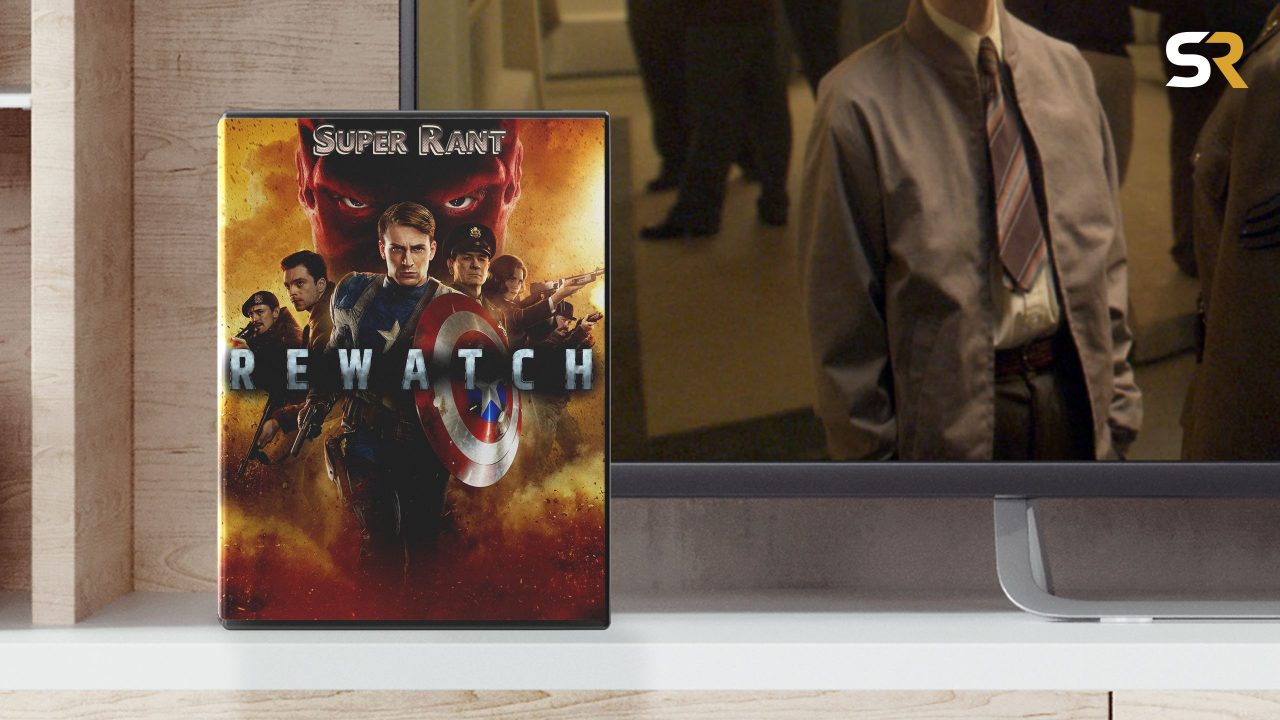
More than a decade after its release, Captain America: The First Avenger still does something almost no other Marvel film has managed to replicate: it roots a superhero story so completely in a specific historical moment that the setting itself becomes part of the character. With Steve Rogers set to return to the MCU in the upcoming Avengers: Doomsday, there’s never been a better time to revisit what made the 2011 original work — and what still holds it back.
The film arrived as the penultimate Phase 1 entry before Marvel’s very first Avengers movie, carrying the weight of introducing both a hero and an entire era. Looking back now, it’s clear that The First Avenger made choices that have aged remarkably well, even if a few others have not.
Chris Evans plays Steve Rogers, a scrappy, undersized kid from Brooklyn who becomes Captain America after receiving the Super Soldier Serum — and the film’s World War II backdrop gives that transformation a weight and moral clarity that many later MCU entries struggle to find. It’s a simpler story, but simplicity, it turns out, can be a genuine strength.
Why the World War II Setting Still Works So Well
The MCU has visited a lot of time periods and corners of the universe over the years, but few settings have been used as effectively as the 1940s backdrop of The First Avenger. The wartime aesthetic isn’t just decoration — it defines the stakes, the tone, and the moral framework that makes Steve Rogers feel like a genuinely distinct kind of hero.
There’s something grounding about a superhero story told against a historical backdrop this specific. The enemy is clear, the sacrifice is real, and the period detail gives the film a texture that purely fictional settings often can’t match. That’s what makes Captain America: The First Avenger stand out as one of the MCU’s strongest period pieces — it doesn’t just use history as wallpaper. It uses it as the foundation of everything.
That approach also helped the film do its job as an origin story. By the time Steve Rogers picks up his shield, viewers understand exactly who he is and why he fights — not because of the serum, but because of the man he already was before it.
The Pacing Problem That Still Lingers
None of this means The First Avenger is a flawless film. One of the most common criticisms of the movie is its uneven pacing, and it’s a fair one. The film’s first act — before Steve becomes Captain America — is carefully constructed and character-driven. Then the serum changes everything, and the movie shifts gears dramatically.
Once Rogers transforms, the film accelerates through major montage sequences that cover a significant portion of his wartime career. While those montages include some genuinely exciting action, including what many consider among the best action sequences in the entire film, they come at a cost. There’s less room for the kind of character development the early scenes promised.
The result is a movie that feels slightly imbalanced — rich and patient in its setup, then almost hurried through its middle section. It’s a structural tension that has followed the film through every rewatch, and it’s worth acknowledging even by those who love it.
How The First Avenger Compares to Other MCU Period Films
| Film | Year Released | MCU Phase | Historical Setting |
|---|---|---|---|
| Captain America: The First Avenger | 2011 | Phase 1 | World War II, 1940s |
| Captain Marvel | 2019 | Phase 3 | 1990s |
| Guardians of the Galaxy Vol. 2 | 2017 | Phase 3 | 1980s (prologue) |
| Ant-Man | 2015 | Phase 2 | 1980s (prologue) |
Among these, The First Avenger commits most fully to its period setting — not just for a prologue or a brief flashback, but for the entire runtime. That sustained commitment is a big part of why it registers so differently from the rest.
What This Film Actually Built for the MCU
It’s easy to underestimate how much structural work The First Avenger was doing in 2011. As the penultimate Phase 1 film, it needed to introduce Steve Rogers, establish the Tesseract as a major threat, and set the stage for The Avengers — all while telling a self-contained story that worked on its own terms.
The fact that it mostly pulled that off is genuinely impressive. The film laid a foundation for Steve Rogers as a character that carried through more than a decade of MCU storytelling. His values, his sense of sacrifice, and his relationship to a world that kept moving without him — all of it traces back to choices made in this 2011 film.
Simpler foundations, it turns out, can age quite well. With Steve Rogers returning in Avengers: Doomsday, there’s a real argument that going back to The First Avenger is the best possible preparation — not just for plot context, but for a reminder of who this character actually is at his core.
What to Watch For on a Rewatch
- The early pre-serum scenes, which establish Steve’s character more clearly than almost anything that follows
- The montage sequences, which pack in some of the film’s strongest action despite moving quickly
- The World War II aesthetic details that give the film its distinctive texture among MCU entries
- How the film plants the seeds for Steve’s later MCU journey, particularly his sense of displacement and sacrifice
- The pacing shift that happens immediately after the Super Soldier transformation — worth watching with fresh eyes
Frequently Asked Questions
When was Captain America: The First Avenger released?
The film was released in 2011 as the penultimate Phase 1 entry in the Marvel Cinematic Universe, arriving just before the first Avengers movie.
Who plays Steve Rogers in The First Avenger?
Chris Evans plays Steve Rogers, also known as Captain America, throughout the film and across his subsequent MCU appearances.
What is the main criticism of The First Avenger?
The most common criticism is the film’s uneven pacing, particularly the rapid montage sequences that follow Steve Rogers receiving the Super Soldier Serum, which some feel come at the expense of deeper character development.
Why is The First Avenger considered the MCU’s best period piece?
The film is considered a standout period piece because it commits fully to its World War II setting for the entire runtime, using the historical backdrop as the foundation of its story rather than just a stylistic detail.
Is Steve Rogers returning to the MCU?
According to
Does The First Avenger hold up more than a decade later?
The film is widely regarded as holding up well overall, with its unique setting and strong character foundation aging better than some of its structural pacing issues.


Leave a Reply