
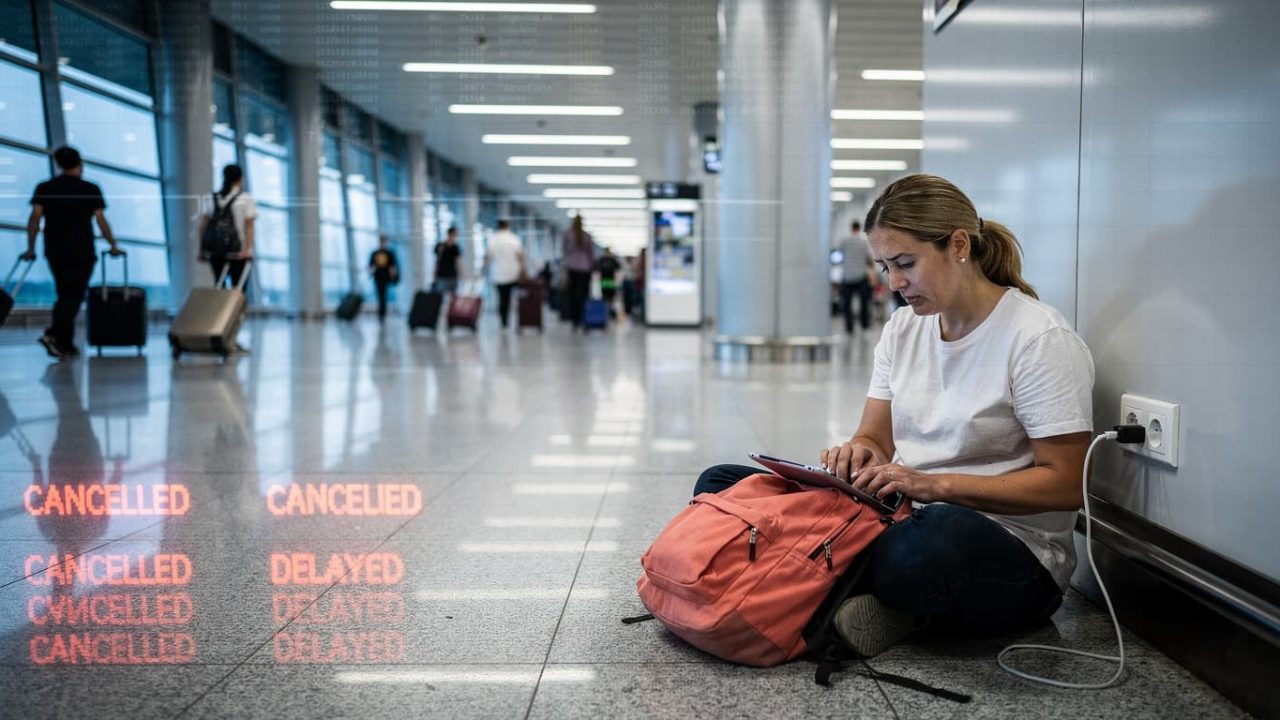
In a single day, Chinese airlines cancelled 31 flights and delayed 771 more, leaving hundreds of passengers stranded across some of the country’s busiest travel hubs. The scale of the disruption was hard to miss — packed departure halls, overwhelmed airline staff, and a flood of complaints spreading rapidly across social media.
The airlines at the center of the chaos were Air China, China Express Airlines, and China Eastern. Together, their combined disruptions rippled through major cities including Beijing, Shanghai, Guangzhou, Shenzhen, Chengdu, Chongqing, Xi’an, Kunming, and Wuhan — essentially blanketing the country’s primary aviation network in delays and uncertainty.
For travelers caught in the middle, the immediate reality was frustrating and exhausting: long queues with little information, scrambled rebooking attempts, and a last-minute hunt for accommodation in cities already strained by the sudden influx of stranded passengers.
(function(){var wrp=document.getElementById(“paap_stat_69c65dc635d608.56293898”);if(!wrp)return;var ids=[“paap_stat_69c65dc635d608.56293898_c0″,”paap_stat_69c65dc635d608.56293898_c1”];var dur=1800;function ease(t){return 1-Math.pow(1-t,3);}function anim(){ids.forEach(function(id){var el=document.getElementById(id);if(!el)return;var tgt=parseFloat(el.getAttribute(“data-target”))||0;var pfx=el.getAttribute(“data-prefix”)||””;var sfx=el.getAttribute(“data-suffix”)||””;var dec=parseInt(el.getAttribute(“data-decimals”))||0;var st=null;function step(ts){if(!st)st=ts;var p=Math.min((ts-st)/dur,1);var v=ease(p)*tgt;el.textContent=pfx+v.toFixed(dec)+sfx;if(p<1)requestAnimationFrame(step);}requestAnimationFrame(step);});}if("IntersectionObserver" in window){var obs=new IntersectionObserver(function(e){e.forEach(function(en){if(en.isIntersecting){anim();obs.disconnect();}});},{threshold:0.2});obs.observe(wrp);}else{anim();}})();
What Caused the Widespread Flight Disruptions Across China
What is clear is that the disruptions were widespread enough to affect nearly every major city in China’s aviation network simultaneously.
When disruptions hit at this scale and across this many carriers at once, the effects compound quickly. A delayed inbound aircraft means a delayed outbound flight. Gate conflicts build. Crew scheduling falls apart. What begins as one airline’s problem becomes every traveler’s problem within hours.
Airline staff on the ground bore the brunt of passenger frustration, struggling to manage the surge of inquiries and complaints as terminals filled beyond comfortable capacity. Social media became an overflow channel, with images of packed departure halls circulating widely and travelers venting about poor communication from carriers.
The Cities and Airlines at the Center of the Crisis
The disruptions did not concentrate in one region — they spread across China’s entire domestic aviation map. Here is a breakdown of what the confirmed reporting shows:
| Airline | Role in Disruption |
|---|---|
| Air China | One of three carriers with confirmed cancellations and delays |
| China Express Airlines | One of three carriers with confirmed cancellations and delays |
| China Eastern | One of three carriers with confirmed cancellations and delays |
The cities confirmed as affected span every major region of the country:
- North: Beijing
- East: Shanghai
- South: Guangzhou, Shenzhen
- Southwest: Chengdu, Chongqing, Kunming
- Northwest: Xi’an
- Central: Wuhan
With nine major cities affected and three of China’s prominent carriers involved, this was not a localized event — it was a systemic disruption that touched virtually every corner of the country’s domestic flight network.
What Stranded Passengers Were Actually Facing on the Ground
Numbers tell part of the story. What they don’t fully capture is what it felt like to be in one of those terminals. Passengers who had planned connections, business meetings, family visits, or onward international travel found themselves stuck with few immediate options and limited support.
Rebooking under normal circumstances is inconvenient. Rebooking when hundreds of other passengers are simultaneously trying to do the same thing — across multiple airlines, in multiple cities — is a different experience entirely. Airline staff were visibly overwhelmed, and the communication coming from carriers was described as poor, leaving many travelers without clear guidance on next steps.
For those who couldn’t rebook quickly, the secondary problem was accommodation. Finding last-minute hotel rooms near major Chinese airports during a mass disruption event is neither easy nor cheap, and the sudden demand surge from stranded travelers put pressure on nearby options almost immediately.
Social media gave the disruption a visibility it might not have had in earlier eras. Images of overcrowded terminals spread quickly, amplifying public frustration and putting additional pressure on the airlines to respond.
What Travelers Should Expect Going Forward
The confirmed reporting does not include a timeline for full restoration of services, nor does it identify the underlying cause of the disruptions or outline any formal response from Chinese aviation authorities. Those details, if and when they emerge, will be important for anyone with upcoming travel through the affected hubs.
What travelers planning to fly through Beijing, Shanghai, Guangzhou, or any of the other affected cities can do right now is monitor their flight status closely, ensure they have flexible rebooking options where possible, and keep an eye on communications from their specific carrier.
Large-scale disruptions like this one also tend to generate follow-up scrutiny — from passengers seeking compensation, from consumer advocates pressing for clearer communication standards, and sometimes from regulators reviewing how airlines handled the crisis. Whether any of that follows this particular event has not yet been confirmed.
For now, the priority for affected passengers is practical: confirm your rebooked flight, keep documentation of any expenses incurred, and follow up directly with your airline regarding any compensation entitlements under applicable Chinese aviation regulations.
Frequently Asked Questions
Which airlines were involved in the China flight disruptions?
Air China, China Express Airlines, and China Eastern were the three carriers confirmed to have cancellations and delays during the disruption event.
How many flights were cancelled and delayed in total?
A total of 31 flights were cancelled and 771 were delayed across the affected cities in a single day.
Which cities were affected by the disruptions?
Confirmed affected cities include Beijing, Shanghai, Guangzhou, Shenzhen, Chengdu, Chongqing, Xi’an, Kunming, and Wuhan.
What caused the mass flight cancellations and delays?
The specific cause of the disruptions has not been confirmed in the available reporting at this time.
What should stranded passengers do to seek compensation?
Passengers should document all expenses, keep records of their disrupted itineraries, and contact their airline directly regarding compensation entitlements under Chinese aviation regulations. Specific compensation guidance from the airlines involved has not yet been confirmed.
Has normal service been restored across the affected hubs?
A timeline for full service restoration has not been confirmed in the available reporting.



Leave a Reply