
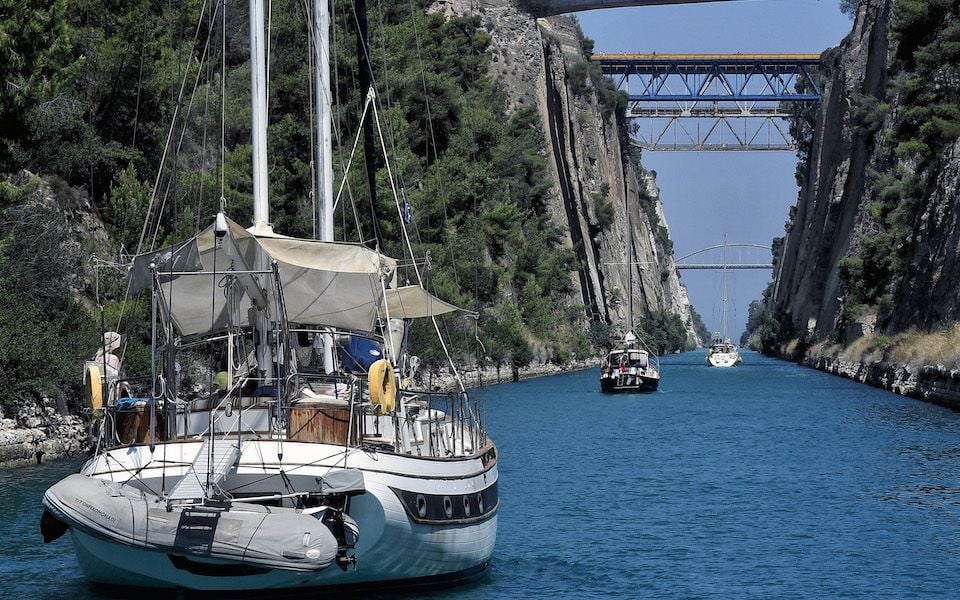
After more than seven months of intensive repair work, one of Greece’s most dramatic engineering landmarks is finally preparing to welcome traffic again. The Corinth Canal — the narrow, cliff-lined waterway that slices through the Isthmus of Corinth to connect the Aegean Sea with the Ionian Sea — is expected to reopen to light shipping in July 2026, according to Greece’s Ministry of Infrastructure and Transport.
The canal has been closed since repair works began in mid-November 2025, following a series of rockfalls and landslides that made safe passage through the waterway impossible. For a structure that has defined Greek geography and maritime history for well over a century, the closure was a significant disruption — and the reopening is being closely watched by travellers, historians, and the shipping industry alike.
If you’re planning a trip to the Greek Peloponnese or simply following the story from afar, here’s everything confirmed so far about what happened, what was done, and what comes next.
Why the Corinth Canal Was Forced to Close
The Corinth Canal has always been a challenging structure to maintain. Carved through solid rock, its near-vertical limestone walls rise dramatically above the water — creating the iconic visual that makes the canal one of Greece’s most photographed sites. But those same walls are also vulnerable to erosion, seismic activity, and geological instability over time.
The closures that triggered the latest round of repairs were caused by rockfalls and landslides along the canal’s route. These aren’t entirely new problems for the waterway — the canal has faced periodic closures due to similar geological issues over the years — but the scale of the damage this time required a sustained, technically complex intervention before any vessels could safely pass through again.
Repair works launched in mid-November 2025 and have been ongoing since, with teams focused on stabilising the canal walls and clearing debris that had fallen into the water.
What the Repair Project Actually Involved
Greek Infrastructure and Transport Minister Christos Dimas acknowledged the complexity of the work, particularly highlighting a challenging one-kilometre section of the canal that required significant attention. Officials have confirmed the project involved multiple layers of technical intervention, not simply clearing fallen rock.
Key elements of the repair and stabilisation project include:
- Stabilisation work along a critical one-kilometre section of the canal
- Infrastructure work near a bridge carrying sewage pipelines
- Removal of debris that had accumulated in the canal following the rockfalls and landslides
- Broader stabilisation measures designed to ensure safe long-term operation of the waterway
Officials have described the project as having made substantial progress, with the July 2026 reopening date now considered realistic based on the current pace of work.
A Waterway With a Remarkable History
The Corinth Canal is not just a piece of infrastructure — it’s a landmark with deep historical roots. The idea of cutting a canal through the Isthmus of Corinth dates back to antiquity, with ancient rulers recognising that the narrow strip of land between the Gulf of Corinth and the Saronic Gulf forced ships to take a long detour around the entire Peloponnese peninsula.
The canal that exists today was constructed in the late 19th century and completed in 1893. At roughly 6.3 kilometres long and only about 21 metres wide, it remains one of the narrowest canals used by commercial and passenger vessels anywhere in the world. Its sheer cliff walls, rising around 90 metres above the water level, create an almost tunnel-like passage that has fascinated visitors for generations.
| Feature | Detail |
|---|---|
| Location | Isthmus of Corinth, Greece |
| Connects | Aegean Sea and Ionian Sea |
| Year completed | 1893 |
| Approximate length | 6.3 kilometres |
| Approximate width | 21 metres |
| Closure began | Mid-November 2025 |
| Expected reopening | July 2026 (light shipping) |
| Cause of closure | Rockfalls and landslides |
What This Means for Travellers and Tourists
For most visitors to the region, the Corinth Canal is primarily a tourist attraction rather than a working shipping route. The canal’s viewing bridges draw enormous numbers of travellers each year, and the area around it — including the ancient city of Corinth nearby — forms a key stop on many Peloponnese itineraries.
The reopening in July 2026 is particularly well-timed from a tourism perspective. July sits squarely in Greece’s peak summer travel season, meaning the restored waterway should be accessible to the large numbers of visitors who pass through the region during those months.
For those who enjoy watching vessels navigate the impossibly narrow passage — one of the more surreal sights in European travel — the return of light shipping traffic will restore one of the canal’s most memorable experiences. Cruise passengers and small vessel operators who use the canal as part of Greek island itineraries will also benefit from the resumption of passage.
Travellers planning to visit the area before July should be aware that the canal remains closed to shipping during the ongoing repair period, though the viewing infrastructure around the canal may still be accessible — this has not been separately confirmed in available reporting.
What Happens Between Now and July
With the Greek Ministry of Infrastructure and Transport confirming substantial progress as of March 2026, the focus now shifts to completing the remaining stabilisation work and final safety clearances before the July reopening.
The work still underway includes finalising the stabilisation near the sewage pipeline bridge and ensuring the full one-kilometre section identified as most complex meets safety standards for vessel passage. Officials have framed July as the target for light shipping specifically — suggesting that the initial reopening may be limited in terms of the vessel sizes permitted to transit.
Whether larger commercial vessels will follow on a separate timeline has not yet been confirmed in available reporting. Travellers and operators planning around the canal’s return should monitor updates from the Greek Ministry of Infrastructure and Transport as the July date approaches.
Frequently Asked Questions
When is the Corinth Canal expected to reopen?
The canal is expected to reopen to light shipping in July 2026, according to Greece’s Ministry of Infrastructure and Transport.
Why was the Corinth Canal closed?
The canal was closed following a series of rockfalls and landslides that disrupted operations along the waterway, with repair works beginning in mid-November 2025.
How long have the repair works been ongoing?
Repair and stabilisation works have been underway since mid-November 2025, meaning the closure will have lasted more than seven months by the time the July 2026 reopening occurs.
What work has been carried out on the canal?
Work has included stabilising a critical one-kilometre section of the canal, infrastructure repairs near a bridge carrying sewage pipelines, and the removal of debris from the waterway.
Will all types of vessels be able to use the canal when it reopens?
The confirmed reopening applies to light shipping. Whether larger commercial vessels will be permitted on a separate timeline has not yet been confirmed.
Who confirmed the July 2026 reopening date?
Greece’s Ministry of Infrastructure and Transport confirmed the expected reopening, with Minister Christos Dimas highlighting the progress made and the complexity of the work involved.




Leave a Reply