
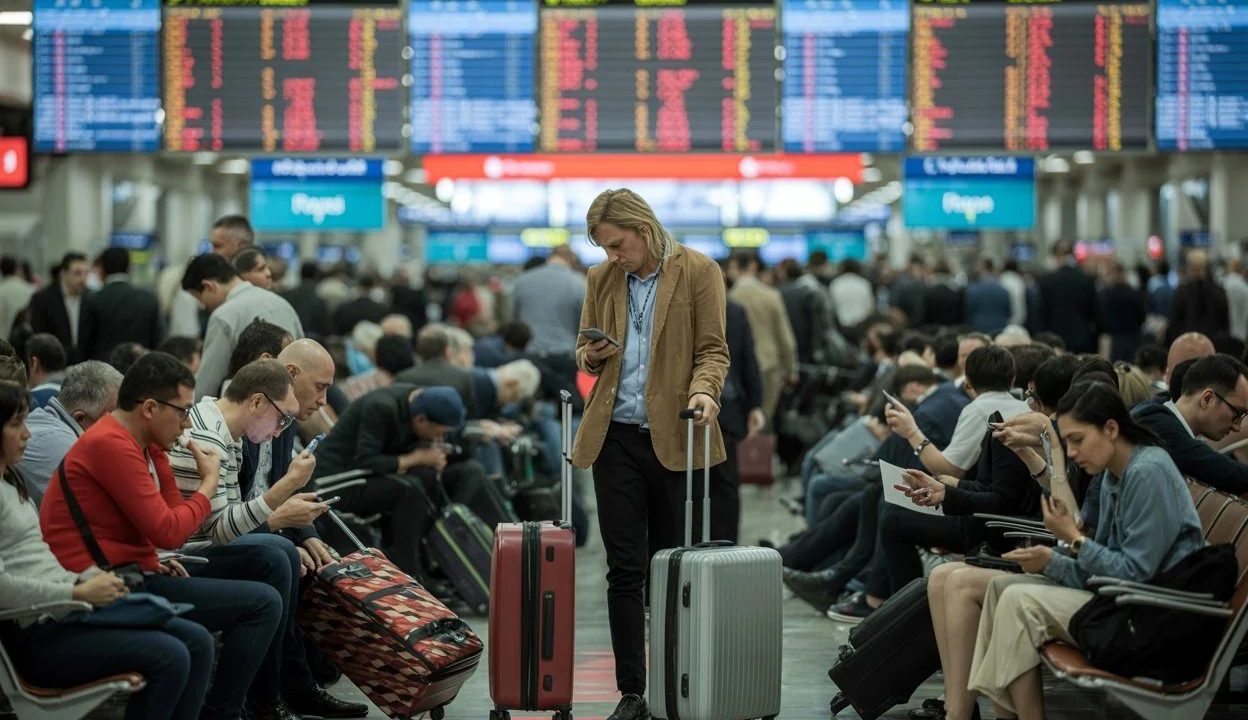
Six major Chinese airports. 649 delayed flights. 39 cancellations. On March 18, 2026, hundreds of travelers across some of China’s busiest air hubs found themselves stranded, staring at departure boards that no longer matched the boarding passes in their hands.
The disruption stretched from Shanghai in the east to Hohhot in the north, hitting airports that collectively handle millions of passengers every week. Families, students, and business travelers alike were caught in the chaos — some mid-journey, others who hadn’t yet left the gate area when the news came through.
For anyone with plans to fly into or out of these cities on that date, the day did not go as expected. Here is what happened, where the disruptions hit hardest, and what it means for passengers still navigating the fallout.
Which Airports Were Hit and How Bad Was It
The disruption was not isolated to one region or one carrier. Six airports across China reported significant flight delays and cancellations on March 18, 2026, spanning the country’s northeast, northwest, north, and eastern coastal regions.
The affected airports included:
- Shanghai Pudong International Airport — one of China’s two major international gateways, and among the busiest in the world by passenger volume
- Nanjing Lukou International Airport — a key hub serving eastern China’s Yangtze River Delta region
- Xi’an Xianyang International Airport — the primary airport for northwest China and one of the country’s fastest-growing aviation hubs
- Harbin Taiping International Airport — the main gateway to China’s northeastern Heilongjiang province
- Taiyuan Wusu International Airport — serving Shanxi province in northern China
- Hohhot Baita International Airport — the principal airport for Inner Mongolia
At Shanghai Pudong, the scale of the disruption was visible in real time. Travelers leaned against luggage in the vast terminals, crowding around power stations to keep phones charged as they waited for updates that were slow to come.
The Flights Affected: A Breakdown of the Disruption
The combined figures across all six airports paint a picture of a significant, multi-city aviation breakdown.
| Metric | Total Confirmed |
|---|---|
| Flights Delayed | 649 |
| Flights Canceled | 39 |
| Airports Affected | 6 |
| Date of Disruption | March 18, 2026 |
Destinations that saw disrupted connections included Beijing, Guangzhou, Chengdu, and Shenzhen — four of China’s most important aviation markets. These are not secondary routes. They are among the highest-traffic domestic corridors in the country, meaning the ripple effects of delays at one end tend to compound quickly at the other.
A delay leaving Shanghai does not just affect the passengers on that plane. It delays the aircraft’s next departure, the crew’s next rotation, and the connecting passengers waiting at the destination airport. By mid-morning on a day like this, the knock-on effects can stretch well into the evening schedule.
Who Was Stranded and What They Faced
The people caught in this disruption were not a single type of traveler. They included families traveling together, likely some heading home or beginning holidays. Business travelers with meetings and schedules built around tight connections. Students returning to universities after breaks. Older passengers less familiar with the process of rebooking or navigating airport information systems under pressure.
At Pudong, the scene was one many frequent flyers will recognize: crowded gate areas, long queues at airline service desks, and the particular exhaustion that comes from not knowing how long the wait will be or what options are actually available.
For passengers whose flights were canceled outright — 39 in total across the six airports — the situation was more acute. Cancellations typically require rebooking onto new flights, which on a day of widespread disruption can mean waiting hours or even overnight for the next available seat.
Those on delayed flights faced a different but equally frustrating situation: uncertain timelines, missed connections at destination airports, and the downstream consequences of arriving hours behind schedule — missed meetings, lost hotel nights, disrupted onward travel plans.
Why Large-Scale Flight Disruptions Happen at This Scale
What is known from general aviation context is that events affecting multiple airports across different regions of a country simultaneously often point to systemic factors — air traffic control constraints, adverse weather patterns affecting flight corridors, or cascading delays triggered when a high volume of aircraft cannot maintain their scheduled rotation.
China’s domestic aviation network is one of the densest in the world. Hundreds of flights operate between major city pairs every single day. When disruptions occur at hub airports like Shanghai Pudong, the effects do not stay local. They travel through the network, arriving at Guangzhou, Beijing, Chengdu, and Shenzhen in the form of delayed inbound aircraft that cannot turn around and depart on time.
The scale of 649 delays across six airports in a single day reflects both the density of the network and the difficulty of absorbing disruption without significant passenger impact.
What Affected Passengers Should Know
If you were among those caught in this disruption — or if you have upcoming travel through any of these airports — a few practical points are worth keeping in mind.
- Passengers on canceled flights are generally entitled to rebooking or refunds under Chinese civil aviation regulations, though the specific process depends on the airline and the stated reason for cancellation.
- Delayed passengers should check directly with their airline for updated departure times rather than relying solely on airport departure boards, which can lag behind real-time scheduling changes.
- Those with onward connections should contact their airline proactively to flag missed or at-risk connections — airlines can often rebook connecting legs before the disruption compounds further.
- Travel insurance policies that include trip delay or cancellation coverage may apply in situations like this, depending on the policy terms and the cause of the disruption.
Disruptions of this scale are disruptive by definition — but how quickly passengers can move through the rebooking process often depends on how proactively they engage with airline staff and their own coverage options.
Frequently Asked Questions
How many flights were delayed across the six Chinese airports on March 18, 2026?
A total of 649 flights were delayed across the six affected airports on that date.
How many flights were canceled?
39 flights were canceled across the affected airports.
Which airports were affected by the disruptions?
The six airports affected were Shanghai Pudong, Nanjing Lukou, Xi’an Xianyang, Harbin Taiping, Taiyuan Wusu, and Hohhot Baita.
Which destinations were disrupted by these delays and cancellations?
Passengers heading to Beijing, Guangzhou, Chengdu, and Shenzhen were among those whose plans were disrupted.
What caused the mass flight delays and cancellations?
The specific cause of the disruption has not been confirmed in the available source material.
What options do passengers have if their flight was canceled?
Passengers on canceled flights should contact their airline directly regarding rebooking or refund options, and check whether their travel insurance policy covers trip disruptions of this kind.



Leave a Reply