

A new direct air route connecting southwest China to the tropical shores of Malaysian Borneo launched this month — and for Sabah, it could not have come at a better time.
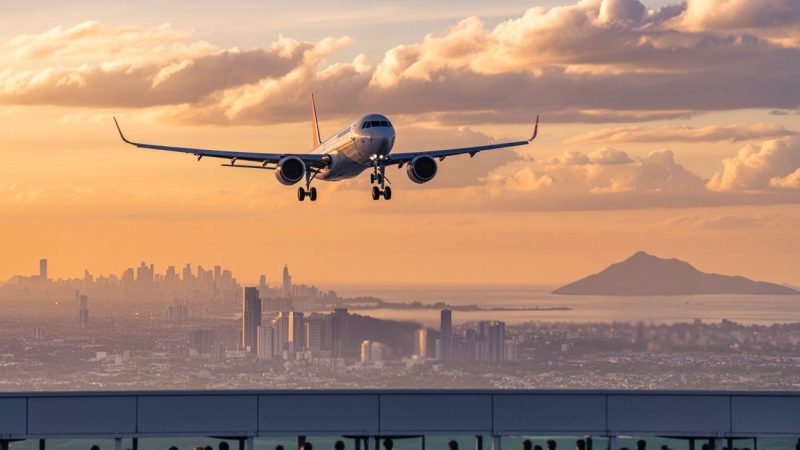
On March 21, 2026, the inaugural flight from Chongqing touched down at Kota Kinabalu International Airport (KKIA), operated by Chongqing Airlines under flight number OQ2193. The aircraft was greeted with a traditional water cannon salute, the kind of ceremony reserved for routes that carry real diplomatic and economic weight. This one certainly does.
The launch arrives as Malaysia ramps up its flagship Visit Malaysia 2026 campaign — a nationwide push to draw international visitors from across the globe. Sabah, with its rainforests, dive sites, and wildlife reserves, is one of the campaign’s most compelling cards to play. A direct connection from one of China’s largest inland cities makes that hand considerably stronger.
Why the Chongqing–Kota Kinabalu Route Actually Matters
Chongqing is not a peripheral city. It is one of China’s four direct-controlled municipalities, home to tens of millions of residents, and sits at the heart of southwest China’s growing middle class — a demographic with rising disposable income and an increasing appetite for international travel.
Until now, travelers from Chongqing looking to visit Sabah would have needed to connect through another hub, adding hours to the journey and friction to the decision. A direct service changes that calculation entirely. Fewer stops mean lower stress, lower cost in many cases, and a far more attractive proposition for the leisure traveler weighing their options.
Chongqing Airlines is a subsidiary within China’s aviation network, and its decision to launch this specific route signals commercial confidence in Sabah’s tourism appeal. Airlines do not open new international routes without data suggesting demand is there — or can be built.
The Flight Schedule: What Travelers Need to Know
The new service runs three times per week, giving travelers from Chongqing consistent and predictable access to Kota Kinabalu throughout the year. Here is a breakdown of the confirmed route details:
| Detail | Information |
|---|---|
| Airline | Chongqing Airlines |
| Flight Number | OQ2193 |
| Route | Chongqing, China → Kota Kinabalu, Malaysia |
| Destination Airport | Kota Kinabalu International Airport (KKIA) |
| Frequency | Thrice-weekly |
| Operating Days | Tuesday, Thursday, Saturday |
| Inaugural Date | March 21, 2026 |
Three flights per week is a meaningful frequency for a newly launched international route. It offers enough capacity to serve both leisure tourists and, potentially, business travelers, while giving the airline room to assess demand before any further expansion.
Sabah’s Bigger Picture: Tourism, Connectivity, and Visit Malaysia 2026
Sabah has long been one of Southeast Asia’s most striking destinations — Mount Kinabalu, the Coral Triangle, the Danum Valley, the proboscis monkeys of the Kinabatangan River. The state has natural assets that rival almost anywhere on the planet. What it has sometimes lacked is the air connectivity to match.
That gap has been closing. The Chongqing Airlines route is part of a broader effort by Malaysian tourism authorities and aviation stakeholders to expand direct international access to Sabah, particularly from key source markets in Northeast and Southeast Asia.
The Visit Malaysia 2026 initiative provides a national framework for these efforts, giving airlines, hotels, and tour operators a unified campaign to rally behind. The timing of the Chongqing route launch — just as the campaign year gets underway — is clearly deliberate. Officials have noted that expanding connectivity from Chinese cities is central to the strategy, given China’s status as one of the world’s largest outbound tourism markets.
The water cannon salute at KKIA was not just ceremony. It was a public signal that Sabah’s tourism authorities view this route as a meaningful partnership, not merely a new flight on the departures board.
Who Stands to Benefit — and How
The most immediate beneficiaries are travelers in Chongqing and the broader southwest China region who have wanted to visit Sabah without the inconvenience of a connecting flight. For them, the route removes a genuine barrier.
On the Sabah side, the ripple effects are broader:
- Hotels and resorts in and around Kota Kinabalu can expect increased occupancy from Chinese visitors, particularly on the three operating days each week.
- Tour operators offering nature-based experiences — diving, jungle trekking, wildlife encounters — stand to gain from a new and direct feeder market.
- Local businesses in Kota Kinabalu’s city centre, from restaurants to retail, typically see uplift when new international routes bring fresh visitor spending.
- The airport itself benefits from increased international traffic, which supports the case for further infrastructure investment at KKIA.
For Malaysia’s tourism sector overall, every new direct international route into Sabah reinforces the state’s position as a world-class destination rather than a secondary stop on someone else’s itinerary.
What Comes Next for Sabah’s International Connectivity
The launch of the Chongqing–Kota Kinabalu route is a marker, not a finish line. The Visit Malaysia 2026 campaign runs through the year, and tourism authorities will be watching arrival numbers, hotel occupancy data, and visitor spending patterns closely to assess the route’s performance.
If demand on the Chongqing service proves strong, there is a natural conversation to be had about increasing frequency beyond three flights per week. Airlines respond to full aircraft. The more travelers from southwest China discover Sabah through this direct connection, the stronger the commercial argument becomes for deepening the service.
Beyond Chongqing, the broader goal is clear: more direct routes, from more Chinese cities and from other international markets, feeding into Kota Kinabalu and reinforcing Sabah’s standing as one of Asia’s premier nature tourism destinations. This route is a step in that direction — a concrete one, with a schedule and a flight number to prove it.
Frequently Asked Questions
Which airline operates the new direct flight from Chongqing to Kota Kinabalu?
The route is operated by Chongqing Airlines, under flight number OQ2193.
How often does the Chongqing–Kota Kinabalu flight operate?
The service runs three times per week, on Tuesdays, Thursdays, and Saturdays.
When did the inaugural flight arrive at Kota Kinabalu International Airport?
The first flight arrived on March 21, 2026, and was greeted with a traditional water cannon salute.
How does this route connect to Visit Malaysia 2026?
The new service is positioned as a key part of Malaysia’s Visit Malaysia 2026 tourism campaign, which aims to boost international visitor arrivals across the country, including to Sabah.
Are there plans to increase the flight frequency beyond three times per week?
This has not yet been confirmed in available information. The current schedule is thrice-weekly, and any expansion would likely depend on passenger demand.
Where does the flight arrive in Malaysia?
The flight lands at Kota Kinabalu International Airport (KKIA), the main gateway to Sabah on the island of Borneo.



Leave a Reply