
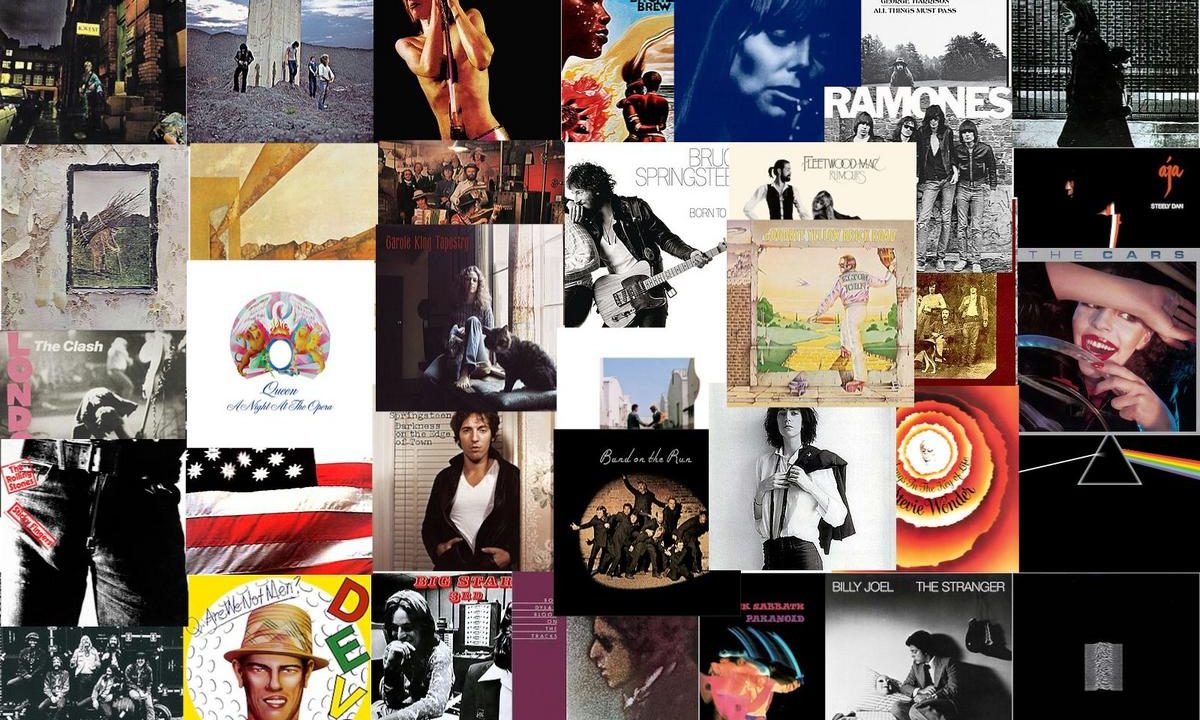
Some albums don’t just hold up — they feel like they were built to last forever. The 1970s produced an extraordinary run of classic rock records that still define what the genre can be at its absolute best: raw, ambitious, emotionally honest, and technically staggering all at once.
Debates about the greatest rock albums of the ’70s never really get old, and for good reason. These records shaped generations of musicians and listeners alike. Whether you grew up with them or discovered them later, there’s something about the best of that era that feels genuinely irreplaceable.
With that in mind, here’s a look at ten of the most celebrated and enduring classic rock albums of the 1970s — the kind that critics, fans, and musicians consistently return to when the conversation turns to perfection.
Why the 1970s Remain the Gold Standard for Classic Rock
The seventies were an unusual moment in music history. Record labels were giving artists enormous creative freedom. Studios were experimenting with new recording technology. And bands were coming off the explosive energy of the late ’60s, channeling it into something more expansive and compositionally ambitious.
The result was a decade-long streak of albums that didn’t just contain great songs — they worked as complete, cohesive artistic statements. Side A flowed into Side B. Lyrics wrestled with real themes. Arrangements were layered and deliberate. That combination is rare in any era, and the ’70s had it in abundance.
What makes an album “perfect” in this context? Consistency matters enormously — no filler, no obvious weak tracks. So does ambition: the sense that the band was reaching for something beyond a collection of singles. And then there’s longevity: records that still sound vital decades after they were made.
The Albums That Define the Era
The following records represent the kind of work that earns the word “perfect” without much argument. They span hard rock, progressive rock, blues-influenced rock, and arena rock — but all share that quality of feeling complete, fully realized, and impossible to improve.
| Album | Artist | Year | Why It’s Considered Perfect |
|---|---|---|---|
| Led Zeppelin IV | Led Zeppelin | 1971 | Contains “Stairway to Heaven”; no weak tracks; peak of the band’s power |
| Rumours | Fleetwood Mac | 1977 | Emotionally raw, impeccably produced, every song a classic |
| Dark Side of the Moon | Pink Floyd | 1973 | Conceptually unified, sonically groundbreaking, endlessly re-listenable |
| Hotel California | Eagles | 1976 | Lush production, sharp songwriting, cultural staying power |
| Born to Run | Bruce Springsteen | 1975 | Cinematic scope, working-class urgency, career-defining performances |
| Exile on Main St. | The Rolling Stones | 1972 | Double album with no drop in quality; raw, sprawling, definitive |
| Tapestry | Carole King | 1971 | Intimate songwriting, extraordinary consistency, massive cultural impact |
| Goodbye Yellow Brick Road | Elton John | 1973 | Double album that justifies every minute; peak Elton John creativity |
| Who’s Next | The Who | 1971 | Synthesizer-driven rock at its finest; “Baba O’Riley” alone earns its place |
| Sticky Fingers | The Rolling Stones | 1971 | Bluesy, dangerous, perfectly sequenced — the Stones at a creative peak |
What These Records Actually Have in Common
Look at that list and a few patterns emerge immediately. Several of these albums came from the same two-year window — 1971 to 1973 — which suggests that something genuinely special was happening in rock music during that stretch. Bands were operating at peak confidence, studios were at peak capability, and the cultural appetite for ambitious rock was enormous.
There’s also the question of emotional range. The best of these records don’t stay in one lane. Rumours moves from heartbreak to defiance to quiet resignation within a single side. Dark Side of the Moon covers mortality, mental illness, greed, and time — and makes it all feel like a single continuous thought. That kind of thematic ambition is what separates a great album from a perfect one.
Production values matter too, but not in the way people sometimes assume. Some of these records are polished to a shine — Hotel California and Born to Run are meticulous. Others, like Exile on Main St., are deliberately rough and muddy. What they share is intentionality: every sonic choice feels deliberate, in service of something larger than any individual song.
Why These Albums Still Matter Today
Streaming data consistently shows that records like Dark Side of the Moon and Rumours attract millions of new listeners every year — people who weren’t alive when these albums were made. That’s not nostalgia driving those numbers. It’s genuine discovery.
Part of what keeps these records alive is how well they function as albums, not playlists. In an era when most music consumption happens one song at a time, there’s something almost radical about sitting with a record from start to finish and experiencing it the way it was designed to be heard. These ’70s classics reward that kind of attention in ways that most modern releases simply don’t.
They also hold up because the songwriting is durable. The themes — love, loss, ambition, disillusionment, freedom — don’t age. The production techniques that once felt cutting-edge have become foundational. And the performances, captured on tape with all their human imperfection, still feel alive in a way that heavily processed modern recordings sometimes don’t.
The Albums That Might Surprise You on This List
A few of these choices are worth pausing on. Tapestry by Carole King is sometimes overlooked in classic rock conversations because King is often categorized as a singer-songwriter rather than a rock artist — but the record’s influence on everything that followed is enormous, and its consistency is genuinely hard to match.
Similarly, Goodbye Yellow Brick Road tends to get treated as a singles collection rather than a cohesive album, but the full double-LP experience reveals a level of craft and variety that earns its reputation as one of Elton John’s greatest achievements.
And while the Rolling Stones appear twice on this list, the case for both Sticky Fingers and Exile on Main St. is genuinely strong. The early ’70s were simply the Stones at their most creatively fertile, and both records reflect that in different ways.
Frequently Asked Questions
What makes a classic rock album from the ’70s considered “perfect”?
A combination of consistency — no weak tracks — thematic ambition, strong production choices, and lasting cultural relevance are the key factors critics and fans typically point to.
Which bands appear most often on lists of the best ’70s classic rock albums?
Led Zeppelin, the Rolling Stones, Pink Floyd, Fleetwood Mac, and the Eagles consistently appear at the top of these discussions, with the Stones and Floyd often represented by multiple records.
Is Carole King’s Tapestry really considered a classic rock album?
While King is often categorized as a singer-songwriter, Tapestry is widely recognized as one of the most influential and consistent records of the early ’70s and frequently appears in classic rock conversations.
Why do so many of the best ’70s rock albums come from the early part of the decade?
The 1971–1973 period in particular saw bands operating at peak creative confidence, studios embracing new technology, and a strong cultural appetite for ambitious, album-length rock statements.
Do these albums still attract new listeners today?
Yes — streaming data consistently shows that records like Dark Side of the Moon and Rumours draw millions of new listeners annually, well beyond the generation that grew up with them.
Why does the Rolling Stones appear twice on this list?
Both Sticky Fingers (1971) and Exile on Main St. (1972) represent the band at a creative peak, and both are considered strong enough to stand independently as near-perfect records from that era.



Leave a Reply