
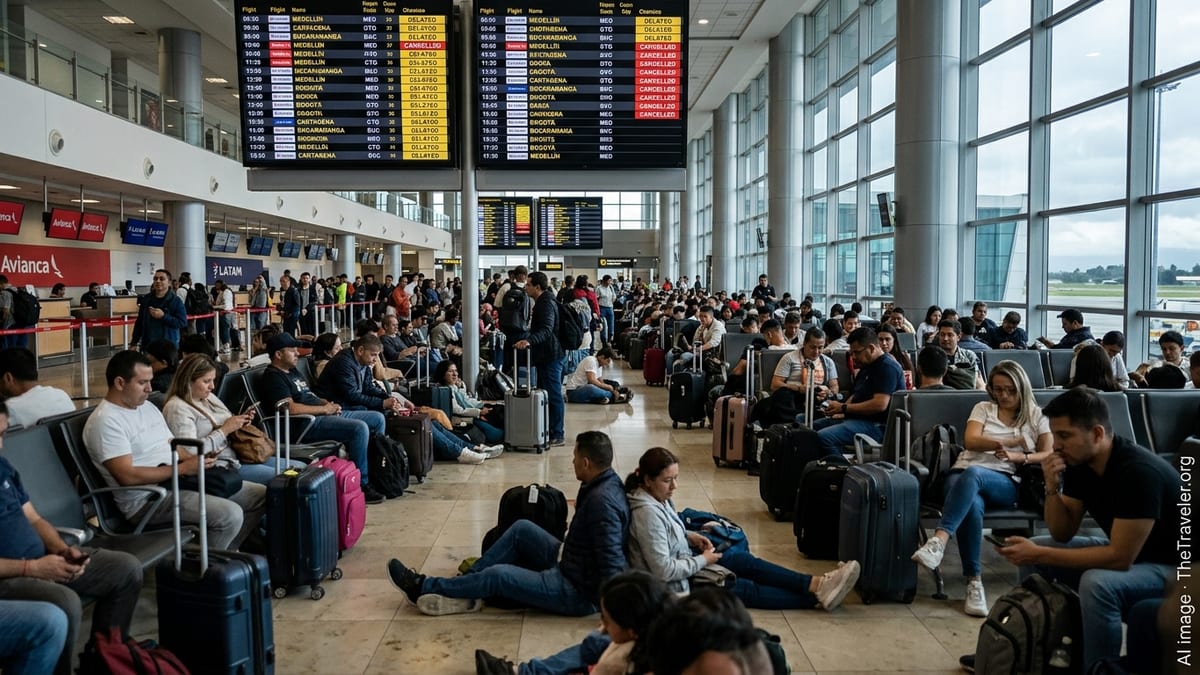
Twenty-six flights cancelled in a single wave — that’s the scale of disruption that hit Colombia’s aviation network this week, leaving passengers stranded or scrambling at three of the country’s most important airports.
The cancellations affected travelers flying with AVIANCA and ARE Airlines, with the chaos spreading across El Dorado International Airport in Bogota, Jose Maria Cordova International Airport serving Medellin and Rionegro, and Alfonso Bonilla Aragon International Airport in Cali. Destinations both domestic and international were hit, touching some of the busiest routes in Colombian aviation.
For anyone with travel plans through Colombia right now — or in the coming days — here’s what you need to know.
What Triggered the Colombia Flight Cancellations
Colombia’s aviation sector has been dealing with what officials have described as significant operational challenges, with the disruption this week representing one of the more visible episodes of turbulence the industry has faced recently.
Both AVIANCA — Colombia’s flagship carrier and one of the oldest airlines in the world — and ARE Airlines were caught up in the cancellations. The affected airports serve as critical hubs not just for domestic travel within Colombia but for connecting passengers to international routes across Latin America, North America, and beyond.
The breadth of the cancellations is what makes this situation notable. When disruptions hit Bogota’s El Dorado, Medellin’s Jose Maria Cordova, and Cali’s Alfonso Bonilla Aragon at the same time, the ripple effects move quickly through the entire travel network. A cancelled flight in one city can strand a connecting passenger in another.
The Airports and Routes Hit Hardest
The 26 cancellations were distributed across three major airports, with affected destinations including Bogota, Medellin, Cali, and Cartagena — four cities that together represent the backbone of Colombian domestic air travel. International routes were also disrupted, compounding the pressure on affected passengers.
| Airport | City | Airlines Affected |
|---|---|---|
| El Dorado International Airport | Bogota | AVIANCA, ARE Airlines |
| Jose Maria Cordova International Airport | Medellin / Rionegro | AVIANCA, ARE Airlines |
| Alfonso Bonilla Aragon International Airport | Cali | AVIANCA, ARE Airlines |
Among the domestic destinations disrupted were Bogota, Medellin, Cali, and Cartagena — cities that collectively handle millions of passengers per year. International routes connected to these hubs were also affected, meaning the impact extended well beyond Colombia’s borders for some travelers.
Who Is Actually Affected — and How Badly
The most immediate impact falls on passengers who had confirmed bookings on the 26 cancelled flights. For domestic travelers, that typically means delays of several hours or the need to rebook on the next available service — which, during a wave of cancellations, can mean waiting a full day or longer.
International travelers face a sharper problem. A cancelled connecting flight through Bogota or Medellin can cascade into missed international departures, hotel costs, and in some cases, visa complications if a traveler is stuck in transit longer than anticipated.
Business travelers, families with young children, and passengers with time-sensitive connections — medical appointments, cruise departures, visa appointment windows — are among those most vulnerable when a disruption of this scale hits without much warning.
Cartagena, one of Colombia’s top tourist destinations, was listed among the affected routes. For international visitors flying in or out of the coastal city, the cancellations represent a significant headache during what is typically a busy travel period.
What Passengers Should Do Right Now
If you have an upcoming flight with AVIANCA or ARE Airlines through any of the affected airports, the most important step is to check your booking status directly through the airline’s official app or website before heading to the airport. During mass cancellation events, airlines typically open rebooking options — sometimes at no extra cost — but those windows can close quickly.
Travelers who have already been affected should document everything: keep confirmation emails, take screenshots of cancellation notices, and hold onto any receipts for out-of-pocket expenses like accommodation or meals incurred because of the disruption. Under Colombian aviation consumer protection rules, passengers are generally entitled to assistance and compensation in cases of airline-initiated cancellations, though the specific entitlements depend on circumstances and timing.
Anyone transiting through Colombia on international routes should contact their onward carrier as well — not just the cancelled leg’s airline — to flag the situation and explore whether protections or rebooking options apply to connecting segments.
What Comes Next for Colombia’s Aviation Sector
Aviation disruptions of this scale tend to prompt scrutiny from regulators and calls for greater transparency from airlines about the root causes. Whether these cancellations stem from operational issues, staffing, technical factors, or something else entirely,
What is clear is that Colombia’s aviation sector is under pressure, and this week’s events have put a spotlight on the operational challenges facing carriers like AVIANCA and ARE Airlines. As the situation develops, passengers are advised to monitor official airline communications closely and stay flexible with their travel plans where possible.
The affected airports — El Dorado, Jose Maria Cordova, and Alfonso Bonilla Aragon — are among the busiest in South America, and any sustained disruption at these hubs has consequences that extend well beyond Colombia’s borders.
Frequently Asked Questions
How many flights were cancelled in Colombia this week?
A total of 26 flights were cancelled, affecting operations at three major Colombian airports.
Which airlines were involved in the cancellations?
AVIANCA and ARE Airlines were the two carriers whose flights were affected by the disruptions.
Which airports were hit by the cancellations?
El Dorado International Airport in Bogota, Jose Maria Cordova International Airport in Medellin/Rionegro, and Alfonso Bonilla Aragon International Airport in Cali were all affected.
Which destinations were disrupted?
Confirmed affected destinations include Bogota, Medellin, Cali, and Cartagena, as well as international routes connected to these hubs.
What caused the flight cancellations?
The specific cause has not been confirmed in available information at this time — travelers should check directly with their airline for updates.
What should affected passengers do?
Passengers should contact AVIANCA or ARE Airlines directly to explore rebooking options, and retain all documentation of expenses incurred due to the cancellations.




Leave a Reply