
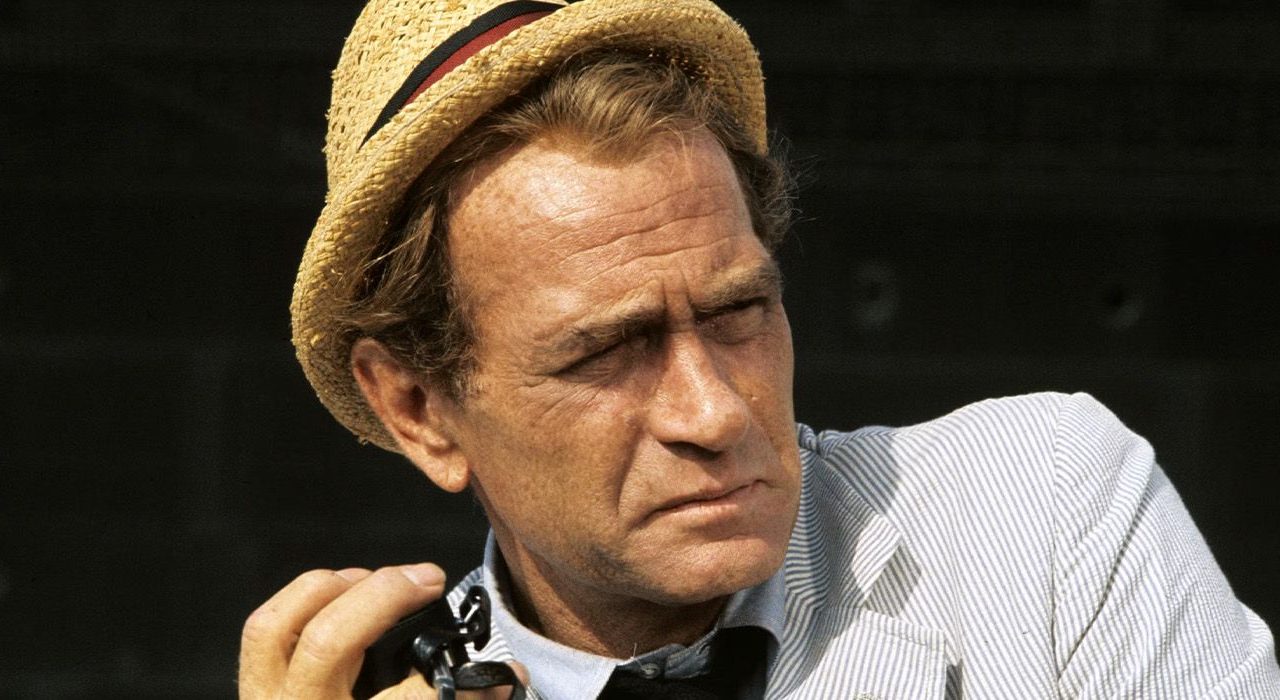
Before the X-Files ever aired, before Mulder and Scully chased shadows through government conspiracies and alien cover-ups, a rumpled newspaper reporter in a straw hat was already doing the same job — and doing it on network television. That character was Carl Kolchak, and the series built around him quietly laid the groundwork for one of the most influential genre formulas in TV history.
Kolchak: The Night Stalker debuted 52 years ago, and its fingerprints are all over modern genre television. Chris Carter, the creator of The X-Files, has openly credited the series as a direct inspiration. That’s not a casual acknowledgment — it’s an admission that the entire structural DNA of The X-Files was borrowed from a cult horror series most younger viewers have never seen.
If you’ve ever wondered why so many supernatural procedurals feel like they’re following the same blueprint, this is where that blueprint was drawn.
Who Is Carl Kolchak — and Why Does He Matter?
The premise of Kolchak: The Night Stalker is deceptively simple. Carl Kolchak is a crime reporter. That’s his assignment. He deals with police reports, follows up on leads, files stories. Except the stories he keeps stumbling into aren’t ordinary crime stories — they involve vampires, werewolves, and other creatures that his editors refuse to believe exist and that authorities actively work to suppress.
That tension — a lone investigator who knows the truth but can never prove it to anyone in power — is exactly the engine that drives The X-Files. Mulder believes. Scully doubts. The government covers things up. Nobody in authority will confirm what the audience already knows is happening. Kolchak invented that wheel decades earlier.
The series grew out of two highly successful TV movies before becoming a weekly show. The character resonated because he wasn’t a hero in the traditional sense. He was a schlubby, persistent, often frustrated journalist who kept getting in over his head — and kept showing up anyway.
The Kolchak Formula That The X-Files Borrowed Directly
What makes the connection between Kolchak and The X-Files more than just a superficial resemblance is how specific the borrowed elements are. Both series operate on what’s sometimes called the “monster of the week” format — a standalone supernatural case each episode, separate from any larger ongoing mythology.
Both feature a protagonist who is institutionally marginalized. Kolchak’s editors dismiss him. Mulder is sidelined within the FBI. In both cases, the protagonist’s credibility is always in question, which creates a built-in dramatic tension that never fully resolves.
Both series also share a visual and tonal approach — investigations conducted largely at night, in industrial or abandoned settings, with the monster or threat kept partially hidden for as long as possible. That restraint, born partly from budget limitations in Kolchak’s era, became an aesthetic choice that defined how supernatural television looked for decades.
| Element | Kolchak: The Night Stalker | The X-Files |
|---|---|---|
| Protagonist role | Crime reporter / journalist | FBI special agents |
| Core conflict | Authorities suppress the truth | Government conspiracy and cover-up |
| Episode structure | Monster of the week | Monster of the week + mythology arcs |
| Tone | Horror-comedy, noir-inflected | Thriller, paranoid, occasionally dark humor |
| Institutional response | Editors disbelieve, police obstruct | FBI skeptics, government obstruction |
| Original format | TV movies, then weekly series (1974) | Weekly series (1993) |
Why the Series Never Got the Credit It Deserved
Part of the reason Kolchak: The Night Stalker remains a cult property rather than a household name comes down to timing and availability. The series ran for only one season — 20 episodes — before being cancelled in 1975. It never had the runway to build the kind of cultural momentum that The X-Files eventually achieved across nine seasons and two feature films.
There’s also the question of era. Genre television in the early 1970s wasn’t taken seriously as prestige entertainment. It was filler. Critics didn’t cover it the way they would later cover The X-Files as a cultural phenomenon. Kolchak did its work quietly, influenced a generation of creators, and then largely disappeared from mainstream conversation.
The series has maintained a devoted fan base precisely because those who do find it recognize immediately how foundational it is. Watching it now, the influence is almost jarring — not because it feels dated, but because so much of what followed feels like a direct continuation of what it started.
What This Means for Fans of Supernatural TV Today
For anyone who grew up on The X-Files, Supernatural, Fringe, or any of the dozens of supernatural procedurals that followed, Kolchak: The Night Stalker is essentially the source code. Understanding it doesn’t diminish those later series — it deepens them.
The formula works because it taps into something genuinely compelling: the idea that one stubborn, imperfect person keeps pushing toward the truth even when every institution around them insists there’s nothing to find. That’s not just good genre television. That’s a story structure with real staying power.
Kolchak also demonstrated that horror could work on a weekly television budget without losing its effectiveness. The scares were often more psychological than spectacular, relying on atmosphere and the audience’s imagination rather than expensive effects. That lesson echoed through decades of television production.
Frequently Asked Questions
What is Kolchak: The Night Stalker?
It is a cult horror-fantasy television series from 1974 featuring a crime reporter named Carl Kolchak who investigates supernatural cases that authorities refuse to acknowledge.
How did Kolchak: The Night Stalker influence The X-Files?
X-Files creator Chris Carter has credited the series as a direct inspiration, and both shows share the same core formula: a marginalized investigator, institutional cover-ups, and a monster-of-the-week episode structure.
How many episodes did Kolchak: The Night Stalker run?
The weekly series ran for 20 episodes across a single season before being cancelled in 1975, though it was preceded by two successful TV movies.
Is Kolchak: The Night Stalker still available to watch?
Why isn’t Kolchak: The Night Stalker more widely remembered?
The series ran for only one season in the early 1970s, an era when genre television was not taken seriously by critics, which limited its cultural footprint despite its enormous influence on later creators.



Leave a Reply