
A drone strike on a British military base in Cyprus on March 2, 2026 triggered a U.S. State Department travel advisory upgrade to Level 3: Reconsider Travel — and with it, a wave of uncertainty that is now rippling through one of the Mediterranean’s most beloved island destinations.
Cyprus has always occupied a delicate geographic position, sitting at the intersection of Europe and the Middle East. For decades, that location was a selling point — a crossroads of cultures, cuisine, and ancient history. Now, in the spring of 2026, that same geography is working against it, as the island absorbs the economic shockwaves of a regional conflict it had no part in starting.
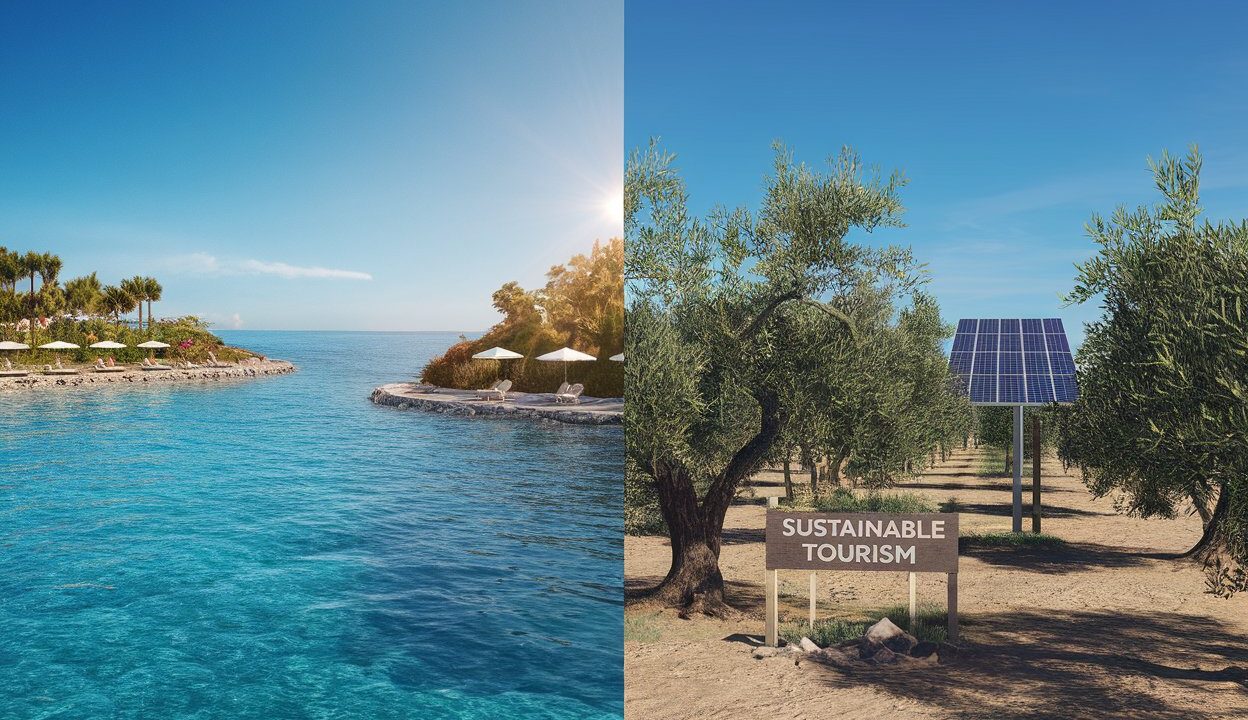
What makes this moment particularly striking is that Cyprus is fighting two battles at once: managing the reputational damage caused by nearby conflict, and pushing forward an ambitious green transition to protect its natural environment from the accelerating effects of climate change. Neither challenge is simple. Together, they define what the island’s future looks like.
How a Regional War Is Cooling Cyprus Tourism
Cyprus is an EU member state and remains peaceful by any objective measure. But perception in travel markets does not always follow objective measures. When the U.S. State Department upgraded its advisory following the Akrotiri drone strike, it sent a signal to American travelers — and likely to travelers from other cautious markets — that the region warranted a second thought.
The conflict between Israel, the United States, and Iran forms the backdrop here. Cyprus itself is not a party to that conflict, but its proximity to the eastern Mediterranean theater means that regional headlines land close to home. Travel advisories, even when they reflect caution rather than direct danger, have a measurable chilling effect on bookings, especially for leisure travelers with flexible destination choices.
For an island economy that depends heavily on tourism — the sector is a cornerstone of Cypriot GDP — a cooling in visitor numbers is not an abstract concern. It translates quickly into empty hotel rooms, quieter restaurants, and reduced income for the thousands of workers whose livelihoods are tied to the summer season.
The Numbers Behind the Pressure
| Factor | Detail | Impact |
|---|---|---|
| U.S. Travel Advisory | Upgraded to Level 3: Reconsider Travel | Deterrent effect on American tourists |
| Trigger Event | Drone strike at Akrotiri British base, March 2, 2026 | Prompted immediate advisory change |
| Regional Context | Ongoing Israel-U.S.-Iran conflict | Sustained uncertainty in eastern Mediterranean |
| Cyprus Status | Peaceful EU member state | Geographically proximate to conflict zone |
| Climate Challenge | Green transition underway | Long-term sustainability push amid short-term tourism stress |
Why Cyprus Is Particularly Vulnerable to This Kind of Disruption
Small island economies are structurally exposed to external shocks in ways that larger, more diversified economies are not. When tourism represents a significant share of national income, a drop in visitor confidence does not just affect the hospitality sector — it moves through the entire economy.
Cyprus has spent years building its reputation as a safe, accessible, sun-drenched alternative to more crowded Mediterranean destinations. The “Island of Love,” named for its association with the legend of Aphrodite, has leaned into that identity: crystal-clear waters, ancient ruins, a relaxed pace of life. That brand is hard to build and surprisingly easy to damage when regional news cycles turn dark.
The Akrotiri base, which belongs to the United Kingdom, is not a Cypriot military installation. But for travelers scanning headlines, that distinction can get lost. The image of a drone strike on Cypriot soil — regardless of whose soil, technically, it struck — is not an image that encourages vacation bookings.
- American travelers face a formal government advisory telling them to reconsider the trip
- European travelers may be less directly affected by the U.S. advisory but are watching the same regional news
- Tour operators face pressure to offer reassurances or flexible cancellation policies
- Local businesses dependent on peak-season revenue face uncertainty heading into spring and summer 2026
The Climate Front: A Long Game Cyprus Is Still Committed To
Even as the tourism sector navigates short-term disruption, Cypriot officials are pressing forward with what
This is not a new ambition, but the timing adds a particular kind of urgency. Cyprus’s appeal as a destination is inseparable from its physical beauty: its coastlines, its clear water, its landscapes. Climate change poses a direct threat to all of those assets. Rising temperatures, changing rainfall patterns, and increased risk of drought are not hypothetical concerns for a small Mediterranean island — they are observable trends.
Officials appear to view the green transition as both an environmental necessity and a long-term economic strategy. A Cyprus that protects its natural environment is a Cyprus that remains a viable tourism destination for decades to come. The challenge is sustaining that commitment while simultaneously managing the immediate revenue pressures caused by the current regional conflict.
What the Road Forward Looks Like for Cyprus
The spring and summer of 2026 will be a critical test. If the regional security situation stabilizes — or if travelers conclude that Cyprus itself remains safe despite the broader conflict — bookings could recover before the peak season is significantly damaged.
Cypriot authorities face the task of communicating clearly to international travelers that the island itself is not a conflict zone, and that the Akrotiri base is a British installation, not a Cypriot one. That distinction matters enormously for the tourism recovery argument.
On the climate side, the green transition is a longer arc. Progress there will be measured in years, not months. But the direction of travel — toward sustainability, toward protecting the island’s natural assets — appears set regardless of the short-term turbulence.
For a place that has built its identity around the legend of Aphrodite and the promise of an idyllic escape, 2026 is a year that will require something less romantic but equally essential: resilience.
Frequently Asked Questions
Why did the U.S. issue a Level 3 travel advisory for Cyprus?
The advisory was upgraded following a drone strike at the British Sovereign Base Area in Akrotiri on March 2, 2026, set against the backdrop of the broader regional conflict involving Israel, the U.S., and Iran.
Is Cyprus itself involved in any military conflict?
No. Cyprus is a peaceful EU member state. The Akrotiri base that was struck is a British military installation, not a Cypriot one.
How does the travel advisory affect tourism in Cyprus?
A Level 3 advisory discourages American travelers from visiting and can create a broader perception of risk, reducing bookings and putting pressure on an economy that relies heavily on tourism revenue.
What is the green transition Cyprus is pursuing?
Cyprus is working to protect its natural environment from the effects of climate change, an effort described as both an environmental necessity and a long-term strategy to preserve the island’s appeal as a destination.
When might Cyprus tourism recover?
This has not yet been confirmed, but the spring and summer of 2026 are considered a critical window — recovery depends largely on whether the regional security situation stabilizes before peak travel season.
Does the U.S. advisory apply to all of Cyprus?
The advisory covers Cyprus broadly, though the island itself remains peaceful. The concern stems from geographic proximity to regional conflict rather than any direct threat within Cyprus.


Leave a Reply