
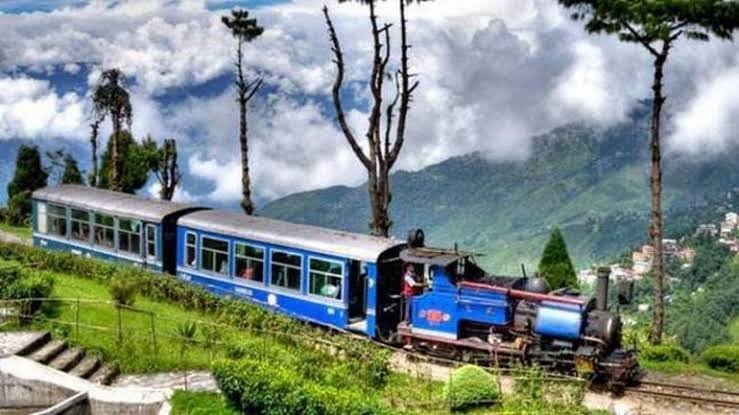
When was the last time a mode of transportation genuinely moved you, not just physically, but emotionally? That question sits at the heart of every conversation about Darjeeling’s legendary Toy Train, a steam-powered relic that has been winding through the Himalayas since 1881. Some travelers call it the most romantic journey on earth. Others step off it stiff-kneed and underwhelmed, wondering what all the fuss was about.
Both groups have a point. And the tension between them reveals something larger about how we value heritage travel in the age of instant everything.
The Setup: A Railway That Refuses to Be Ignored
Darjeeling sits in the Himalayan foothills of West Bengal, India, at roughly 2,000 meters above sea level. It earned its reputation as the “Queen of Hill Stations” during the British Raj, when tea planters and colonial administrators built a world of Victorian bungalows, manicured estates, and mountain air so sharp it could wake the dead.
The Darjeeling Himalayan Railway, affectionately known as the Toy Train, was their solution to a logistical nightmare: how to connect the plains of Siliguri to this cloud-wrapped town without roads capable of handling serious traffic. The answer was a 2-foot (610 mm) narrow-gauge railway, 83 kilometers long, climbing more than 1,800 meters in elevation. It opened in 1881 and has run, with occasional interruptions, ever since.
In December 1999, UNESCO recognized the railway as a World Heritage Site, citing its extraordinary engineering achievement. A train that loops back on itself, crosses its own tracks at multiple points, and conquers gradients that defeated far more powerful engines became a symbol of human audacity against impossible terrain.
So why is there a debate at all?
| Route Option | Distance | Duration | Approx. Cost (INR) | Best For |
|---|---|---|---|---|
| Joy Ride (Darjeeling to Ghoom and back) | ~14 km | ~2 hours | 1,000–1,500 | First-timers, short visits |
| NJP to Darjeeling (Full Journey) | 83 km | 7–8 hours | 1,200–1,800 | Heritage enthusiasts, photographers |
| Kurseong to Darjeeling | ~31 km | ~3 hours | 600–900 | Mid-journey sampler |
Side A: The Toy Train Is an Irreplaceable Experience
Advocates for the Toy Train argue that no road journey, no cable car, no modern alternative can replicate what happens when a 19th-century steam locomotive hauls you through the Himalayan foothills at walking pace. The slowness is not a flaw. It is the entire point.
The train passes within arm’s reach of roadside tea stalls, schoolchildren waving from courtyards, and terraced gardens where some of the world’s most prized tea leaves grow. The route includes the famous Batasia Loop, where the train spirals around a war memorial garden with panoramic views of Kanchenjunga on clear mornings. No highway offers that.
“The toy train on the Darjeeling Himalayan section is not merely a source of delight for the young and old; it also represents the engineering skills of the highest order.”
— Indian Railways Heritage Documentation
From a cultural preservation standpoint, riding the train is an act of stewardship. The Darjeeling Himalayan Railway exists because enough people still choose to ride it. Revenue from ticket sales, particularly the higher-priced Joy Ride and full-route tickets, funds ongoing maintenance of infrastructure that dates back to Victorian engineering principles. When tourists skip it for faster jeep transfers, they starve a living museum of its lifeline.
Heritage travel researchers also point out that the full NJP-to-Darjeeling journey, roughly seven to eight hours, functions as a meditation on landscape. The elevation climbs so dramatically that passengers experience multiple climate zones in a single day, starting in subtropical heat and arriving in pine-scented mountain cool. That transition, felt slowly and consciously, is something no car journey captures.
Side B: The Train Is Overrated, Uncomfortable, and Often Unreliable
Critics are not wrong either. The narrow seats in older carriages were designed for travelers of a different era. The wooden benches leave modern passengers sore within the first hour. Visibility from inside the carriages can be obstructed, and on overcast days, the much-promised Himalayan vistas simply do not appear.
Weather is a genuine issue. Darjeeling receives intense monsoon rainfall between June and September. Landslides periodically close sections of the track, sometimes for weeks. Travelers who plan itineraries around the train without building in flexibility have been left stranded or deeply disappointed. Trip reports from travelers note that service delays and cancellations are not rare events but fairly predictable seasonal occurrences.
There is also a pricing argument. At 1,000 to 1,800 INR per person for what amounts to an extremely slow journey that a shared jeep covers in three hours for a fraction of the cost, some budget travelers feel the Toy Train has become a premium tourist product dressed up as a local experience. Locals themselves largely use road transport. The train’s primary passengers today are tourists and rail enthusiasts, which shifts its cultural meaning considerably.
Accessibility is a third concern. The full journey requires an entire day. For travelers with limited time in Darjeeling, spending eight hours on a train means missing the tea estates, the Buddhist monasteries, Tiger Hill at dawn, and the vibrant Chowrasta market. The opportunity cost is real.
The Data: What Objective Evidence Actually Shows
The UNESCO designation is not ceremonial. It carries specific obligations for India’s government to maintain the railway to heritage standards, which has resulted in ongoing restoration work on steam locomotives and original station infrastructure. The railway’s continued operation is formally tied to international preservation commitments.
Visitor satisfaction data from travel platforms consistently rates the Joy Ride, the shorter Darjeeling-to-Ghoom round trip, significantly higher than the full journey for comfort and overall experience. The two-hour Joy Ride delivers the most-photographed moments, including the Batasia Loop, without the endurance test of the full route.
Darjeeling’s tea economy, meanwhile, tells its own story. The region produces some of the world’s most sought-after first-flush teas, with premium single-estate lots selling internationally for extraordinary prices. Multi-day tea estate tours, available through operators like those listed on Viator, offer immersive experiences covering cultivation, plucking, withering, rolling, and oxidation, a process that transforms a leaf into what connoisseurs call the “Champagne of teas.” The tea and the train are inseparable parts of the same cultural fabric.
Verdict: Stop Asking If It’s Worth It. Start Asking How to Do It Right.
The debate between “irreplaceable heritage” and “overhyped tourist product” is largely a false binary. The Darjeeling Toy Train is both things simultaneously, depending entirely on how you approach it.
The Joy Ride wins on almost every metric for first-time visitors. It is affordable, manageable, and delivers the iconic views and engineering spectacle without committing an entire day. The full NJP journey is genuinely rewarding, but only for travelers who actively want a slow, contemplative railway experience and have adjusted their expectations accordingly.
Pair the train with a morning visit to Tiger Hill for the Kanchenjunga sunrise, a walking tour of the Happy Valley Tea Estate, and an afternoon at the Himalayan Mountaineering Institute, and Darjeeling reveals itself as something far richer than any single attraction suggests.
Implications: What This Debate Means for Heritage Travel Everywhere
Darjeeling is not unique in facing this tension. Living heritage sites around the world, from Venice’s canals to Machu Picchu’s Inca trails, wrestle with the same question: how do you preserve something that derives its value from being experienced, without the experience destroying what made it valuable?
The Toy Train’s survival depends on a steady stream of paying passengers. But the quality of those passengers’ experiences depends on managing expectations, preserving authenticity, and refusing to turn the railway into a theme-park simulacrum of itself. That balance is fragile.
For travelers, the practical implication is clear. Visit Darjeeling with curiosity rather than a checklist. Ride the Joy Ride at minimum. Spend a morning at a tea estate where someone can explain why the altitude, the soil, and the morning mist produce a flavor that nowhere else on earth replicates. Walk the mall road at dusk when the Himalayan light turns the clouds gold.
The Toy Train is a 143-year-old machine that has outlasted empires, survived two world wars, and kept climbing long after faster alternatives existed. The question was never really whether it is worth it. The question is whether we are still the kind of travelers who understand why slow, difficult, and beautiful things deserve to survive.
Frequently Asked Questions

You Might Also Like
When Diplomacy Fails, Flights Suffer: A 6-Region Travel Alert
Diplomatic tensions are reshaping travel demand and spiking aviation costs across Thailand, Pakistan, the Middle…

Caribbean Crossroads: Why the U.S. Just Flagged Trinidad and Tobago for 2026
The U.S. updated its Trinidad and Tobago travel advisory to Level 3 for 2026. Here's…
Croatia’s Restored WWI Bunkers in Senj Are Drawing Visitors to the Adriatic Coast
Buried beneath centuries of salt air and overgrown coastal terrain, a network of First World…
Leave a Reply