
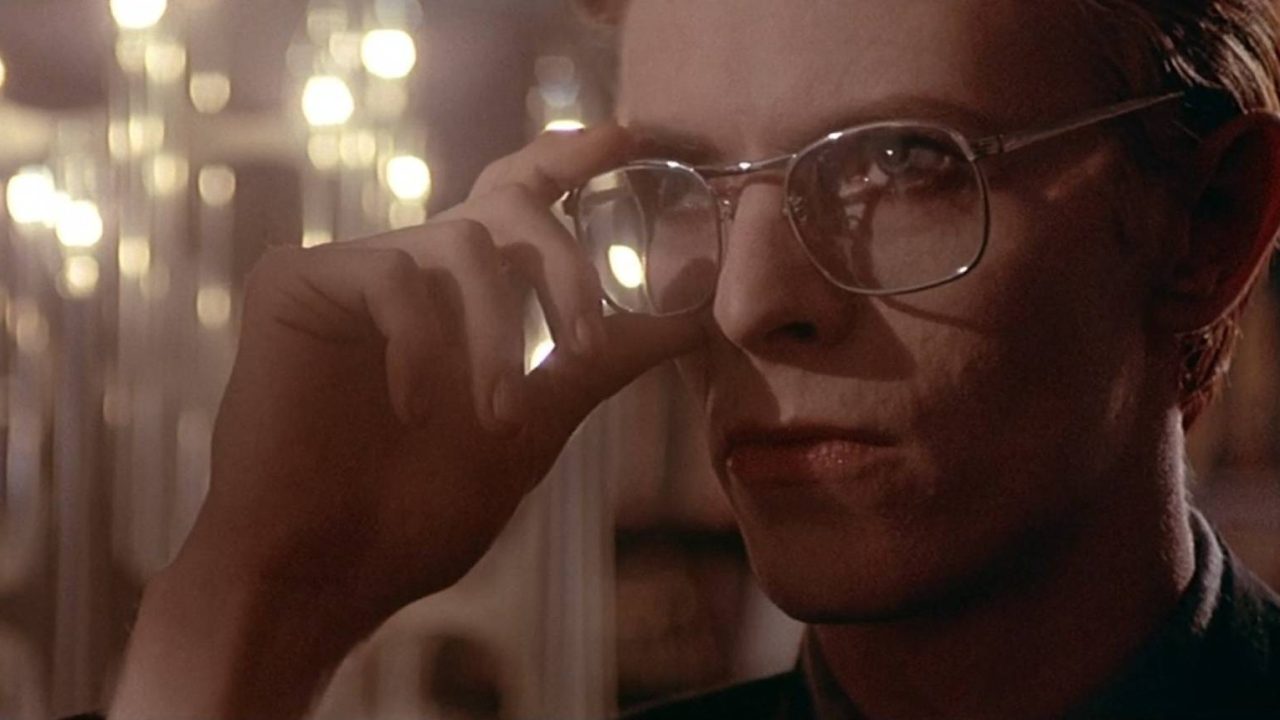
Fifty years ago this month, a rock star walked onto a film set and delivered one of the most unnervingly perfect performances in science fiction history — without any formal acting training whatsoever. That film was The Man Who Fell to Earth, and the rock star was David Bowie.
Released in 1976, the film marked Bowie’s feature film debut, and it remains one of the most striking actor-to-screen transitions in cinema. Half a century later, it still holds up as a genuinely strange, genuinely affecting piece of work — and Bowie’s role at the center of it all is a big reason why.
The anniversary is worth pausing on. Not just because the film is good, but because of what it represented at the time and what it still says about the rare intersection of music, persona, and cinema.
What The Man Who Fell to Earth Actually Is
The Man Who Fell to Earth is a British science fiction film directed by Nicolas Roeg, based on the 1963 novel of the same name by Walter Tevis. Bowie plays Thomas Jerome Newton, an alien who travels to Earth in search of water to save his dying planet, only to become slowly consumed by human vices — television, alcohol, and isolation among them.
It’s a film about alienation in the most literal sense. And casting Bowie — a man who had spent years constructing otherworldly personas like Ziggy Stardust and the Thin White Duke — was either an act of genius or the most obvious decision in film history. Possibly both.
Roeg reportedly felt that Bowie’s naturally alien quality made him the only real choice for the role. At the time of filming, Bowie was in the grip of a severe cocaine addiction and later described himself as barely present during production — which, paradoxically, may have contributed to the eerie, detached quality that makes his performance so compelling.
Why Bowie Was Born to Play Thomas Jerome Newton
There’s a reason the casting works as well as it does. By 1975, Bowie had already spent years performing as characters who didn’t quite belong to this world. His stage personas were elaborate, theatrical, and deeply strange. Newton, the alien who arrives on Earth and slowly loses himself in it, wasn’t a stretch — it was practically autobiography filtered through science fiction.
What makes the performance remarkable is its stillness. Bowie doesn’t overact. He watches. He reacts slowly. He seems genuinely confused by ordinary human behavior in a way that feels less like acting and more like instinct. It’s a performance that has aged extraordinarily well precisely because it doesn’t try to explain itself.
The film also features strong supporting work from Rip Torn and Candy Clark, but every scene ultimately orbits around Bowie’s presence. He’s magnetic in the way that truly strange things tend to be — you can’t quite look away, even when you’re not sure what you’re looking at.
Key Facts About the Film at 50
| Detail | Information |
|---|---|
| Film Title | The Man Who Fell to Earth |
| Release Year | 1976 |
| Director | Nicolas Roeg |
| Based On | Novel by Walter Tevis (1963) |
| Bowie’s Role | Thomas Jerome Newton |
| Bowie’s Film Debut | Yes — his first feature film appearance |
| Supporting Cast | Rip Torn, Candy Clark |
| Genre | Science fiction / Drama |
- The film is based on Walter Tevis’s 1963 novel of the same name
- Nicolas Roeg directed the film, already known for his visually unconventional style
- Bowie had no formal acting training prior to the role
- The film was a British production and received a wide international release
- Bowie later reflected on his fragmented mental state during filming, attributing it to his addiction at the time
What the Film’s Legacy Looks Like Five Decades On
The Man Who Fell to Earth has never really faded. It occupies a specific and irreplaceable space in both science fiction cinema and in the broader David Bowie mythology. For fans of either, it’s essentially required viewing.
The film’s influence can be felt in the wave of arthouse sci-fi that followed — movies that prioritized mood, alienation, and visual texture over plot mechanics. Roeg’s fragmented editing style and refusal to explain the story’s stranger elements feel far ahead of their time, and contemporary audiences tend to respond to the film’s ambiguity rather than being frustrated by it.
For Bowie himself, the role helped establish that he was more than a rock star playing dress-up. He went on to appear in other films — most notably Labyrinth in 1986 — but Newton remains his most critically regarded screen performance. There’s an argument to be made that no role ever fit him quite so perfectly again.
The 50th anniversary is also a reminder of how much the cultural landscape has shifted. Bowie passed away in January 2016, just two days after the release of his final album, Blackstar. Revisiting The Man Who Fell to Earth now carries an additional layer of weight — you’re watching someone who genuinely seemed like he arrived from somewhere else, in a role that asked exactly that of him.
Why This Anniversary Still Matters to Audiences Today
Anniversaries can feel like hollow exercises in nostalgia, but this one earns its attention. The Man Who Fell to Earth is not a film that has been softened by time into something comfortable. It remains odd, occasionally difficult, and deeply melancholy — and those qualities feel more relevant, not less, in a media landscape that often rewards the loudest thing in the room.
Bowie’s performance as Newton is a reminder that presence on screen doesn’t require volume. Sometimes the most powerful thing an actor can do is simply seem like they don’t entirely belong — and mean it.
Frequently Asked Questions
Was The Man Who Fell to Earth really David Bowie’s first film?
Yes. The 1976 Nicolas Roeg film marked Bowie’s feature film debut, and he had no formal acting training before taking the role.
Who directed The Man Who Fell to Earth?
The film was directed by Nicolas Roeg, a British filmmaker known for his visually distinctive and unconventional style.
What is the film based on?
It is based on the 1963 novel of the same name by Walter Tevis, the author also known for writing The Hustler and The Queen’s Gambit.
Who else starred in the film alongside Bowie?
The supporting cast included Rip Torn and Candy Clark, though Bowie’s performance as Thomas Jerome Newton anchors the entire film.
What character does Bowie play in the film?
Bowie plays Thomas Jerome Newton, an alien who comes to Earth searching for water to save his home planet, but gradually succumbs to human vices.
Did Bowie appear in other films after this one?
Yes. Bowie went on to appear in several other films, with his most widely seen later role being Jareth the Goblin King in Labyrinth (1986), though The Man Who Fell to Earth remains his most critically regarded screen performance.



Leave a Reply