
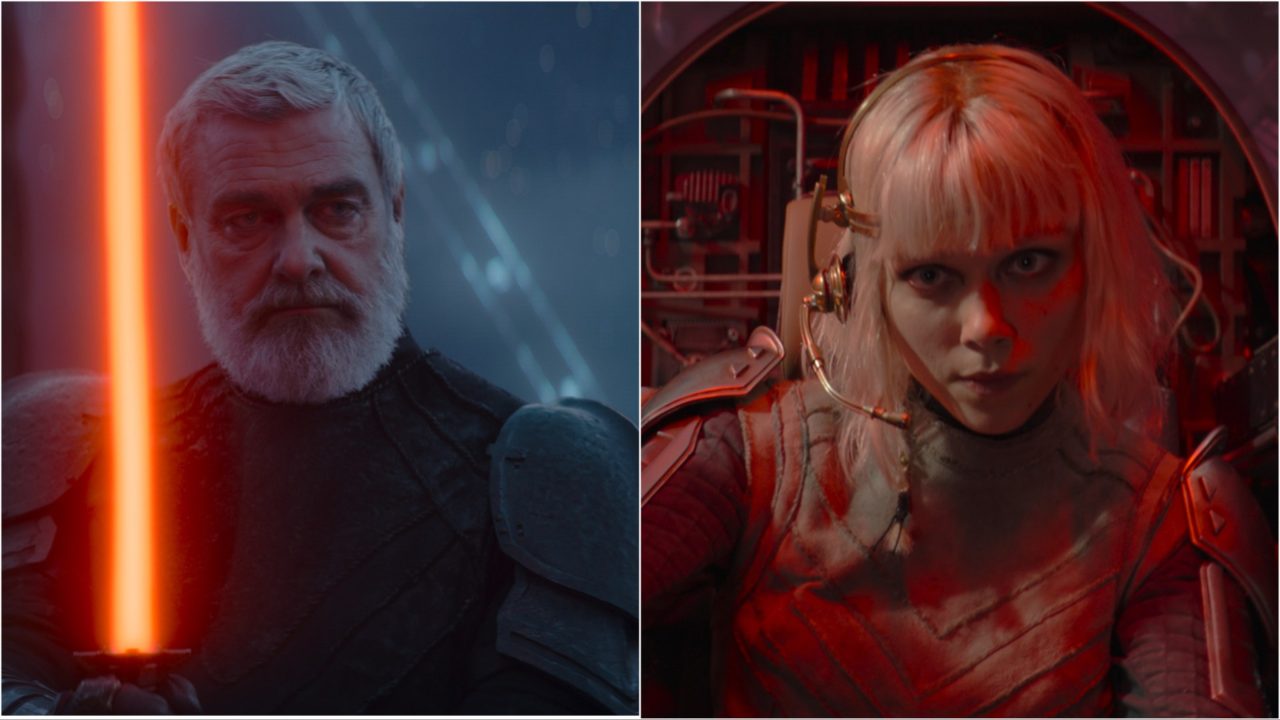
Darth Maul was cut in half and left to fall down a reactor shaft at the end of The Phantom Menace. By any reasonable measure, that should have been the end of him. Yet the horned Sith warrior came back — and the creative decision to resurrect him was directly inspired by two of the most enduring villains in horror movie history: Michael Myers and Jason Voorhees.
It’s a crossover that nobody saw coming, but it makes a strange kind of sense. The idea that a villain can survive what should be a fatal wound, return without explanation, and become even more terrifying for it is one of horror’s oldest and most effective tricks. Star Wars, it turns out, was paying attention.
According to reporting from Screen Rant, the creative team behind Darth Maul’s return drew direct inspiration from the slasher genre when deciding to bring the character back from what appeared to be certain death. The result reshaped how Star Wars thought about its villains — and gave fans one of the franchise’s most compelling redemption arcs.
How Horror Legends Influenced a Galaxy Far, Far Away
Michael Myers has been shot, stabbed, burned, and dropped from heights that would kill any ordinary person. Jason Voorhees has been drowned, decapitated, and killed in more creative ways than most franchises can imagine. Neither of them stays dead. That refusal to die is core to what makes them frightening — and it’s precisely that quality that the Star Wars creative team wanted to capture when they decided Darth Maul’s story wasn’t finished.
The logic is compelling. A villain who survives the unsurvivable carries a different kind of weight. Audiences stop assuming they know when a threat is over. The fear becomes open-ended in a way that a straightforward death simply doesn’t allow.
Darth Maul had made an enormous impression in The Phantom Menace despite relatively limited screen time. His design was iconic, his combat style was unlike anything Star Wars had shown before, and his death left many fans feeling the character had been underused. The slasher horror template gave the creative team a narrative framework to justify bringing him back — and to do so in a way that felt mythologically consistent rather than cheap.
The Return That Changed Star Wars Storytelling
Darth Maul’s resurrection came in Star Wars: The Clone Wars, the animated series that significantly expanded the mythology of the prequel era. When he returned, he wasn’t simply restored to his former self. He had survived by clinging to a primal rage — driven mad by his injuries, living in the depths of a junkyard planet, having built himself a crude set of spider-like mechanical legs from scavenged debris.
That portrayal leaned hard into horror territory. A figure driven to madness by trauma, surviving on instinct and hatred, lurking in darkness — it owed as much to the atmosphere of a slasher film as it did to traditional Star Wars storytelling.
His brother Savage Opress eventually found him and helped restore him to sanity, after which Maul became one of the most layered antagonists in the entire franchise. He built criminal empires, manipulated political structures, and ultimately became a tragic figure defined by his obsession with Obi-Wan Kenobi.
Why This Connection Matters for Both Franchises
The influence of horror on Star Wars is easy to overlook, but it has always been there. The original trilogy drew heavily from monster movies and haunted house conventions — Darth Vader himself was conceived partly as a figure of gothic dread. The decision to model Darth Maul’s return on slasher villains is a continuation of that lineage, not a departure from it.
What Michael Myers and Jason Voorhees represent, at their core, is the idea that some threats cannot be permanently neutralized. They are forces of nature as much as characters. By applying that framework to Darth Maul, the Star Wars team transformed him from a one-film spectacle into something more durable and more dangerous.
| Character | Franchise | Known For | Influence on Darth Maul |
|---|---|---|---|
| Michael Myers | Halloween | Surviving seemingly fatal injuries, returning repeatedly | Template for villain resurrection after apparent death |
| Jason Voorhees | Friday the 13th | Near-indestructibility, primal menace | Reinforced idea that iconic villains defy permanent defeat |
| Darth Maul | Star Wars | Survived bisection, returned in The Clone Wars | Applied slasher horror logic to a sci-fi villain arc |
What Maul’s Arc Ultimately Became
The decision to resurrect Darth Maul paid off in ways that extended well beyond The Clone Wars. He appeared in Star Wars Rebels, where his story reached a genuinely moving conclusion. His brief but significant appearance in Solo: A Star Wars Story shocked audiences who had only followed the films and introduced him to a new generation of fans.
By the time his arc concluded, Darth Maul had gone from a visually striking but narratively thin villain to one of the franchise’s most fully realized characters. That transformation began with a creative team willing to borrow from an entirely different genre — and trusting that the logic of horror could survive the jump to hyperspace.
It’s a reminder that the best storytelling doesn’t respect genre boundaries. Sometimes the scariest thing you can do to an audience is refuse to let the monster stay dead.
Frequently Asked Questions
What horror villains inspired Darth Maul’s return in Star Wars?
The creative team behind Darth Maul’s resurrection drew direct inspiration from Michael Myers of the Halloween franchise and Jason Voorhees of Friday the 13th, both known for surviving apparently fatal situations.
Where did Darth Maul return after his death in The Phantom Menace?
Darth Maul returned in Star Wars: The Clone Wars, the animated series set during the prequel era, where he was revealed to have survived by clinging to a deep, primal rage.
Was Darth Maul’s return well received by fans?
His return is widely considered one of the most successful character resurrections in the Star Wars franchise, ultimately giving him one of its most layered and emotionally resonant story arcs.
Did Darth Maul appear in any Star Wars projects after The Clone Wars?
Yes — Darth Maul appeared in Star Wars Rebels, where his story concluded, and made a surprise appearance in Solo: A Star Wars Story.
Why did the Star Wars team feel Darth Maul deserved to come back?
Despite limited screen time in The Phantom Menace, Maul made a significant impression, and the creative team felt his story had been left unfinished — the slasher horror model gave them a framework to justify his survival.
How did the horror influence show in how Darth Maul was portrayed after his return?
His return depicted him as having been driven to madness, surviving in isolation on a junkyard planet with crude mechanical legs — an atmosphere that owed a clear debt to horror genre conventions.


Leave a Reply