
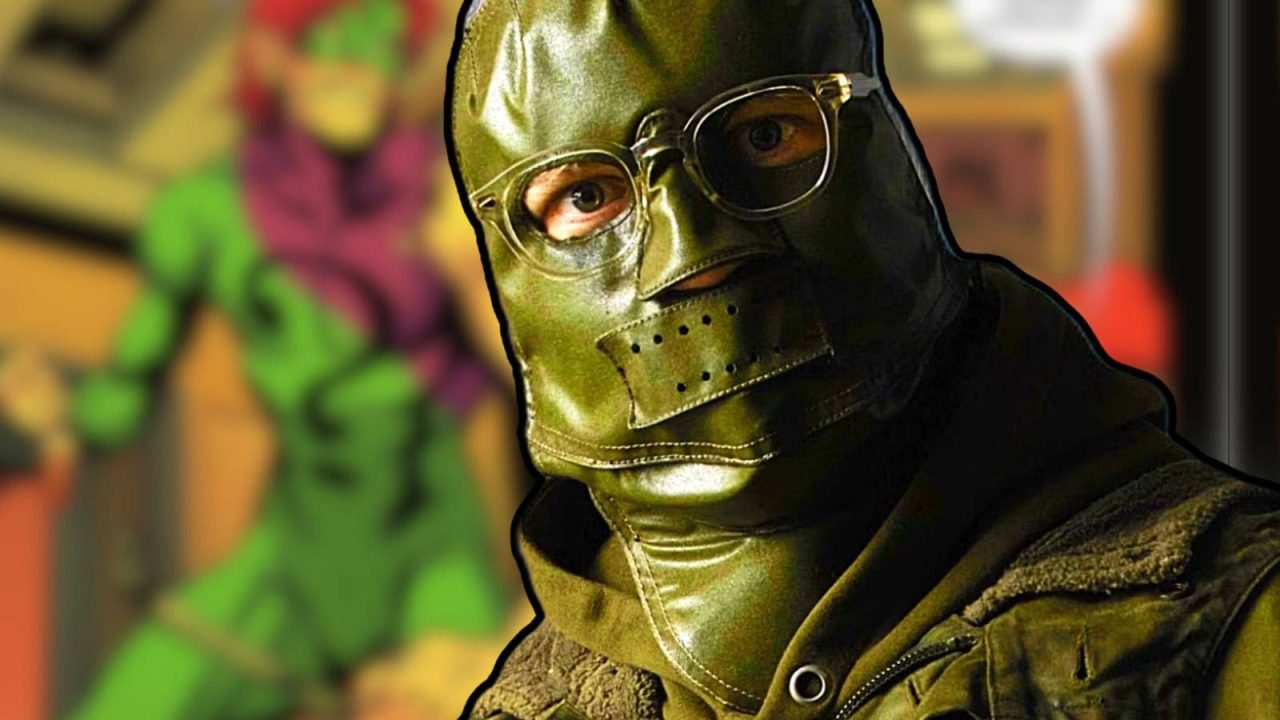
The Riddler has worn many faces over his decades in DC Comics — the slick showman in a green bowler hat, the obsessive puzzle-master, the political terrorist of Zero Year. But the redesign DC has now officially unveiled takes Edward Nygma somewhere he has rarely, if ever, been before: into genuinely unsettling physical territory, complete with a monstrous mutant arm that changes what the character looks like at a fundamental level.
This is not a costume tweak or a palette swap. According to reporting from Screen Rant, DC’s new look for the Riddler represents one of the more extreme visual overhauls the character has received in recent memory, arriving during a stretch of years that has already seen the villain repositioned in significant ways across comics, film, and television.
For Batman fans who track how Gotham’s rogues gallery evolves — and there are millions of them — this redesign is the kind of development worth paying close attention to. Character redesigns at this level tend to signal larger story intentions, not just aesthetic choices.
What DC’s New Riddler Redesign Actually Looks Like
The centerpiece of the redesign is a mutant arm — a dramatic, visually extreme physical alteration that sets this version of the Riddler apart from virtually every prior interpretation of the character. Where past Riddler designs leaned into his theatrical, almost dandyish quality, this new look pushes him toward something more visceral and threatening.
The Screen Rant report notes that the past five years have placed the Riddler in an increasingly prominent position within DC’s publishing line. That trajectory makes this redesign feel less like a random creative decision and more like a deliberate escalation — a way of signaling that this version of Edward Nygma is not the camp villain of earlier eras.
Mutant or body-horror elements in superhero comics tend to carry specific narrative weight. They suggest transformation, corruption, or a character who has crossed a threshold they cannot walk back from. Applied to the Riddler, a villain whose entire identity is built around intellect and control, a monstrous physical mutation creates an interesting tension: what does it mean for a man defined by his mind to be reshaped by his body?
Why the Riddler Has Been DC’s Most Versatile Villain in Recent Years
It is worth stepping back to understand why this redesign carries as much weight as it does. The Riddler spent decades as a second-tier Batman villain — entertaining, but rarely treated as a genuine threat on the level of the Joker or Ra’s al Ghul.
That began to change in the comics with storylines that reframed him as a genuinely dangerous figure. Then came the broader cultural moment: Paul Dano’s interpretation in The Batman (2022) introduced the character to a new generation as something closer to a mass-casualty terrorist than a puzzle-obsessed eccentric. That film’s massive audience shifted how many readers and viewers think about what the Riddler can be.
DC’s comics line has clearly been tracking that renewed interest. A villain who has this much cultural momentum is a natural candidate for a bold visual reinvention — one designed to match the darker, more threatening version of the character that audiences have come to expect.
How This Fits Into Batman’s Current Direction
Redesigns of this scale rarely happen in isolation. When DC overhauls a villain’s appearance — especially with something as specific and deliberate as a mutant limb — it is almost always tied to an ongoing or upcoming story arc that requires the character to feel new and dangerous again.
Batman’s own corner of the DC universe has been in a period of significant creative activity. New creative teams, new status quos, and a publishing line that has been willing to take risks with its most iconic characters have all created an environment where a redesign like this can land with real impact rather than feeling gratuitous.
The mutant arm, in particular, suggests a story that involves physical transformation — whether through science, magic, or some combination of the two. That is a different kind of Riddler story than the chess-match-style narratives the character typically anchors.
What a Redesign Like This Signals for the Character’s Future
Major visual redesigns in superhero comics tend to follow a recognizable pattern. They arrive, they generate significant reader reaction, and then the story either justifies them or walks them back. The ones that stick are the ones attached to genuinely compelling narratives — the ones that feel earned rather than imposed.
Whether this Riddler redesign falls into the “lasting change” or “temporary story element” category remains to be seen. But the fact that DC has officially unveiled it suggests a level of editorial commitment that goes beyond a single issue or short arc.
| Element | Traditional Riddler Design | New Redesign |
|---|---|---|
| Physical appearance | Standard human build, theatrical costume | Mutant arm, extreme physical alteration |
| Visual tone | Camp, theatrical, puzzle-themed | Visceral, threatening, body-horror adjacent |
| Character positioning | Secondary villain, intellectual foil | Elevated threat level, recent cultural prominence |
| Recent cultural moment | Classic comics and animation versions | Post-The Batman (2022) reinvention era |
For longtime Batman readers, the redesign is a conversation starter. For newer fans who came to the Riddler through film or television, it is a signal that the comics version of the character is being taken just as seriously — and pushed even further.
Frequently Asked Questions
What is the most notable feature of DC’s new Riddler redesign?
The redesign prominently features a mutant arm, representing one of the most extreme physical alterations the character has undergone in his comics history.
Is this a permanent change to the Riddler, or a story-specific look?
DC has officially unveiled the redesign, suggesting editorial commitment, but whether it represents a lasting change or a story-specific transformation has not yet been confirmed.
What Batman comic does this redesign appear in?
The specific title or issue number was not confirmed in the available source material at the time of this report.
Why has the Riddler become such a prominent villain in recent years?
The character has been repositioned as a more serious threat in DC’s publishing line over the past five years, a shift amplified by high-profile cultural moments including his portrayal in recent media.
Does the mutant arm suggest a specific story direction?
A physical mutation of this kind typically signals a transformation narrative in comics storytelling, though the specific plot details driving this redesign have not been fully detailed in available reporting.
Who covers DC Comics developments at Screen Rant?
The report on this redesign was written by TJ Mills, an editor on Screen Rant’s Comics team who specializes in DC storylines and character evolutions.

Leave a Reply