
Eight hundred hotels. In a single country. That number alone should stop you mid-scroll.
On March 27, 2026, Accor officially opened the Sofitel Changzhou Hi-Tech District, marking its 800th hotel in Greater China. For context, that is more properties than many entire hotel chains operate worldwide. And Changzhou — a mid-sized industrial city most Western travelers could not place on a map — was chosen as the symbolic home of this milestone.
That choice tells you everything about where global hospitality is actually headed.
What Most Travelers Assume About Western Hotels in China
The dominant narrative goes something like this: China is a closed, complicated market. Western brands face regulatory headaches, cultural barriers, and fierce competition from homegrown chains. Smart money, the story goes, is quietly pulling back.
Plenty of business press has fed this assumption. Trade tensions, visa friction, and post-pandemic travel disruptions all painted a picture of retreat. Travelers imagined that if you landed in a second-tier Chinese city, you would be choosing between local budget options and a lucky Marriott outpost.
That picture is wrong. And Accor’s 800-hotel milestone is the clearest evidence yet.
The Sofitel Changzhou Opens in a City Most Maps Skip
Changzhou sits in Jiangsu Province, wedged between Nanjing and Shanghai along the Yangtze River Delta. It has a population of roughly five million people, a booming high-tech manufacturing sector, and until recently, almost no international luxury hotel presence worth mentioning.
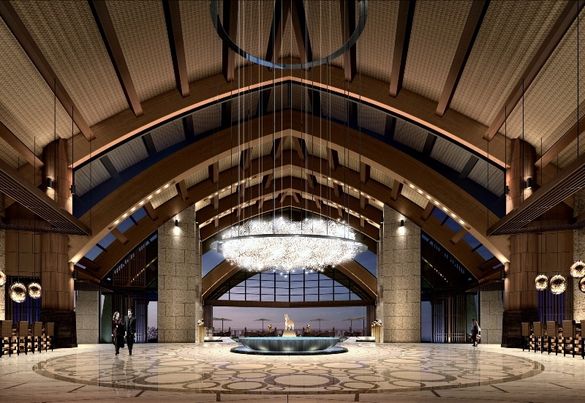
The Sofitel Changzhou Hi-Tech District changes that. Described as a shining tower set amid a growing business district, the property carries Sofitel’s signature French-influenced luxury aesthetic into a city that represents China’s industrial future rather than its tourist past.
This is not an accident. Accor is deliberately planting its premium flags in cities where domestic business travel is surging, not just in Beijing or Shanghai where the competition is already brutal.
From 100 to 800: Accor’s Acceleration Across Greater China
The journey from 100 hotels to 800 is not a straight line. It is a story of calculated, market-specific expansion that most casual observers missed entirely.
When Pullman Oceanview Sanya Bay Resort and Spa was celebrated as Accor’s 100th hotel in China, the brand was still seen as a niche European presence. The 700th milestone brought the opening of Sofitel Shanghai North Bund, a spectacular 25-story landmark that signaled Accor’s confidence in China’s luxury segment.
Now, at 800 properties, the math demands attention. Growing from 700 to 800 hotels represents a 14 percent increase in portfolio size, in a market where many global brands are consolidating rather than expanding.
| Milestone | Hotel | Location | Significance |
|---|---|---|---|
| 100th Hotel | Pullman Oceanview Sanya Bay Resort and Spa | Sanya, Hainan | First major beach resort milestone |
| 700th Hotel | Sofitel Shanghai North Bund | Shanghai | 25-story luxury landmark in top-tier city |
| 800th Hotel | Sofitel Changzhou Hi-Tech District | Changzhou, Jiangsu | Premium expansion into tier-two business city |
Why Tier-Two Cities Are the Real Prize in Chinese Hospitality
Western travelers fixate on Beijing, Shanghai, and Chengdu. But China’s economic geography is far more distributed than outsiders realize. Cities like Changzhou, Wuxi, Suzhou, and Hefei are generating enormous volumes of domestic business travel, corporate events, and government conferences.
These cities have educated, high-earning professional populations. They host international trade fairs, tech summits, and manufacturing expos. They lack the saturation of global hotel brands that makes Shanghai’s luxury market so competitive.
Accor understood this dynamic early. Its multi-brand portfolio — spanning luxury Sofitel and Fairmont properties down through midscale Novotel and economy ibis brands — means it can enter a tier-two city at multiple price points simultaneously. That breadth is a structural advantage that single-brand competitors simply cannot match.
Frequently Asked Questions

You Might Also Like

Frozen Mouse Brains Just Came Back to Life in the Lab
Scientists vitrified mouse hippocampal tissue, froze it to minus 321°F, and recovered electrical function. Here's…
Can Hong Kong Really Win Back the World’s Travelers?
Hong Kong's new tourism revival plan targets global markets and high-value visitors. But can it…

UK Foreign Office Rewrites Travel Rules for 16 Countries: Smart or Overreach?
The UK Foreign Office updated travel advice for 16 countries including Spain and Turkey. Are…
Leave a Reply