
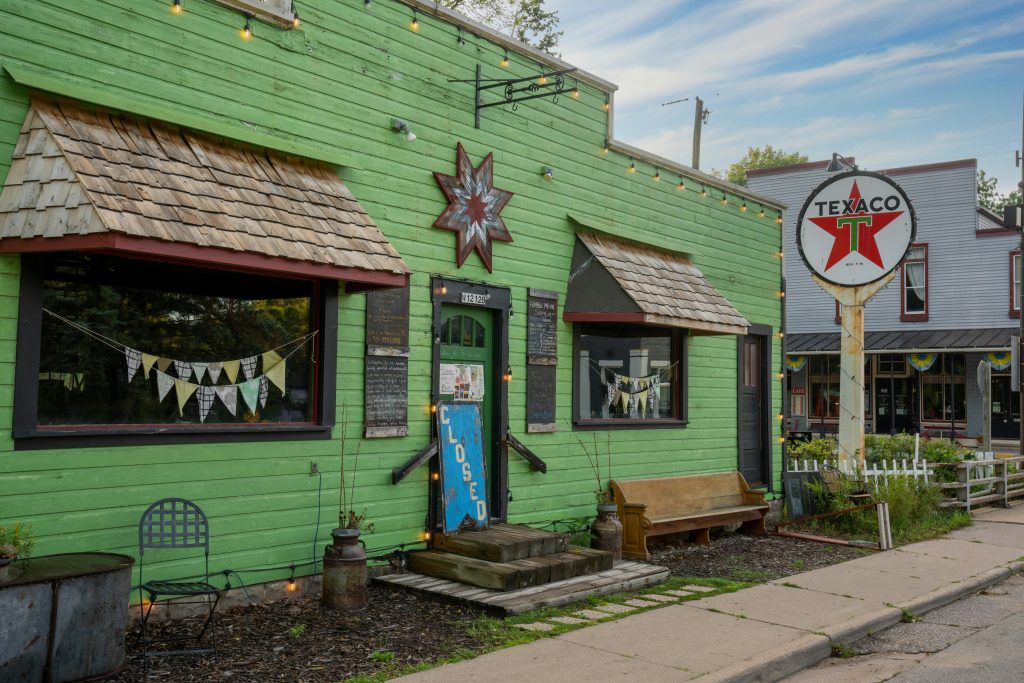
Roughly one in five independent restaurants in the United States closes within its first year of operation, according to estimates from the National Restaurant Association — but the closures making headlines in early 2026 are not new businesses failing. They are institutions, some nearly a century old, quietly turning off their lights for the last time.
DeRienzo’s in Salem, Ohio, served its community for 90 years before closing. The Grill & Skillet Diner in Columbus — originally named The Town House when it opened in 1945 — announced it would close effective March 2. A family restaurant in Brook Park, Ohio, that operated for more than 50 years shut down. Oliveto Italian Bistro in Tyler, Texas, posted a notice on its front door that its lease had ended. The pattern spans multiple states and restaurant types, and it shows no sign of slowing.
A 90-Year Run Ends in Salem, Ohio
DeRienzo’s restaurant in Salem, Ohio, operated for nine decades before serving its final customers, according to reporting by a Youngstown-area news outlet. Salem, a city of approximately 11,000 residents in Columbiana County in northeastern Ohio, had watched DeRienzo’s outlast dozens of competitors, recessions, and two generations of local families. The restaurant’s closure was confirmed via a YouTube segment produced by a local news organization covering the Youngstown media market.
Ninety years in business means DeRienzo’s opened approximately in 1935 or 1936 — the height of the Great Depression. That a restaurant could survive that era, then navigate World War II rationing, the economic turbulence of the 1970s, the 2008 financial crisis, and a global pandemic, only to close in 2025 or 2026, underscores the particular severity of the current operating environment for independent food businesses.
Columbus Loses an 80-Year Diner Near Bexley
In Columbus, Ohio, owners Diana Cain and John Flood announced last week — relative to a March 2 closure date — that The Grill & Skillet Diner would permanently close, according to 614NOW. The diner was established in 1945 under the name The Town House, operating under that name until 1965, before being rebranded as The Grill & Skillet. That means the location on the east side of Columbus served customers through 80 years of continuous operation.
The diner sits near Bexley, a historic inner-ring suburb of Columbus with a population of roughly 14,000. Cain and Flood’s announcement was described as an 80-year run coming to an end — a closure that Columbus food media covered as a significant community loss. According to Yahoo Lifestyle, the diner’s closure was characterized as the end of a “decades-old classic.”
Brook Park and the Human Cost Behind Each Closing
The Brook Park restaurant closure — documented through social media responses — illustrates the emotional dimension of these shutdowns that financial reporting rarely captures. Brook Park is a small city of approximately 18,000 residents in Cuyahoga County, southwest of Cleveland. A family restaurant operating there for more than 50 years would have served multiple generations of the same families — birthday dinners, post-funeral gatherings, Sunday breakfasts after church.
The language used by community members responding online was not the language of market analysis. It was grief. The phrase “insane times” in the social media post cited above reflects a widespread sense among working-class Midwestern communities that the economics of ordinary life have shifted in ways that feel both recent and irreversible.
Texas and the Lease Problem: Oliveto Italian Bistro in Tyler
Not all of these closures are driven by the same cause. In Tyler, Texas — a city of approximately 105,000 in Smith County in East Texas — Oliveto Italian Bistro at 3709 Troup Highway posted a physical notice on its front door informing customers that the restaurant’s lease had ended. No relocation was announced at the time of reporting.
The lease-ending closure reflects a different but increasingly common threat to established local restaurants: commercial real estate pressure. As property values rise in mid-sized Sun Belt cities like Tyler, landlords have more leverage at lease renewal. A restaurant that built its customer base over years in a specific location may find that location no longer financially viable — not because of anything the owners did wrong, but because the land underneath them became more valuable to someone else.
Chain Restaurants Are Not Immune
The closures are not limited to independent operators. A 76-year-old cafeteria-style restaurant chain known for fried chicken and homemade pies announced it was shutting down another longtime location, according to MSN. The chain, which has operated since approximately 1950, has faced increasing pressure as its core demographic ages and its cafeteria-service model struggles to attract younger diners.
The closure of chain locations in this category is significant because these restaurants often anchor strip malls and commercial corridors in smaller cities and suburbs. When they leave, they create vacancies that are frequently difficult to fill — and they take with them dozens of jobs, often held by long-tenured employees who may struggle to find comparable work elsewhere.
The Twin Cities Picture and What Comes Next
The pattern extends to Minneapolis and the broader Twin Cities metro, where the Star Tribune maintains an ongoing tracker of restaurant openings and closings in the region. That publication has documented a sustained churn in the Twin Cities dining scene, with closings and openings tracked simultaneously — suggesting that while new concepts continue to launch, the floor of established, legacy businesses is eroding faster than it is being replaced.
The broader question raised by the wave of closures is not simply economic. It is cultural. A diner that opened in 1945 carries within it a physical record of the community it served — the booths worn down by decades of regulars, the menus that barely changed, the waitstaff who remembered your order. When those places close, that record does not transfer to any successor business. It disappears entirely.
As of the date of this report, no coordinated federal or state preservation effort targets legacy independent restaurants the way historic building preservation programs target physical structures. The businesses that define a community’s daily life — its diners, its family-owned Italian bistros, its cafeteria-style lunch counters — remain almost entirely unprotected from the economic forces now closing them at an accelerating rate.
Frequently Asked Questions

You Might Also Like

Luke Grimes Left Hollywood for Montana and Says Residents Are ‘Not Happy’ He Showed Up
The conventional wisdom holds that moving to the country is the ultimate escape — clean…
Montana Still Has Working Soda Fountains From the 1930s — and Locals Have Never Stopped Going
Montana's historic soda fountains in Kalispell, Stevensville, and Virgelle have survived nearly a century. Here's…
How Donald Judd Turned a Dying West Texas Ranch Town Into America’s Most Unlikely Art Economy
The conventional story of American small-town revival almost always involves the same ingredients: a broadband…
Leave a Reply