
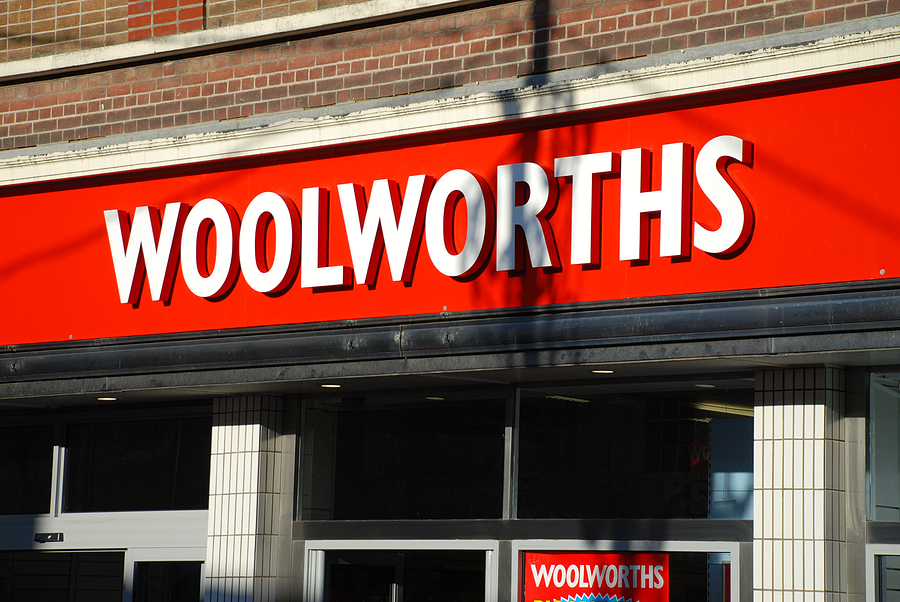
What would you order if you sat down at a lunch counter that hasn’t changed its menu, its stools, or its layout since your parents were in grade school? That question isn’t hypothetical for a small but devoted group of regulars who still pull up to one of America’s last surviving Woolworth’s luncheonettes — a fully operational relic from an era when a grilled cheese sandwich and a cherry Coke represented the height of American convenience dining.
While the vast majority of F.W. Woolworth’s iconic five-and-dime empire was dismantled in the late 1990s, a tiny number of these lunch counters escaped demolition. The one drawing the most recent attention seats 22 along a continuous counter facing an open kitchen — the same configuration, the same aesthetic, and by most accounts the same general menu that greeted shoppers for decades before the chain collapsed.
A Chain That Once Defined American Retail Life
To understand why a surviving Woolworth’s lunch counter stops people cold, you have to understand how central Woolworth’s was to mid-20th-century American daily life. At its peak, the F.W. Woolworth Company operated more than 3,000 stores across the United States, Canada, and Europe. The counters weren’t an afterthought — they were a destination.
Mothers brought children for grilled cheese after back-to-school shopping. Office workers grabbed ham salad sandwiches during 30-minute lunch breaks. Teenagers crowded the swivel stools after school. The format — counter seating, short-order cook in plain view, laminated menus with numbered items — became the visual grammar of mid-century American eating.
According to The Spokesman-Review’s 1997 coverage of the chain’s collapse, the Woolworth closure was widely described as the end of an era — not merely for retail, but for a particular kind of democratic public space where a factory worker and a bank manager might sit elbow-to-elbow over the same 89-cent bowl of soup.
The Surviving Counter: 22 Seats and an Open Kitchen
The luncheonette drawing renewed attention seats exactly 22 people along a single unbroken counter. The open kitchen — the cook’s hands, the flat-top grill, the coffee urn — is fully visible, as it was when the store first opened. There are no booths. There is no hostess stand. You sit where there’s an empty stool, and someone comes to you.
Visitors who have documented it in recent months describe the interior as a functioning time capsule: pendant lighting overhead, white ceramic tiles behind the counter, rotating pie displays, and handwritten daily specials. The stainless steel surfaces are original. The stools still spin.
The post that reignited broader interest in the counter appeared in a Facebook group dedicated to New York dining recommendations, where a user asked for suggestions for “old/vintage American diners.” The response describing the surviving Woolworth’s luncheonette drew hundreds of reactions and became one of the most-shared threads the group had seen in months.
Why Woolworth’s Lunch Counters Matter Beyond Nostalgia
These counters carry a weight that goes well beyond grilled cheese and cherry phosphates. On February 1, 1960, four Black college students — Ezell Blair Jr., Franklin McCain, Joseph McNeil, and David Richmond — sat down at the Woolworth’s lunch counter in Greensboro, North Carolina, and refused to leave after being denied service. That act of deliberate, nonviolent resistance helped launch the sit-in movement that transformed the American civil rights struggle.
The Greensboro Woolworth’s counter is now preserved as part of the International Civil Rights Center and Museum, a federally recognized historic site. It no longer serves food. The counters that still do serve food occupy a stranger, more complicated place in the cultural memory — simultaneously ordinary and historically loaded.
According to records in the Congressional Record from July 1994, the Woolworth Company had already begun consolidating its American retail footprint years before the final 1997 announcement, as discount giants and regional competitors steadily eroded the five-and-dime model. The lunch counter closures were not sudden — they were the last act in a decades-long decline.
What Survives When Almost Nothing Does
Preservation of the Woolworth’s luncheonette format happened largely by accident. In most cases, the stores were absorbed into other retail concepts or demolished. In a small number of instances, local operators — sometimes the original Woolworth’s lease holders, sometimes new owners — kept the counters running because they were profitable, because the building’s layout made repurposing impractical, or simply because nobody got around to ripping them out.
Food historians and preservation advocates note that the open-kitchen lunch counter format predates Woolworth’s and survives in a handful of independent diners across the country. But the specific Woolworth’s version — the institutional scale, the company-standard tile work, the counter proportions — is now nearly impossible to find intact and in service. Most Americans under 40 have never sat at one.
The Quiet Demand for What Was Almost Lost
The renewed interest in surviving Woolworth’s counters reflects a broader pattern in American food culture, where scarcity drives curiosity. When something ordinary becomes rare, it becomes remarkable. A lunch counter that was once the most unremarkable place in a shopping district — somewhere you ate because it was there, not because it was special — now draws people who drive hours for the experience.
That dynamic has played out in other vanishing American food formats: the automat, the Horn & Hardart cafeteria line, the Howard Johnson’s. All were once considered too mundane to bother documenting. All are now subjects of books, documentary projects, and pilgrimage travel. The Woolworth’s luncheonette is simply the next entry on that list.
For the 22 counter seats currently still in service, the question isn’t whether they matter historically — they clearly do. The question is how long they last. The owners of surviving counters have generally declined media attention, preferring to operate as working lunch spots rather than tourist attractions. That reluctance is, in its own way, exactly what made the original Woolworth’s model work: it was never supposed to be a destination. It was just where you ate lunch.
Frequently Asked Questions

You Might Also Like
A Pennsylvania Town Has Sat Above a Coal Fire for 63 Years — and Only 5 Residents Refused to Leave
Centralia, PA has had a coal mine fire burning underground since May 1962. In 2026,…
Nebraska Has a Town of One Person — She Runs the Bar, Signs Her Own Liquor License, and Has Done It for Two Decades
In 1930, the town of Monowi, Nebraska counted roughly 150 residents on its census rolls.…
Pennsylvania’s Ghost Town Has Been on Fire Underground for 63 Years — and 5 People Still Live There
Roughly 1,000 people called Centralia, Pennsylvania home in 1961. By the 2020 U.S. Census, that…
Leave a Reply