
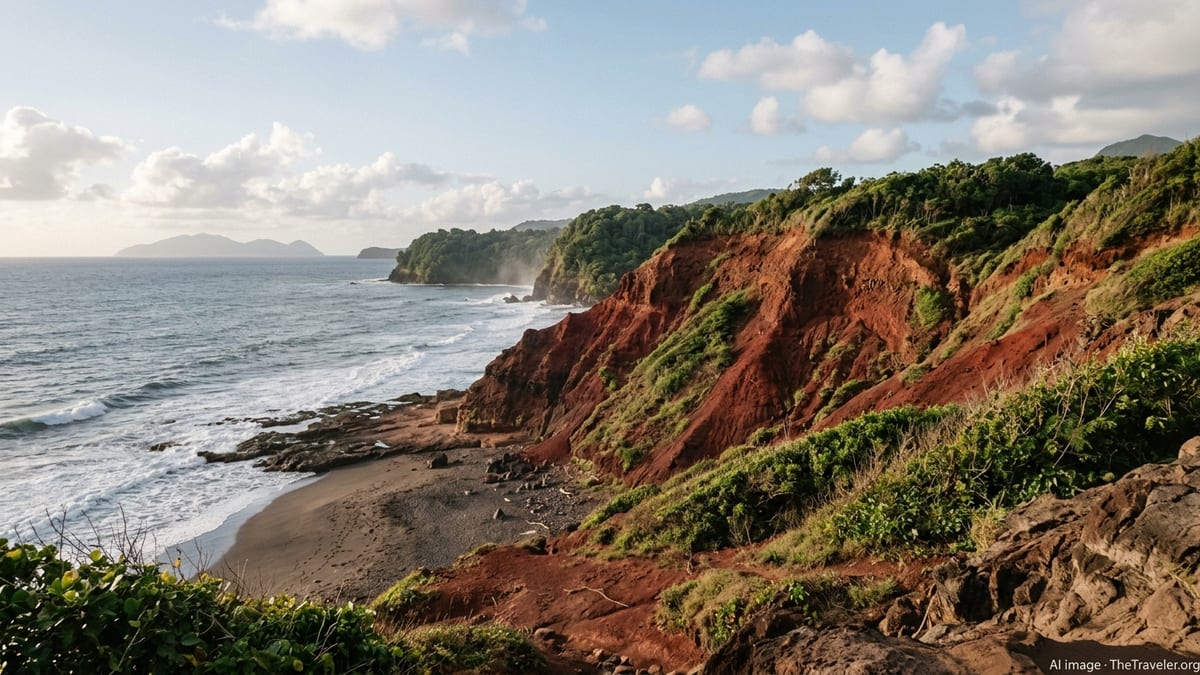
On the north coast of Dominica, just past the quiet village of Calibishie, a stretch of coastline is turning heads among a new wave of adventure travelers — and it looks like nothing else in the Caribbean. The formation known as Red Rocks, named for its vivid iron-rich volcanic stone, is drawing visitors who want something rawer, more elemental, and further off the beaten path than the region’s typical resort experience.
Dominica has long carried the nickname “Nature Island” of the Caribbean, and for good reason. The island is defined by waterfalls, volcanic lakes, and dense rainforest. But Red Rocks represents a different kind of natural spectacle — a rugged, wind-battered coastline shaped by volcanic forces, standing in sharp contrast to the lush green hills that most travelers associate with the island.
In 2026, interest in the site appears to be growing. Adventurers seeking experiences that feel genuinely untouched are increasingly pointing to Dominica’s north coast as a destination worth the journey.
What Makes Red Rocks Different From the Rest of Dominica
Most Caribbean destinations compete on beaches — white sand, calm water, easy access. Red Rocks competes on something else entirely: geological drama. The site features an iron-rich coastline formed by volcanic activity, producing the deep red and rust-colored rock formations that give the area its name.
The contrast is striking. On one side, you have Dominica’s signature green hills and tropical vegetation. On the other, this exposed, almost otherworldly stretch of red stone meeting the Atlantic. It’s the kind of landscape that feels more like Iceland or the Azores than the Caribbean — which is precisely why it’s catching on with a particular kind of traveler.
Located beyond Calibishie, the site sits on a part of the island that sees far fewer visitors than Dominica’s more established attractions. That remoteness is part of the appeal. People who make the trip aren’t looking for convenience — they’re looking for an experience that feels earned.
Why Dominica Is Attracting Adventure Travelers in 2026
Dominica’s reputation as an eco-tourism destination isn’t new. The island has spent years building an identity around natural experiences that go beyond the surface-level beach holiday. Its volcanic lakes, including the famous Boiling Lake — one of the largest of its kind in the world — have long been a draw for serious hikers. Its rainforests and waterfalls have made it a favorite among nature photographers and wildlife enthusiasts.
What’s shifting in 2026 is the type of traveler paying attention. As more popular Caribbean destinations become crowded and commercialized, a growing segment of adventurers is actively seeking out places that feel less developed, less polished, and more connected to the natural world. Dominica, and Red Rocks specifically, fits that profile almost perfectly.
The island’s volcanic geography means that almost every corner holds something visually dramatic. Red Rocks is simply the latest feature to break through into wider awareness — a hidden gem, in the truest sense of the phrase, now stepping into a larger spotlight.
Key Features of the Red Rocks Area at a Glance
| Feature | Detail |
|---|---|
| Location | North coast of Dominica, near Calibishie village |
| Formation Type | Iron-rich volcanic rock coastline |
| Visual Character | Deep red and rust-colored stone formations |
| Surrounding Landscape | Lush green hills and tropical vegetation |
| Visitor Profile | Adventure travelers, eco-tourists, nature photographers |
| Accessibility | Remote; located beyond the village of Calibishie |
| Island Nickname | “Nature Island” of the Caribbean |
- The site offers a rugged coastal experience shaped by volcanic action
- The red coloration comes from iron-rich rock formed through geological processes
- The location is on Dominica’s north coast, near the village of Calibishie
- The surrounding landscape creates a sharp visual contrast between red stone and green hills
- The area appeals to travelers specifically seeking experiences outside mainstream Caribbean tourism
Who This Kind of Travel Is Really For
Red Rocks isn’t a destination for travelers who want a lounger and a cocktail menu. The site’s appeal is rooted in its rawness — the sense that you’re standing somewhere that hasn’t been packaged or smoothed over for mass consumption.
Adventure travelers, hikers, landscape photographers, and eco-tourists are the natural audience. So are travelers who have already checked off Dominica’s more famous landmarks — the Boiling Lake, Trafalgar Falls, the Waitukubuli National Trail — and want to push further into the island’s less-visited corners.
The north coast around Calibishie is also a quieter, more laid-back part of Dominica compared to the capital Roseau. Visitors who base themselves in that area tend to find a more unhurried pace, with access to both the Red Rocks formation and the broader natural landscape of the island’s northern end.
For travelers who feel like the Caribbean has become too predictable, Dominica’s north coast offers a genuine alternative. The island has never tried to be Aruba or St. Barts — and Red Rocks is perhaps the clearest expression of what makes it different.
What Visitors Should Know Before Making the Trip
Dominica as a whole requires a certain mindset. Infrastructure is more limited than on larger Caribbean islands, and the terrain can be demanding. Travelers who thrive in that environment tend to leave with experiences they talk about for years. Those expecting resort-style convenience may find the adjustment challenging.
The Red Rocks area, being remote even by Dominica’s standards, rewards preparation. Getting there typically means navigating the roads of the north coast, and the site itself is a natural, undeveloped formation — not a managed attraction with facilities.
Observers note that the growing interest in sites like Red Rocks reflects a broader shift in how a segment of travelers thinks about the Caribbean. The region is vast and geologically diverse, and destinations like Dominica are increasingly seen as representing what the Caribbean looked like before large-scale tourism reshaped so much of it.
Frequently Asked Questions
Where exactly are the Red Rocks located in Dominica?
Red Rocks are located on the north coast of Dominica, just beyond the village of Calibishie.
What gives the Red Rocks their distinctive color?
The red and rust coloration comes from iron-rich volcanic rock formed through geological processes over time.
Is Red Rocks a managed tourist attraction?
Based on available information, Red Rocks is a natural, undeveloped coastal formation rather than a managed attraction with facilities — visitors should prepare accordingly.
Why is Dominica called the “Nature Island” of the Caribbean?
Dominica earned the nickname due to its exceptional natural features, including waterfalls, volcanic lakes, dense rainforests, and rugged coastlines like Red Rocks.
What type of traveler is Red Rocks best suited for?
The site appeals primarily to adventure travelers, eco-tourists, hikers, and nature photographers seeking raw, undeveloped natural landscapes away from mainstream Caribbean tourism.
Are there other natural attractions near Red Rocks on Dominica’s north coast?
The north coast around Calibishie offers access to Dominica’s broader natural landscape, though specific nearby attractions beyond Red Rocks are not detailed in current reporting on the site.




Leave a Reply