
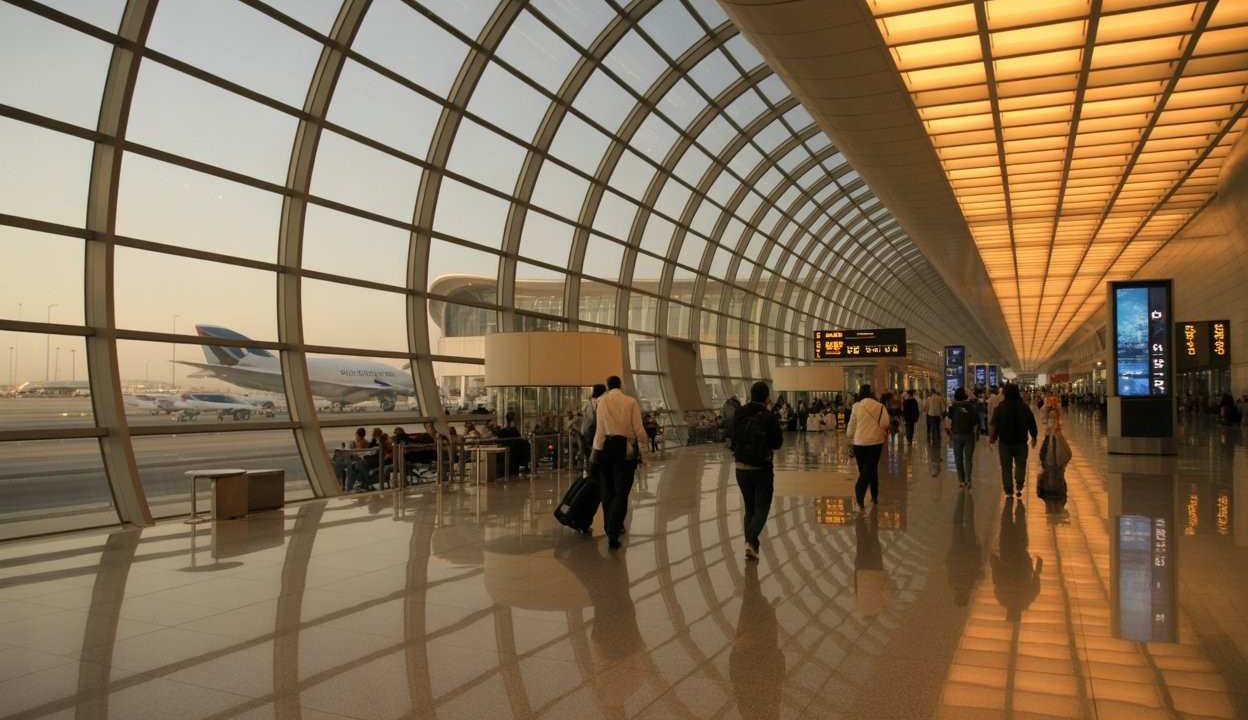
Nearly twelve million passengers flew between India and Dubai in 2025 alone — making India the single largest source market for Dubai International Airport. Now, a sweeping new flight restriction threatens to unravel that relationship, with real consequences for travelers, airlines, and the tourism economies on both sides.
Starting April 20, 2026, Dubai authorities are limiting all foreign carriers to just one daily round-trip service across both Dubai International Airport (DXB) and Al Maktoum International Airport (DWC). The restrictions are set to remain in place through May 31, 2026. For Indian airlines that have built dense, multi-frequency schedules on one of aviation’s busiest corridors, the impact is immediate and significant.
The policy is linked to regional tensions, including the ongoing Iran crisis, which has prompted Dubai to tighten control over its airspace and airport capacity. What began as a geopolitical precaution is now reshaping travel plans for millions of people.
What the Flight Cap Actually Means for India-Dubai Travel
The restriction is straightforward but its effects are wide-ranging. Every foreign airline — including Indian carriers — is now capped at a single daily round-trip to Dubai, regardless of how many flights they previously operated. That means airlines that ran multiple daily departures between Indian cities and Dubai must now consolidate or cancel a significant portion of their schedules.
Both of Dubai’s major airports are covered under the cap. DXB, which handles the bulk of passenger traffic, and DWC, which has been growing as an alternative hub, are both subject to the one-flight-per-day ceiling. There is no workaround that allows airlines to split their frequencies between the two airports to maintain overall capacity.
The restrictions stem from broader regional instability. Authorities have pointed to the Iran crisis as the primary driver of the policy, reflecting how quickly geopolitical events can translate into concrete disruptions for ordinary travelers and commercial aviation.
The Numbers Behind the Disruption
To understand why this matters so much, it helps to look at the scale of what is being affected. India is not just one of Dubai’s top markets — it is the top market. The volume of travel between the two destinations supports an entire ecosystem of hospitality, retail, and attractions.
| Detail | Information |
|---|---|
| India’s rank as DXB source market (2025) | Number one |
| Estimated Indian passengers through DXB (2025) | Nearly 12 million |
| Flight cap per foreign carrier per day | One round-trip |
| Airports covered by the restriction | DXB and DWC |
| Restriction start date | April 20, 2026 |
| Restriction end date | May 31, 2026 |
The sheer passenger volume tells the story. Nearly twelve million travelers in a single year means roughly 33,000 people crossing between India and Dubai every day on average. Even a partial reduction in seat availability will be felt almost immediately in ticket prices, booking availability, and the downstream businesses that depend on visitor arrivals.
Who Feels This Most — and How
Indian airlines are on the front line. Carriers that operate multiple daily flights to Dubai — serving cities like Mumbai, Delhi, Chennai, Bengaluru, and others — are being forced to slash their schedules down to a single daily service. That means fewer seats, and almost certainly higher fares, for anyone trying to fly the route during the restriction period.
For travelers, the practical consequences are real. Flights that were previously easy to book on short notice will become harder to find. Business travelers who rely on flexible scheduling will face fewer options. Families planning holidays or visits during the April-to-May window may find themselves either paying significantly more or rerouting through third countries.
Dubai’s tourism sector also absorbs a direct hit. The city’s hotels, shopping destinations, and landmark attractions like Burj Khalifa draw heavily from Indian visitors. A drop in Indian arrivals — even a temporary one spanning six weeks — represents meaningful lost revenue for a tourism economy that has treated the India corridor as its single most important source of international visitors.
On the Indian side, outbound travel demand doesn’t disappear — it redirects. Travelers who would have gone to Dubai may look toward other Gulf destinations, Southeast Asia, or European cities, pulling spending away from Dubai’s hospitality and retail sectors.
What Happens After May 31
The current restrictions are set to expire on May 31, 2026. Whether they are lifted on schedule, extended, or modified will depend largely on how the regional situation — particularly tensions connected to the Iran crisis — evolves over the coming weeks.
If conditions stabilize, airlines could resume normal scheduling relatively quickly. Aviation routes of this scale don’t take long to rebuild once capacity restrictions are lifted, given that the demand clearly exists. However, if the geopolitical situation deteriorates further, an extension of the cap beyond May cannot be ruled out.
For anyone with travel plans between India and Dubai in this window, the practical advice is to book early and monitor airline announcements closely. Seat availability on the restricted one-flight-per-day services will be under significant pressure, and last-minute options may be scarce or expensive.
Airlines are expected to prioritize their highest-demand city pairs during the restriction period, which could mean travelers from smaller Indian cities face even tighter options than those flying from major hubs.
Frequently Asked Questions
When do the Dubai flight restrictions take effect?
The restrictions begin on April 20, 2026, and are currently scheduled to remain in place until May 31, 2026.
How many flights can foreign airlines operate to Dubai under the cap?
Foreign carriers are limited to one daily round-trip service, covering both Dubai International Airport (DXB) and Al Maktoum International Airport (DWC).
Why is Dubai imposing these flight restrictions?
The policy is linked to regional tensions, including the Iran crisis, which has prompted Dubai authorities to limit foreign airline operations during this period.
Why does this particularly affect India?
India was the top passenger market for Dubai International Airport in 2025, with nearly twelve million travelers, making it the most heavily impacted country by any reduction in flight capacity.
Will the restrictions be lifted after May 31, 2026?
The current end date is May 31, 2026, but whether the cap is lifted or extended will depend on how the regional geopolitical situation develops. This has not yet been confirmed either way.
What should travelers with upcoming Dubai trips do?
Travelers should book seats as early as possible, since the one-flight-per-day cap will put significant pressure on available seats, and monitor airline announcements for schedule changes.



Leave a Reply