
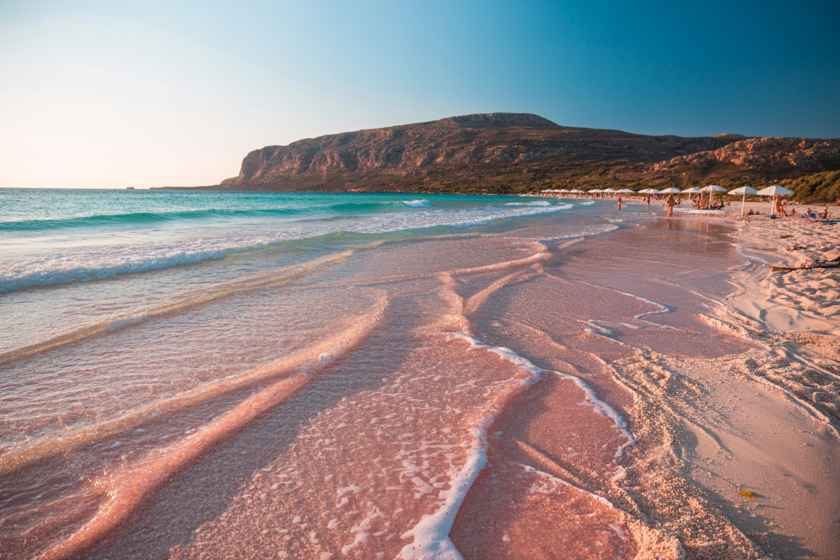
There are beaches, and then there is Elafonissi. Tucked along the southwestern coast of Crete, this stretch of shoreline has earned a reputation as one of the most visually striking beaches in all of Greece — and the reason is immediately obvious the moment you arrive: the sand is pink.
Not a faint blush, not a trick of the light at sunset. The sand at Elafonissi Beach carries a genuine rosy hue, the result of crushed coral, shells, and marine life that have mixed with the natural elements over thousands of years. It is a detail that sounds almost too picturesque to be real — but it is, and thousands of visitors make the journey to this remote corner of Crete every year to see it for themselves.
If you are planning a trip to Greece and wondering whether Elafonissi deserves a place on your itinerary, the short answer is yes. Here is everything you need to know before you go.
What Makes Elafonissi Beach So Different From Other Beaches in Greece
Greece has no shortage of beautiful beaches. The Aegean and Ionian coasts are lined with them. But Elafonissi stands apart for a combination of reasons that goes well beyond its famous pink sand.
The beach sits within a protected nature reserve, which means the environment is actively maintained and shielded from the kind of overdevelopment that has compromised other popular Mediterranean destinations. The result is a beach that still feels genuinely wild and unspoiled, even as it draws large crowds during peak season.
The waters here are exceptionally shallow, which gives the sea an almost lagoon-like quality. The shallow depth means the water warms quickly under the Greek sun and stays calm enough for children and non-swimmers to wade comfortably. For families in particular, this is a significant draw.
The setting also appeals to nature lovers. Because the area is a protected reserve, the surrounding landscape supports diverse wildlife, and the ecosystem around the beach remains largely intact.
The Pink Sand: Why It Looks the Way It Does
The most-asked question about Elafonissi is almost always the same: is the sand really pink? The answer is yes — though the intensity of the color can vary depending on the time of day, the light, and where exactly you are standing on the beach.
The pink coloration comes from a natural process. Over time, crushed coral, shells, and fragments of marine life have accumulated and blended with the sand, giving it its distinctive rosy tint. This is not a phenomenon unique to Elafonissi — pink sand beaches exist in a handful of places around the world — but it is exceptionally rare in Europe, which makes Crete’s version particularly special.
The color tends to be most vivid when the sand is wet, and certain sections of the beach display it more prominently than others. First-time visitors are often advised to explore the full length of the shoreline rather than settling in the first spot they find.
Who Elafonissi Beach Is Right For
One of the things that makes Elafonissi genuinely versatile as a destination is how well it serves different types of travelers. It is not just a beach for one kind of visitor.
- Families benefit from the shallow, calm waters that are safe for children and easy for non-swimmers to enjoy.
- Couples are drawn by the romantic setting — the pink sand, the turquoise water, and the relative seclusion of the southwestern coast.
- Nature lovers can explore the protected reserve and observe the wildlife that inhabits the surrounding landscape.
- Water sports enthusiasts will find options available at the beach for those who want something more active than sunbathing.
- Photographers consistently rate Elafonissi among the most visually rewarding locations in the entire Mediterranean.
The combination of natural beauty, calm conditions, and protected status makes it genuinely difficult to find a type of traveler who would not get something meaningful out of a visit.
Key Facts About Visiting Elafonissi
| Feature | Details |
|---|---|
| Location | Southwestern coast of Crete, Greece |
| What makes it unique | Pink sand formed from crushed coral, shells, and marine life |
| Water conditions | Shallow, calm, crystal-clear — suitable for families |
| Environmental status | Protected nature reserve |
| Activities available | Swimming, relaxing, wildlife exploration, water sports |
| Best suited for | Families, couples, nature lovers, water sports enthusiasts |
What the Protected Status Actually Means for Visitors
Elafonissi being designated as a protected nature reserve is not just a label — it has real implications for what the beach looks and feels like when you visit.
The protected status limits the kind of commercial development that can take place in and around the area. That means no sprawling resort complexes right on the sand, no heavy infrastructure that would change the character of the coastline. The natural environment is given legal protection, which is part of why the beach has retained its pristine condition despite attracting significant visitor numbers each year.
For travelers, this translates to a beach experience that feels more authentic and less commercialized than many popular Mediterranean destinations. The trade-off is that facilities may be more limited than at heavily developed beach resorts — something worth factoring into your planning if you are traveling with specific needs or expectations.
Planning Your Visit to Elafonissi
Elafonissi sits on the far southwestern tip of Crete, which means getting there requires some commitment. The beach is not a quick stop from Heraklion or Chania — it is a destination in itself, typically requiring a dedicated day trip or an overnight stay in the surrounding area.
Given its popularity, arriving early in the day is widely recommended, particularly during the summer months when visitor numbers are at their highest. The beach’s remote location and protected status mean that space is finite, and the most peaceful experience tends to belong to those who get there first.
The combination of its striking natural beauty, its calm and shallow waters, and its status as a protected reserve makes Elafonissi one of those rare places that genuinely lives up to its reputation — and in travel, that is never a given.
Frequently Asked Questions
Is the pink sand at Elafonissi Beach real?
Yes. The sand gets its pink color from crushed coral, shells, and marine life that have mixed with the natural sand over time.
Where exactly is Elafonissi Beach located?
Elafonissi Beach is located on the southwestern coast of Crete, Greece.
Is Elafonissi Beach suitable for children?
Yes. The beach is known for its shallow, calm, crystal-clear waters, which make it particularly well-suited for families with children.
Is Elafonissi Beach a protected area?
Yes. The beach is part of a protected nature reserve, which helps preserve its pristine environment and limits overdevelopment in the area.
What activities can you do at Elafonissi Beach?
Visitors can swim, relax, explore the surrounding wildlife, and participate in water sports, according to available information about the beach.
Is Elafonissi Beach only for certain types of travelers?
No. The beach is described as suitable for families, couples, nature lovers, and water sports enthusiasts, making it a versatile destination for a wide range of visitors.




Leave a Reply