
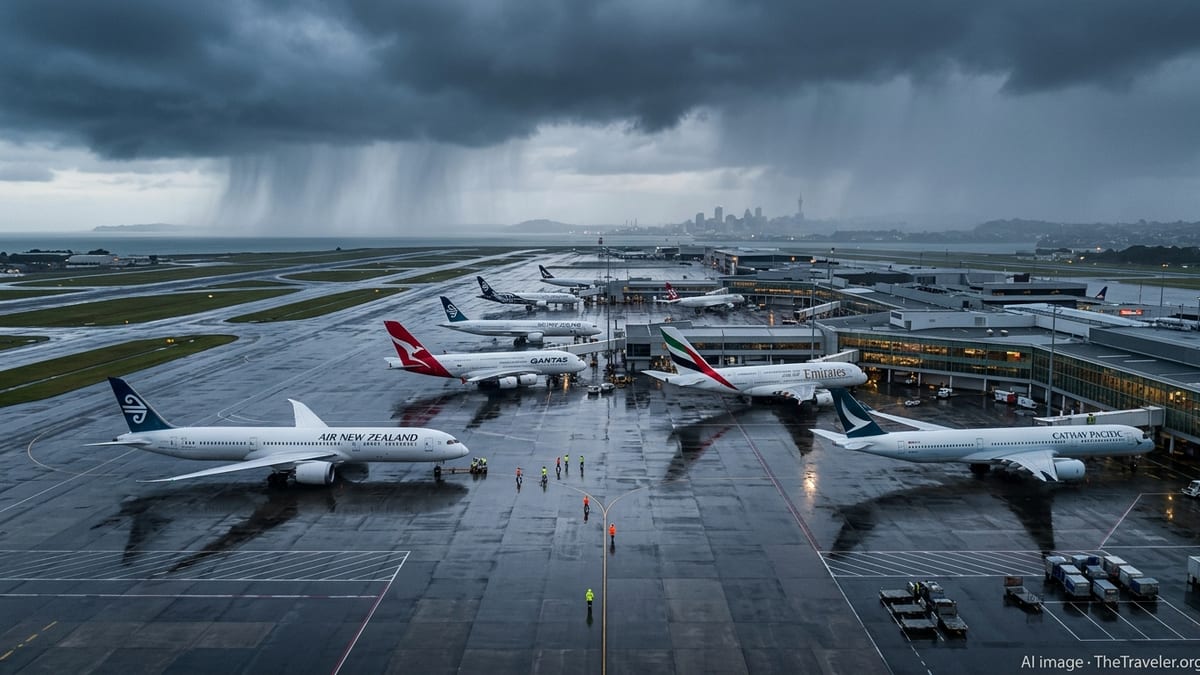
Up to 320 millimetres of rain is forecast to hammer New Zealand’s North Island — and the consequences for international travellers are already rippling across airlines, hotels, and airports before the first drop has even fallen.
The storm system, expected to bring severe flooding, landslides, and hazardous conditions to key travel hubs including Auckland, Northland, and the Bay of Plenty, has placed major carriers on alert. Air New Zealand, Qantas, Emirates, Singapore Airlines, Cathay Pacific, and American Airlines are all bracing for what could become one of the more disruptive weather events of the current travel season in the Southern Hemisphere.
For the thousands of tourists currently in New Zealand — or booked to arrive — the situation is anything but routine. Travellers from Australia, the United States, China, and the United Kingdom are among those most exposed to potential flight delays, cancellations, and re-routing chaos.
Why This Storm Has Airlines Watching Closely
The North Island of New Zealand is no stranger to heavy rainfall, but 320mm of rain in a single weather event places this forecast firmly in the severe category. That volume of water — roughly equivalent to what some regions receive over several months — is enough to overwhelm drainage systems, close roads, and make ground operations at airports genuinely dangerous.
Auckland Airport is New Zealand’s busiest international gateway. Any significant disruption there creates a cascade effect: delayed inbound flights back up outbound schedules, connecting passengers miss onward legs, and airlines scramble to reposition aircraft. When that disruption hits simultaneously across Northland and Bay of Plenty, the options for re-routing or diversion shrink quickly.
For carriers like Emirates and Singapore Airlines operating long-haul routes into Auckland, the implications are significant. Turning around a wide-body aircraft that has flown from Dubai or Singapore isn’t a simple rescheduling exercise — it involves crew hours, slot availability, and passenger welfare obligations that can stretch for days.
Airlines and Routes in the Firing Line
The carriers flagged as facing potential disruption span some of the world’s busiest international routes into New Zealand. Here’s a breakdown of the airlines involved and the passenger groups most affected:
| Airline | Key Affected Passenger Origin | Primary Risk |
|---|---|---|
| Air New Zealand | Australia, UK, US, China | Flight delays and cancellations at Auckland |
| Qantas | Australia | Trans-Tasman route disruption |
| Emirates | UK, Middle East, connecting passengers | Long-haul re-routing and delays |
| Singapore Airlines | China, Southeast Asia, UK | Auckland arrival and departure delays |
| Cathay Pacific | China, Hong Kong, UK | Flight cancellations and diversions |
| American Airlines | United States | Transpacific schedule disruption |
Australian travellers face a particular challenge given the volume of trans-Tasman flights operating daily. Qantas and Air New Zealand together run a dense schedule between Australian cities and Auckland, meaning even a partial shutdown creates a significant backlog that takes days to clear.
What This Means for Tourists Already on the Ground
If you’re currently travelling in New Zealand’s North Island — or due to arrive in the coming days — the practical risks go well beyond a delayed flight. Flooding and landslides can close state highways, cut off tourist regions, and make travel between cities unreliable even after the rain stops.
The hospitality sector is already bracing for the fallout. Hotels in Auckland and across the North Island are anticipating cancellations, particularly from international visitors who may choose to defer travel or who simply cannot get their flights confirmed. High-end resorts and smaller accommodation providers alike face the prospect of no-show bookings and the financial uncertainty that comes with them.
Travellers from the US and UK face an added complication: their flights typically involve long-haul connections through hubs like Singapore, Hong Kong, or Dubai. A disruption at the Auckland end doesn’t just affect the final leg — it can unravel an entire itinerary involving multiple carriers and carefully timed connections.
Chinese tourists, many of whom travel on group tour itineraries with pre-booked accommodation and activities, face particular disruption if their arrival windows shift by even a day or two. Tour operators managing those bookings will be working urgently to adjust schedules.
What Happens Next for Stranded and At-Risk Travellers
Airlines typically activate weather waiver policies when a significant storm is forecast, allowing passengers to rebook without fees. Travellers on affected routes should check directly with their carrier for any advisory notices — most major airlines post these to their websites and apps within 24 to 48 hours of a confirmed severe weather event.
Travel insurance holders should document everything: keep records of any official airline communications, weather warnings issued by New Zealand authorities, and any accommodation costs incurred as a result of delays. Whether a policy covers weather-related disruption depends on the specific terms, but documentation is always the starting point for any claim.
For those still planning to travel to New Zealand in the near term, monitoring official weather warnings from New Zealand’s meteorological authorities is the most reliable way to stay ahead of developments. The situation can evolve quickly — what begins as a forecast can become a confirmed severe warning within hours.
The broader travel industry will be watching closely. New Zealand’s tourism sector depends heavily on international visitors, particularly during the Southern Hemisphere’s key travel months. A major weather disruption that shakes confidence among Australian, American, Chinese, and British tourists could have consequences that extend well beyond the storm itself.
Frequently Asked Questions
Which airlines are affected by the New Zealand storm forecast?
Air New Zealand, Qantas, Emirates, Singapore Airlines, Cathay Pacific, and American Airlines have all been flagged as facing potential disruption from the severe weather event.
How much rain is forecast for New Zealand’s North Island?
The forecast calls for up to 320 millimetres of rain, with severe warnings in place for Auckland, Northland, and the Bay of Plenty.
Which tourists are most at risk of disruption?
Travellers from Australia, the United States, China, and the United Kingdom are among those most exposed to flight delays, cancellations, and re-routing.
Will hotels in New Zealand be affected?
Yes — the hospitality sector, including high-end resorts and other accommodation providers across the North Island, is bracing for cancellations linked to the storm.
What should affected travellers do right now?
Check your airline’s website for any weather waiver or rebooking advisory, contact your travel insurer, and monitor official New Zealand weather warnings for the latest updates.
Could flights be cancelled entirely, or just delayed?
Both outcomes are possible — the storm is forecast to cause flooding and landslides severe enough to affect airport operations, which can lead to both delays and outright cancellations depending on conditions.



Leave a Reply