
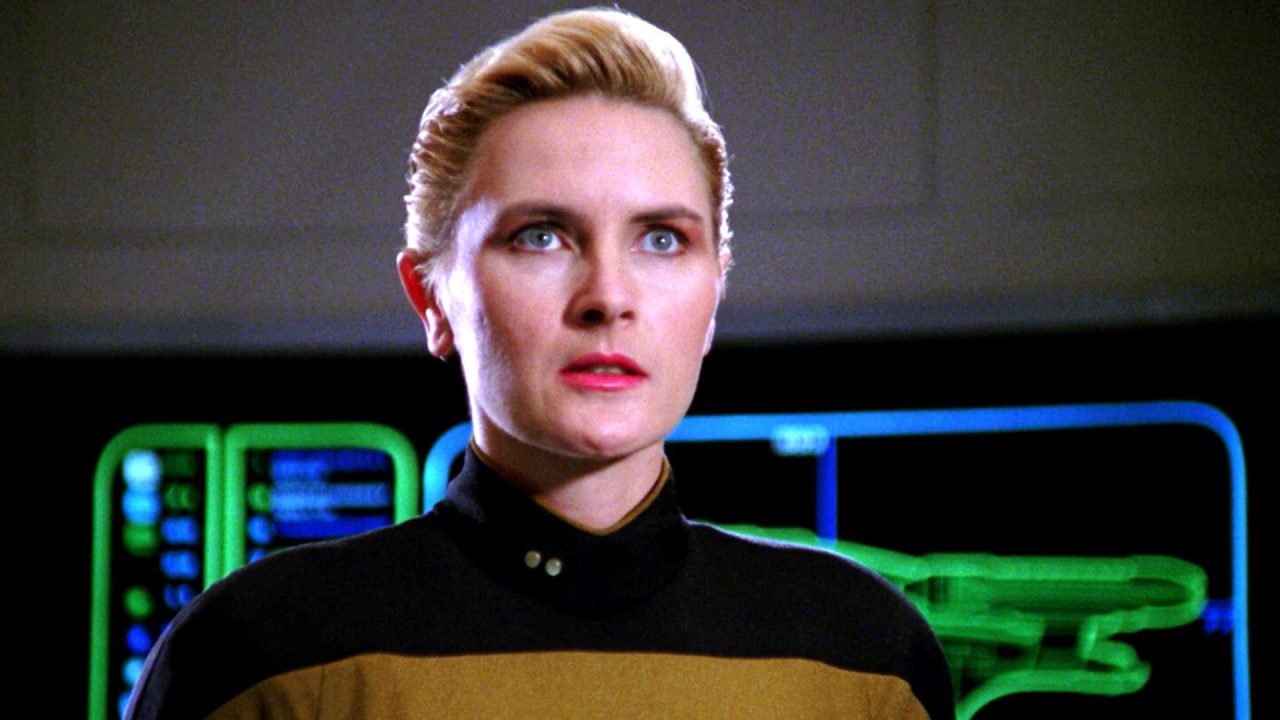
Few debates in science fiction fandom run as deep or as long as the one between fans of Star Trek: The Original Series and Star Trek: The Next Generation. For years after TNG premiered in 1987, many loyalists refused to accept that a new crew on a new Enterprise could ever match what Kirk, Spock, and McCoy had built. Then came a specific episode that changed the conversation — and for a significant portion of the fanbase, settled it.
The question of when, exactly, TNG stopped being “the new Star Trek” and became something arguably greater than its predecessor is one fans still argue about. But there is a strong case that a single episode marks the turning point — the moment The Next Generation stopped trying to live up to TOS and started surpassing it on its own terms.
Whether you grew up with the original crew or came to Trek through Picard and Data, this debate touches on what makes great science fiction work in the first place: not just the technology or the alien worlds, but the depth of the characters and the boldness of the storytelling.
Why TNG Had Such a Hard Act to Follow
When The Next Generation launched, it carried enormous weight. The Original Series had already become a cultural institution — not just a TV show, but a philosophy, a community, and for many viewers, a formative part of their identity. Kirk was a swashbuckling hero in the classic mold. Spock was one of the most iconic characters in television history. The original series had also spawned a successful film franchise that kept the characters alive and beloved well into the 1980s.
TNG, by contrast, started slowly. Its first season is widely acknowledged — even by devoted fans — as uneven at best. The characters took time to find their footing. Episodes felt, on occasion, like pale imitations of what the original series had already done. Critics and fans were skeptical, and not without reason.
What changed was the writing, the confidence, and the willingness to let these new characters carry genuinely complex, morally serious stories. TNG gradually built toward something the original series, for all its brilliance, rarely attempted: sustained, novelistic character development across multiple seasons.
The Episode That Marked the Shift
The episode most frequently cited as the moment TNG surpassed TOS is “The Best of Both Worlds” — the two-part story that closed Season 3 and opened Season 4, in which Captain Picard is captured and assimilated by the Borg, transformed into Locutus, and used as a weapon against humanity.
What made this story so significant was not just its scale, though the stakes were genuinely enormous by television standards of the time. It was the fact that the show was willing to do something the original series almost never did: put its central character through something that could not be undone by the end of the episode. Picard was not saved and reset. He was fundamentally changed, and that change echoed through the rest of the series and into the films.
The cliffhanger ending of Part 1 — Riker ordering the crew to fire on a Borg cube containing their own captain — was television that audiences in 1990 genuinely did not know how to process. It was ambitious in a way that felt new for Trek, and it announced that TNG was operating at a different level.
What TNG Did That TOS Could Not — or Would Not
It is worth being fair to the original series here. TOS was a product of its era, constrained by network television norms of the 1960s that made serialized storytelling almost impossible. Episodes had to be self-contained. Characters had to be reset. The format itself limited what the writers could do with long-term consequences.
TNG benefited from a changed television landscape and, crucially, from being a syndicated series with more creative freedom than a network show. But it also benefited from a writing staff that, by Season 3, was genuinely pushing the medium. Episodes like “The Measure of a Man,” “Who Watches the Watchers,” and “Yesterday’s Enterprise” showed a series willing to engage with philosophy, ethics, and consequence in ways that felt more like prestige drama than adventure television.
| Series | Premiered | Serialized Storytelling | Notable Turning Point |
|---|---|---|---|
| Star Trek: The Original Series | 1966 | Largely episodic, self-contained | Cultural institution; set the template |
| Star Trek: The Next Generation | 1987 | Increasingly serialized from Season 3 onward | “The Best of Both Worlds” (1990) |
Why This Debate Still Matters to Trek Fans
The TOS versus TNG argument is not really about which show is “better” in some objective sense. It is about what you want from science fiction, and what you want from the Star Trek universe specifically.
Fans of the original series often point to its energy, its humor, and the irreplaceable chemistry between Shatner, Nimoy, and Kelley. Those three actors created something that has never quite been replicated, and the original series carries a pioneering spirit that no successor can claim in the same way.
But fans of TNG argue — with considerable justification — that the later series used the foundation TOS built and constructed something more architecturally complex on top of it. Picard is a different kind of hero than Kirk: more contemplative, more morally conflicted, and ultimately capable of carrying heavier narrative weight.
The Borg arc, and “The Best of Both Worlds” in particular, is the clearest evidence for that argument. It is the moment TNG stopped borrowing from TOS’s playbook and wrote one of its own.
The Legacy That Followed
The impact of that creative leap did not stop with the episode itself. Picard’s assimilation informed his character for the rest of TNG’s run, shaped the film Star Trek: First Contact — widely considered the best TNG film — and remained central to his story decades later in the Picard streaming series.
That kind of lasting consequence is exactly what separates a truly significant television moment from a merely entertaining one. TOS gave Trek its soul. TNG, at its best, showed what that soul could carry.
Frequently Asked Questions
Which episode is most often cited as the moment TNG surpassed TOS?
“The Best of Both Worlds,” the two-part story spanning the end of Season 3 and the beginning of Season 4, is widely considered the turning point where TNG established itself as something greater than a successor to the original series.
When did “The Best of Both Worlds” air?
Part 1 aired in 1990 as the Season 3 finale, with Part 2 opening Season 4 shortly after. The cliffhanger ending between the two parts became one of the most talked-about moments in Trek television history.
Why did TNG struggle in its early seasons?
The first season is broadly acknowledged by fans and critics as uneven, with characters still finding their footing and episodes that felt derivative of TOS. The show built confidence and creative ambition gradually, hitting its stride around Season 3.
Is TNG considered better than TOS overall?
This remains one of the most debated questions in the Trek fanbase. TOS is credited with creating the franchise’s identity and cultural impact, while TNG is often praised for deeper character development and more complex, serialized storytelling.
How did Picard’s assimilation affect the rest of the franchise?
The consequences of Picard becoming Locutus carried through the remainder of TNG, directly shaped the film Star Trek: First Contact, and remained a defining element of his character in the later Picard streaming series.
What other TNG episodes are considered evidence of the show surpassing TOS?
Episodes frequently cited alongside “The Best of Both Worlds” include “The Measure of a Man,” “Yesterday’s Enterprise,” and “Who Watches the Watchers,” all of which demonstrated the show’s willingness to engage with serious ethical and philosophical questions.

Leave a Reply