
Could your hours spent mastering fast-paced video games actually qualify you for one of the most demanding — and well-paying — jobs in aviation? According to the Federal Aviation Administration, the answer may be closer to yes than most people realize.
The FAA has opened its annual hiring window for air traffic control specialists, and this year’s campaign is sending a clear signal to a new generation of candidates: the cognitive skills that make someone exceptional at gaming — rapid decision-making, multitasking under pressure, spatial awareness, and strategic thinking — are precisely the skills that make a great air traffic controller.
For anyone who has ever wondered whether there’s a career path that combines high stakes, high responsibility, and high reward, this hiring window is worth paying close attention to.
Why the FAA Is Actively Recruiting Right Now
Air traffic control is not a career that runs on autopilot. The FAA manages one of the most complex airspace systems in the world, and keeping it running safely requires a workforce that is sharp, well-trained, and adequately staffed at all times.
The agency’s decision to open this hiring window reflects the ongoing need to bring fresh talent into the pipeline. Air traffic controller roles are among the most technically demanding positions in the federal government, and the training process is rigorous — which means the FAA needs to recruit well ahead of actual staffing needs.
What makes this particular campaign stand out is its deliberate outreach to non-traditional candidates. Rather than limiting its search to aviation industry veterans or engineering graduates, the FAA is signaling that transferable cognitive skills matter — and that people who have sharpened those skills in unexpected places, including competitive gaming, are worth considering.
What Air Traffic Controller Jobs Actually Involve
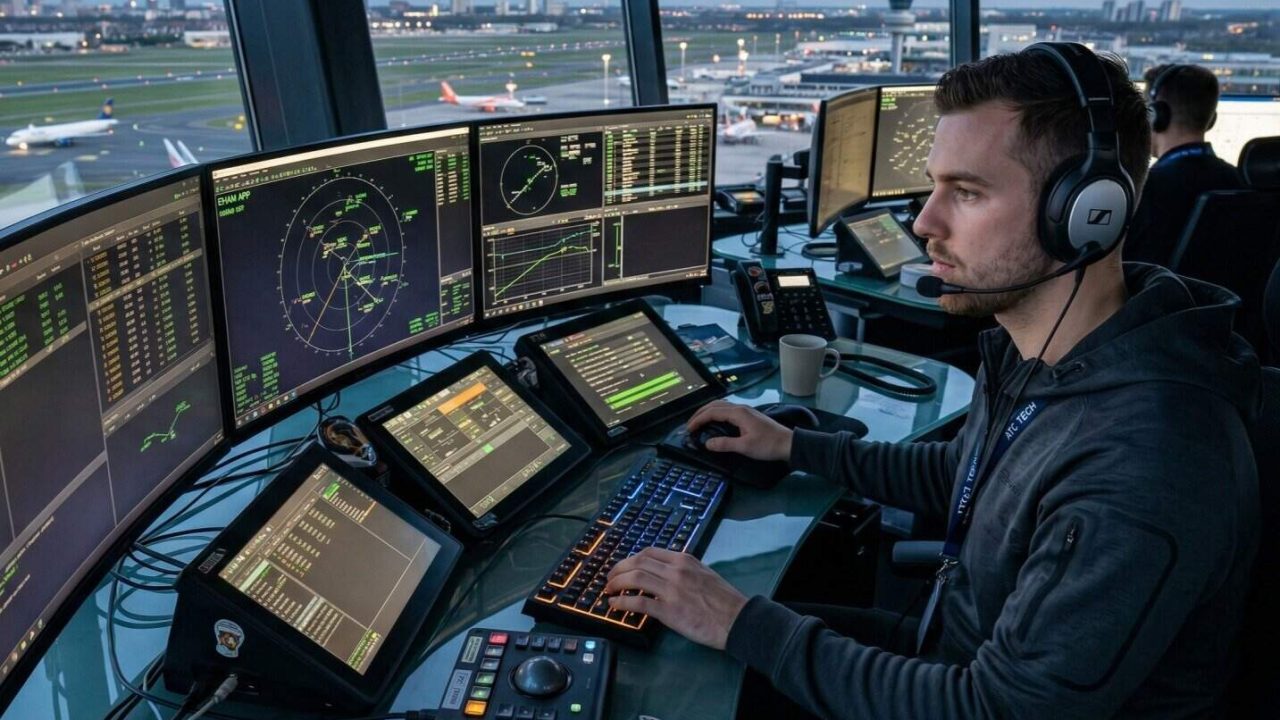
Air traffic controllers are responsible for the safe, orderly, and efficient movement of aircraft through designated airspace and on the ground at airports. The job demands constant situational awareness — tracking multiple aircraft simultaneously, communicating clearly with pilots, anticipating conflicts before they develop, and making split-second decisions when conditions change.
These are not skills that can be taught from a textbook alone. They require a particular type of mind: one that processes information quickly, stays calm under pressure, and can hold multiple variables in focus at the same time. It’s a profile that, as the FAA now openly acknowledges, overlaps significantly with the skill set developed through serious gaming.
| Skill Area | Relevance to Air Traffic Control | Common in Gamers? |
|---|---|---|
| Multitasking | Managing multiple aircraft simultaneously | Yes |
| Rapid decision-making | Responding to fast-changing airspace conditions | Yes |
| Strategic problem-solving | Anticipating and resolving potential conflicts | Yes |
| Spatial awareness | Visualizing aircraft positions in three dimensions | Yes |
| Focus under pressure | Maintaining accuracy during high-traffic periods | Yes |
Who Should Be Applying — and Why It Matters for Your Future
The FAA’s outreach to the gaming community is more than a marketing angle. It reflects a genuine recognition that the workforce of the future doesn’t always come packaged in a traditional aviation résumé. If you’re a young adult who has spent years developing fast reflexes, learning to read complex systems under time pressure, and coordinating with others in high-stakes digital environments, you may have more relevant experience than you think.
That said, this is still a highly selective federal career. Candidates must meet specific eligibility requirements, pass a rigorous aptitude assessment, and complete formal training before they can work independently. The FAA is not lowering its standards — it’s broadening its talent search.
For candidates who do make it through, the career offers genuine long-term rewards. Air traffic control is a federal position with competitive pay, strong benefits, and a defined career path. It is also work that carries real meaning — every shift contributes directly to the safety of thousands of passengers in the air.
- Aviation industry background or engineering degree required as a baseline expectation.
- Familiar with technical aviation systems and standard operational procedures.
- Recruited primarily through conventional federal hiring channels and aviation networks.
- Cognitive skill set valued regardless of formal aviation background or degree.
- Multitasking, rapid decision-making, and strategic thinking highlighted as key qualifications.
- Outreach now actively targets young adults with gaming and problem-solving skill profiles.
What Happens After You Apply
The hiring process for air traffic control specialist positions is structured and competitive. Candidates who apply during the open window can expect a multi-stage process that typically includes an initial eligibility screening, a biographical questionnaire, and the Air Traffic Skills Assessment — a cognitive test designed to evaluate the exact skills the FAA is looking for.
Those who pass the assessment move on to medical and background evaluations before being considered for placement at the FAA Academy. Training at the academy is intensive, and candidates must successfully complete it before being assigned to a facility.
The timeline from application to working as a certified controller is not short — it can take years. But for candidates who are serious about the career, the structured pathway is well-defined, and the FAA provides support throughout the process.
Anyone interested in applying should act during the open hiring window, as these opportunities are not available year-round. The FAA’s official USAJOBS listings are the authoritative source for current openings, eligibility requirements, and application deadlines.
Frequently Asked Questions
Do I need an aviation degree to apply for an air traffic controller job with the FAA?
The FAA’s current hiring campaign emphasizes cognitive and transferable skills, suggesting that a formal aviation background is not the only path — but specific eligibility requirements still apply and should be confirmed through official FAA listings.
Why is the FAA specifically interested in people with gaming skills?
The FAA has identified multitasking, rapid decision-making, and strategic problem-solving as core competencies for air traffic controllers — skills that many experienced gamers develop naturally through competitive play.
How long does the FAA hiring window stay open?
The hiring window is not permanent — it opens on an annual basis. Candidates are encouraged to apply as soon as the window is active, as opportunities are time-limited.
What is the Air Traffic Skills Assessment?
It is a cognitive aptitude test used by the FAA to evaluate whether candidates have the mental skill set needed for air traffic control work, including the ability to process information quickly and manage multiple tasks at once.
Is air traffic control a well-paying federal career?
Air traffic control specialist positions are among the higher-compensated roles in the federal government, with competitive pay and benefits — though exact figures vary by facility and experience level.
Where do I apply for FAA air traffic controller jobs?
Official FAA air traffic controller vacancies are posted through USAJOBS, the federal government’s central hiring platform, during active hiring windows.




Leave a Reply