
More than 188 flights were cancelled and nearly 4,000 delays were recorded in a single day across major US airports this spring — and for thousands of travelers caught in the middle of it, the numbers tell only part of the story.
The disruptions hit some of the country’s busiest hubs simultaneously, creating a backlog that airline crews and airport staff struggled to clear for hours. If you have travel plans in the coming weeks, or you were among those stranded this season, here is what happened and what it means for anyone moving through the US air travel system right now.
The timing could not have been worse. Spring is one of the peak periods for leisure and family travel, and this year’s wave of disruptions arrived just as millions of Americans were counting on smooth connections to reach their destinations.
What Triggered the Spring 2026 Flight Chaos
According to reports from March 2026, the disruptions were not caused by any single factor. Instead, a combination of pressures converged at the same time, overwhelming a system that had limited room to absorb the shock.
Three primary forces were identified as driving the chaos:
- TSA staffing shortages at major checkpoints, slowing the flow of passengers through security and creating cascading delays throughout terminals
- Severe weather conditions affecting flight paths and ground operations at key hubs
- Airline operational issues, including crew availability and aircraft repositioning problems that compounded the weather-related disruptions
When any one of these factors hits on its own, airlines can usually manage. When all three arrive together during a high-demand travel period, the result is what travelers experienced this spring — a near-total breakdown of normal scheduling across multiple airports at once.
The Airports Hit Hardest by Flight Cancellations and Delays
The disruptions were concentrated at four of the largest and most interconnected airports in the United States. Because these hubs feed connecting flights across the entire country, delays at any one of them ripple outward rapidly.
| Airport | Location | Role in US Air Network |
|---|---|---|
| John F. Kennedy International (JFK) | New York | Major domestic and international hub |
| Los Angeles International (LAX) | Los Angeles, California | Primary West Coast gateway |
| O’Hare International | Chicago, Illinois | One of the busiest connecting hubs in the world |
| Hartsfield-Jackson Atlanta International | Atlanta, Georgia | Consistently ranked among the world’s busiest airports |
These four airports collectively handle an enormous share of domestic US traffic. A disruption at all four simultaneously does not just inconvenience travelers at those locations — it affects connecting passengers across dozens of downstream cities.
What Passengers Actually Faced on the Ground
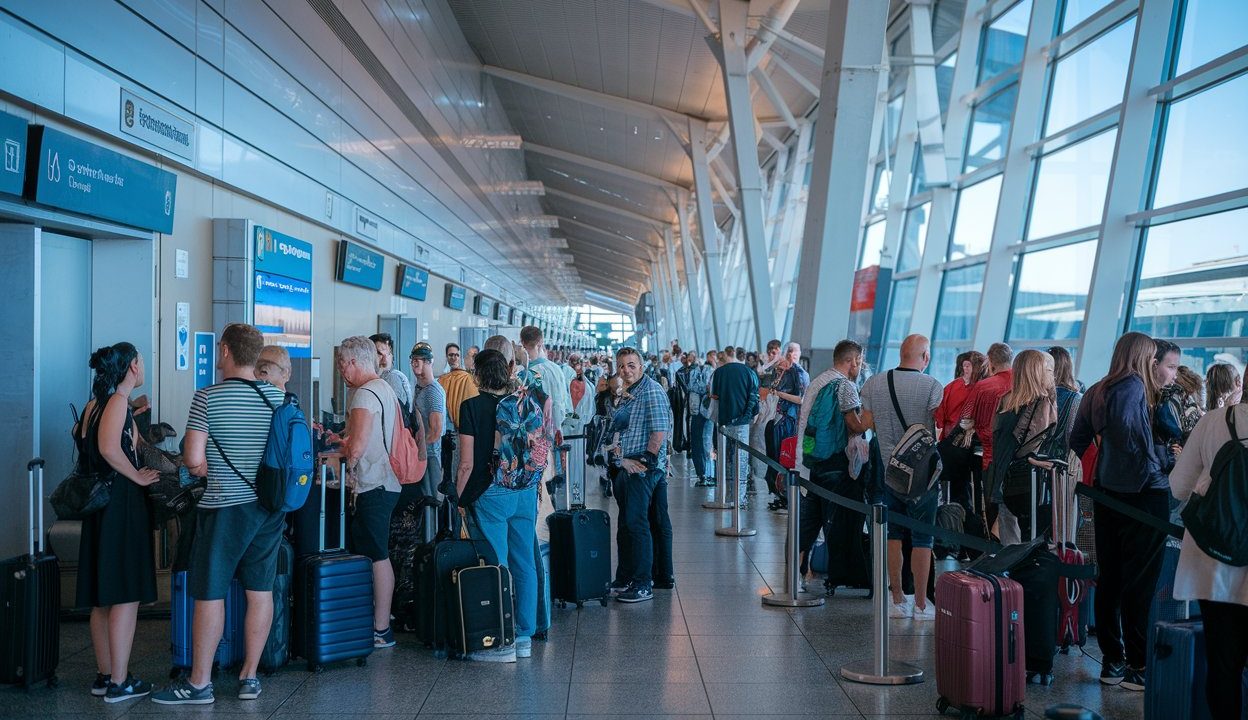
The raw numbers — 188 cancellations, nearly 4,000 delays — translate into something far more exhausting when you are the person sitting in the terminal with a dead phone, a missed connection, and no clear answer from the gate agent.
Reports from the period described passengers stranded in terminals for extended periods, scrambling to find alternate flights or waiting in long queues to rebook. Airline personnel worked to reassign crews and reposition aircraft, but the sheer volume of affected flights made it nearly impossible to clear the backlog quickly.
For many travelers, the frustration was compounded by a lack of clear, timely information. When cancellations cascade across a system this large, airlines face an almost impossible communication task — notifying thousands of affected passengers while simultaneously trying to solve the operational problem.
The practical consequences for travelers included:
- Extended waits inside terminals with no confirmed rebooking timeline
- Difficulty reaching airline customer service due to high call volumes
- Missed connections that could not be resolved the same day
- Additional out-of-pocket costs for meals, accommodation, and ground transportation while stranded
Why This Matters Beyond One Bad Travel Day
What happened in March 2026 is not simply a story about one rough weekend at the airport. It reflects a pattern of vulnerability in the US air travel system that has become harder to ignore.
TSA staffing shortages have been a recurring concern at major airports for several years. When security checkpoint capacity drops, everything behind it backs up — including boarding times, gate departures, and crew positioning for subsequent flights. Combine that with weather disruptions, which are inherently unpredictable, and the system has very little buffer left.
Airline operational issues — particularly around crew scheduling and aircraft availability — have also been a persistent challenge since the industry went through major workforce contractions and then rapid demand recovery in recent years. The spring 2026 disruptions suggest those vulnerabilities have not been fully resolved.
For travelers, the lesson is a practical one: the US air travel system, especially during peak seasons, remains susceptible to exactly this kind of multi-factor breakdown. Building flexibility into travel plans — allowing connection time, purchasing travel insurance, and monitoring flight status closely — is no longer just cautious advice. It is increasingly necessary.
What Travelers Should Watch for This Spring Season
The March 2026 disruptions came during a period when spring travel demand was already running high. Anyone with upcoming travel through major US hubs should consider a few practical steps based on what this disruption revealed.
- Monitor your flight status starting at least 24 hours before departure, not just on the day of travel
- Allow significantly more connection time than the minimum if routing through JFK, LAX, O’Hare, or Atlanta
- Know your airline’s rebooking policy before you need it — most major carriers allow same-day rebooking via their apps during disruptions
- Keep key documents and essentials accessible in carry-on luggage in case checked bags are delayed during rebooking
- Check whether your credit card provides travel delay or cancellation protection, which can offset costs if you are stranded
Officials have noted that airline staff worked through the disruption period to accommodate affected passengers, but the volume of impacted flights made rapid resolution difficult. Recovery from a disruption of this scale typically takes more than 24 hours as airlines work to reposition crews and aircraft across the network.
Frequently Asked Questions
How many flights were affected during the March 2026 US travel disruptions?
Reports confirmed more than 188 cancellations and nearly 4,000 delays recorded on a single day across major US airports.
Which airports were most affected by the spring 2026 flight disruptions?
The four airports identified as key affected hubs were JFK in New York, LAX in Los Angeles, O’Hare in Chicago, and Hartsfield-Jackson in Atlanta.
What caused the widespread flight cancellations and delays?
A combination of TSA staffing shortages, severe weather, and airline operational issues converged simultaneously, overwhelming the system during a peak spring travel period.
Were airlines able to quickly resolve the backlog for stranded passengers?
Airline personnel worked to reassign crews and reposition aircraft, but the scale of disruptions made it nearly impossible to clear the backlog quickly, leaving many passengers stranded for extended periods.
Is this level of disruption unusual for US airports?
While large-scale disruptions do occur, the combination of multiple simultaneous causes hitting several of the country’s busiest hubs at once made this event particularly severe for spring travelers.
What can travelers do to protect themselves from similar disruptions?
Monitoring flight status early, allowing extra connection time, knowing your airline’s rebooking options, and checking travel protection through credit cards or insurance are all practical steps based on what this disruption revealed.



Leave a Reply