
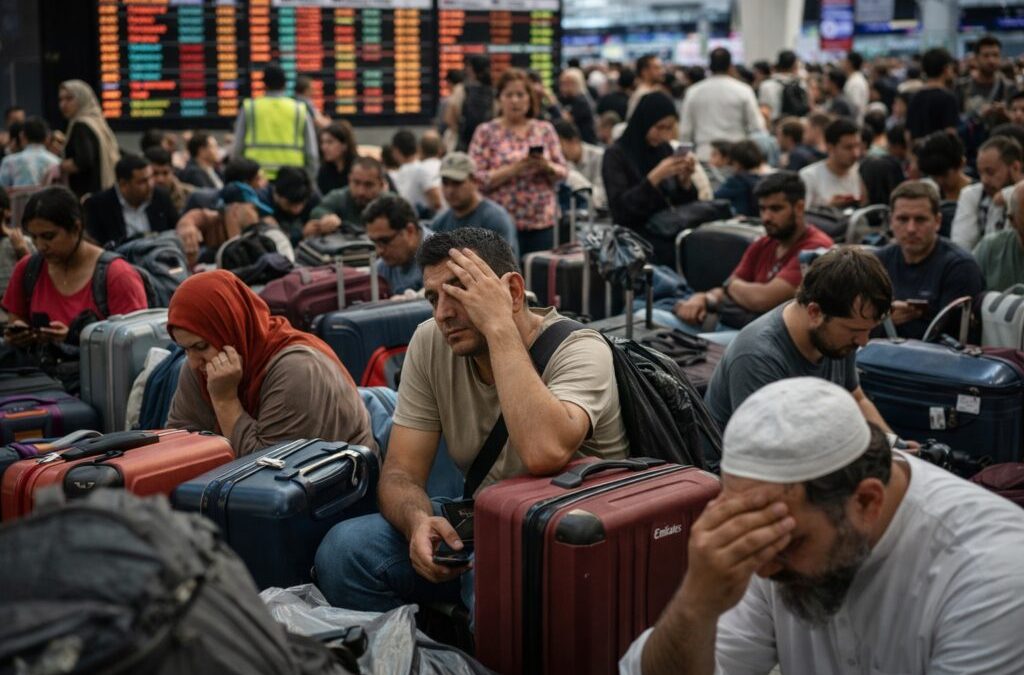
More than 50 flights have been cancelled across the United Arab Emirates in a single wave of disruptions, leaving passengers at Dubai, Abu Dhabi, Sharjah, and Al Maktoum airports scrambling to rebook travel to destinations spanning three continents. The scale of the cancellations — hitting routes as far apart as Bahrain and Belgrade, Cairo and Colombo — makes this one of the more significant short-term disruptions to hit UAE air travel in recent memory.
Airlines affected include Gulf Air, FlyDubai, Etihad, and Qatar Airways, among others. The destinations impacted read like a map of the UAE’s most-travelled corridors: Bahrain, Cairo, Doha, Ahmedabad, Riyadh, Lahore, Colombo, Dushanbe, Djibouti, Kabul, Alexandria, Sphinx, Seeb, Vnukovo, Prague, Warsaw, and Belgrade. Whether you were heading home, connecting onward, or flying for business, the disruption has touched an unusually wide range of travellers.
Dubai International Airport bore the heaviest burden, with Gulf Air and FlyDubai cancelling multiple departures from the hub. But the cancellations were not confined to one airport — disruptions spread across the UAE’s airport network, amplifying the knock-on effect for connecting passengers.
What Is Behind the Mass Flight Cancellations in the UAE
The source of the disruptions has not been specified in detail, but the breadth of airlines involved — spanning Gulf carriers, low-cost operators, and full-service international airlines — suggests the cancellations may stem from a combination of operational, logistical, or external factors rather than a single cause isolated to one airline.
When disruptions hit at this scale and span multiple airports simultaneously, the ripple effects tend to compound quickly. A cancelled departure means a stranded inbound aircraft, which in turn delays or cancels the next outbound leg. For hub airports like Dubai International, which handles an enormous volume of connecting traffic, even a moderate number of cancellations can cascade into a much larger disruption within hours.
The timing matters too. Routes to South Asia, the Middle East, and Eastern Europe are heavily used by both migrant workers and business travellers — groups with limited flexibility to simply wait a day or two for the next available seat.
The Flights and Routes Most Affected
Dubai International Airport (OMDB) saw the most concentrated cancellations, with Gulf Air and FlyDubai among the primary carriers pulling flights. The disruptions also affected operations at Abu Dhabi, Sharjah, and Al Maktoum airports, widening the geographic footprint of the crisis within the UAE itself.
The following destinations have been confirmed as affected by the cancellations:
- Bahrain
- Cairo, Egypt
- Doha, Qatar
- Ahmedabad, India
- Riyadh, Saudi Arabia
- Lahore, Pakistan
- Colombo, Sri Lanka
- Dushanbe, Tajikistan
- Djibouti
- Kabul, Afghanistan
- Alexandria, Egypt
- Sphinx, Egypt
- Seeb, Oman
- Vnukovo, Russia
- Prague, Czech Republic
- Warsaw, Poland
- Belgrade, Serbia
| Airline | Hub Airport Affected | Key Routes Impacted |
|---|---|---|
| Gulf Air | Dubai International (OMDB) | Bahrain and regional Middle East routes |
| FlyDubai | Dubai International (OMDB) | Multiple regional and international routes |
| Etihad | Abu Dhabi | International routes including European destinations |
| Qatar Airways | UAE airports | Doha connections and onward international routes |
| Multiple carriers | Sharjah and Al Maktoum | South Asia, East Africa, and Central Asia routes |
Who Gets Hurt Most When Flights Cancel at This Scale
The passenger groups most exposed to disruptions of this kind are those with the least flexibility. Migrant workers travelling between the UAE and South Asia — on routes to Lahore, Colombo, Ahmedabad — often hold fixed-date tickets tied to visa schedules or employment contracts. A cancelled flight is not a minor inconvenience; it can mean missed work, lost income, or complications with immigration status.
Travellers connecting through UAE hubs to Eastern European destinations like Prague, Warsaw, and Belgrade face a different but equally frustrating problem: missed connections and lengthy rebooking queues, often with limited same-day alternatives on those less-frequently served routes.
For passengers heading to destinations like Djibouti, Dushanbe, or Kabul, the situation can be more acute still. These are routes with fewer competing airlines and less frequent departure schedules, meaning a cancelled flight may not have a next-day equivalent readily available.
Travellers already in transit — those who had already left their home country and were connecting through a UAE airport — face the most difficult situation, caught between two destinations with no immediate onward option.
What Affected Passengers Should Do Right Now
If you have a flight booked on any of the affected airlines — Gulf Air, FlyDubai, Etihad, or Qatar Airways — through any UAE airport in the near term, the immediate priority is to check your flight status directly with your airline. Do not rely solely on airport departure boards, which can lag behind real-time cancellation decisions.
Passengers whose flights have been cancelled are generally entitled to rebooking on the next available service, or in some cases a full refund, depending on the airline’s policies and the reason for the cancellation. Documenting everything — confirmation emails, cancellation notices, any communication from the airline — is important if you need to make a claim later.
For travellers on routes with limited frequency, it is worth contacting the airline proactively rather than waiting in queue at the airport. Rebooking options tend to fill up quickly after a mass cancellation event, and early action usually means better alternatives.
Airlines have not yet publicly confirmed the cause of the cancellations or provided a timeline for when full operations will resume. Passengers should monitor updates closely as the situation develops.
Frequently Asked Questions
Which airlines have cancelled flights in the UAE?
Gulf Air, FlyDubai, Etihad, and Qatar Airways are among the airlines confirmed to have cancelled flights, along with other carriers operating through UAE airports.
Which airports in the UAE are affected?
Disruptions have been confirmed at Dubai International Airport, Abu Dhabi Airport, Sharjah Airport, and Al Maktoum Airport.
How many flights have been cancelled in total?
The total number of cancelled flights exceeds 50, making this a significant and widespread disruption across the UAE’s aviation network.
Which destinations are impacted by the cancellations?
Affected destinations include Bahrain, Cairo, Doha, Ahmedabad, Riyadh, Lahore, Colombo, Dushanbe, Djibouti, Kabul, Alexandria, Sphinx, Seeb, Vnukovo, Prague, Warsaw, and Belgrade.
What caused the cancellations?
The specific cause of the cancellations has not yet been confirmed by the airlines or airport authorities.
What should passengers do if their flight has been cancelled?
Passengers should contact their airline directly to arrange rebooking or a refund, and keep all documentation of the cancellation for any future claims.



Leave a Reply