
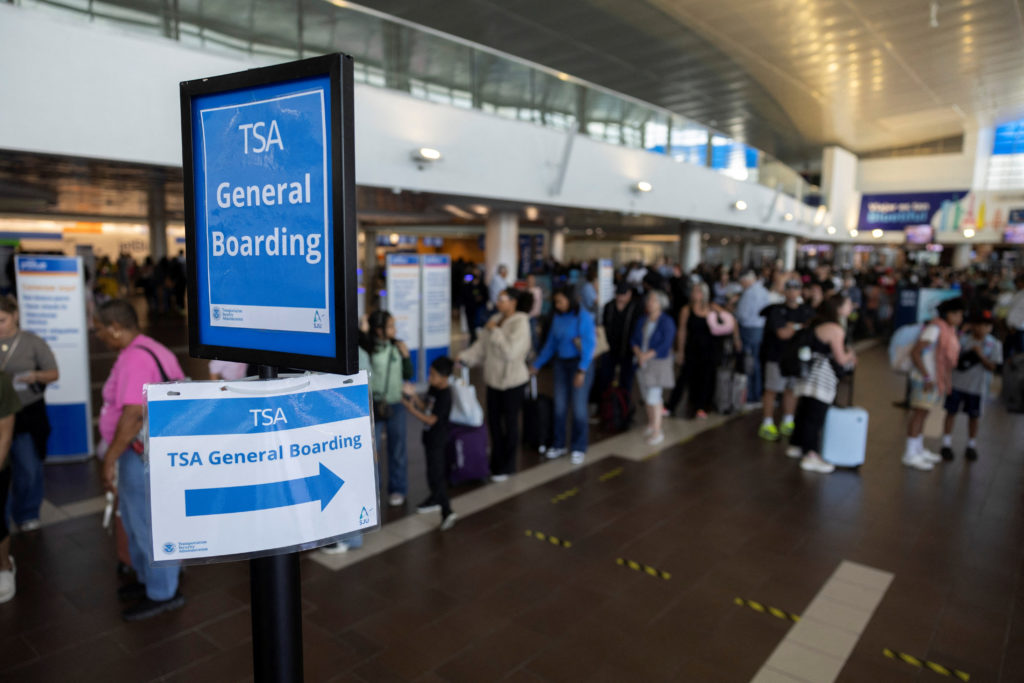
When a government shutdown cuts off paychecks for federal workers, the consequences rarely stay confined to Washington. This time, they spread directly into the nation’s airports — where thousands of Transportation Security Administration officers were missing pay, walking off the job, or simply not showing up. The result was mounting absenteeism, a wave of resignations, and severe delays at airports across the country.
The situation forced a swift government response. Officials moved to ensure TSA workers received their compensation, stepping in before the disruption could spiral into a full breakdown of the air travel security system. It was a rare moment of rapid action in the middle of a protracted shutdown — and it carried real consequences for anyone with a flight to catch.
For millions of travelers, the stakes were immediate and personal. Airport security isn’t an abstract bureaucratic function. It’s the line between a smooth departure and a missed flight, between a functioning transportation network and one grinding toward collapse.
What the Government Shutdown Did to Airport Security
Government shutdowns have a way of making invisible workers suddenly very visible. TSA officers are federal employees — which means when Congress fails to pass a budget and a shutdown begins, their paychecks stop. They are still legally required to show up for work, but they do so without pay, sometimes indefinitely.
That arrangement has always been fragile. Officers who live paycheck to paycheck — which describes a significant portion of the federal workforce — face impossible choices. The partial government shutdown that prompted this crisis followed that same pattern, pushing TSA staffing to a breaking point.
The consequences were direct and visible: high absenteeism as officers called out, resignations from workers who could no longer afford to work for free, and severe delays at airports that suddenly didn’t have enough screeners to keep security lanes moving. Travelers experienced the downstream effects in real time — longer lines, slower checkpoints, and the creeping anxiety of wondering whether their flight would be affected.
Officials recognized that allowing the situation to continue unchecked risked a total breakdown of airport security operations nationwide. The decision to intervene and restore TSA pay was driven by that calculation: the cost of inaction was simply too high.
Key Facts About the TSA Pay Crisis and Government Response
Here is what is confirmed about the situation and the government’s response:
- The crisis occurred during a partial government shutdown affecting federal agencies and their employees.
- TSA officers — federal workers responsible for airport security screening — stopped receiving paychecks as a result of the shutdown.
- The loss of pay triggered a surge in absenteeism, with officers not reporting to their posts.
- Resignations increased as workers who could not sustain unpaid work left their positions.
- Airport operations suffered severe delays as understaffed security checkpoints struggled to manage passenger volume.
- The government intervened to guarantee compensation for TSA staff, halting the immediate crisis.
- The action was described as protecting both the safety and efficiency of the nation’s air travel system.
| Problem | Cause | Consequence |
|---|---|---|
| TSA officers missing paychecks | Partial government shutdown halting federal pay | High absenteeism and officer call-outs |
| Rising TSA resignations | Officers unable to sustain working without pay | Reduced airport security staffing levels |
| Severe airport delays | Understaffed security checkpoints nationwide | Disrupted travel for passengers across the country |
| Risk of total security breakdown | Compounding staffing losses with no resolution | Government moved to restore TSA compensation |
Who Bears the Real Cost When TSA Workers Go Unpaid
The most immediate victims of the TSA pay crisis were the officers themselves — federal workers performing a demanding, security-critical job while watching their bank accounts drain. For many, the choice between showing up unpaid and staying home wasn’t ideological. It was financial survival.
But the ripple effects extended far beyond airport employees. Travelers planning business trips, family visits, or time-sensitive journeys found themselves caught in lines that stretched far longer than usual, at checkpoints running on skeleton crews. Airlines, too, faced operational pressure as delays compounded across hubs and connecting flights backed up.
The broader concern was systemic. Airport security isn’t a service that can simply pause while a budget dispute gets resolved. Every hour of understaffing is an hour of elevated risk — not just of inconvenience, but of compromised public safety. Officials framing the intervention as a matter of national security weren’t being dramatic. The TSA exists specifically because the consequences of security failures at airports are catastrophic.
The government’s move to restore pay was, in that sense, less a generous gesture than a recognition of a hard operational reality: you cannot run a national security infrastructure on goodwill alone.
What Comes Next for TSA Staffing and Shutdown Preparedness
The immediate crisis has been addressed — TSA workers received their pay, and airport operations stabilized. But the underlying vulnerability hasn’t disappeared. Government shutdowns are a recurring feature of American political life, and each one creates the same structural risk: essential federal workers caught between their legal obligation to work and the financial impossibility of doing so without pay.
The episode raises a question that doesn’t have an easy answer: should workers in national security roles ever be subject to paycheck interruptions in the first place? Advocates for TSA workers and federal employee unions have long argued that the current system puts an unfair burden on workers who have no role in budget negotiations but bear all the consequences of their failure.
For now, the immediate priority is ensuring airport operations return to full capacity — restoring staffing levels, addressing the backlog of resignations, and rebuilding the workforce stability that a functioning security system depends on. Whether Congress takes additional steps to protect essential workers from future shutdown pay disruptions remains an open question.
What is clear is that this won’t be the last time the issue surfaces. As long as shutdowns remain a tool of political negotiation, the workers who keep airports secure will remain caught in the middle.
Frequently Asked Questions
Why did the government shutdown affect TSA workers’ pay?
TSA officers are federal employees, and when a government shutdown occurs, federal paychecks stop — even though officers are still legally required to report for duty.
What happened at airports during the TSA pay disruption?
Airports experienced high absenteeism, a rise in TSA resignations, and severe security checkpoint delays as understaffed screening lanes struggled to handle normal passenger volumes.
How did the government respond to the TSA pay crisis?
Officials intervened to ensure TSA workers received their compensation, halting the immediate crisis and stabilizing airport security operations before a total breakdown could occur.
Were travelers directly affected by the TSA staffing shortages?
Yes. Passengers at airports across the country experienced significant delays as understaffed security checkpoints slowed the screening process during the disruption.
Could this situation happen again during a future government shutdown?
The structural risk remains. As long as TSA officers are classified as federal employees subject to shutdown pay interruptions, a future shutdown could trigger the same cycle of absenteeism, resignations, and airport delays.
Did the government’s intervention fully resolve the airport security crisis?
Restoring TSA pay addressed the immediate emergency, but rebuilding staffing levels and recovering from the wave of resignations is an ongoing process that extends beyond a single pay decision.


Leave a Reply