
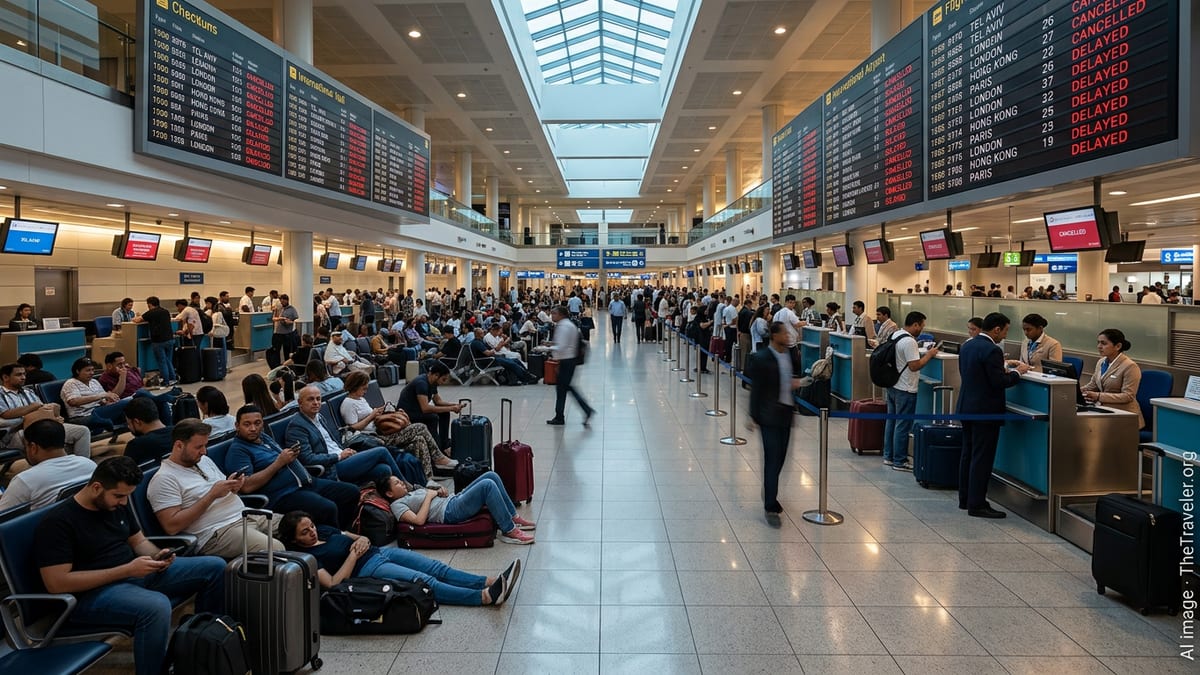
Nearly 2,139 flights across the Middle East and Turkey have been grounded or delayed in a single wave of disruption — 297 cancellations and 1,842 delays — leaving thousands of travelers stranded at some of the world’s busiest airports.
The scale of the chaos is hard to overstate. Passengers heading through Dubai, Istanbul, Riyadh, Doha, and other major regional hubs have found themselves stuck in terminals, scrambling to rebook, or simply waiting with no clear timeline for departure. For a region that handles an enormous volume of international transit traffic, a disruption this size ripples outward fast.
The problems are being attributed to a combination of severe weather conditions and operational challenges — a familiar pairing that, when it hits multiple countries simultaneously, can overwhelm even well-resourced airline systems.
What Triggered the Mass Flight Disruptions Across the Middle East
The disruption is not isolated to one country or one airline. Five countries — the UAE, Saudi Arabia, Bahrain, Kuwait, and Turkey — are all caught up in this wave of cancellations and delays. That geographic spread is part of what makes this event so significant. When a single airport goes down, travelers can often reroute. When an entire region is affected, options shrink quickly.
Weather-related issues appear to be a primary driver, compounded by the operational knock-on effects that follow: aircraft out of position, crews timing out, ground services stretched thin. Those secondary effects tend to outlast the weather itself, which is why disruptions like this often take days to fully clear.
The airlines caught in the middle of this include some of the region’s most prominent carriers — names that millions of international travelers rely on every year for long-haul connections and regional hops alike.
Airlines and Airports at the Center of the Chaos
The disruption is hitting a wide range of carriers and hubs simultaneously. Here is a breakdown of what is confirmed from the source reporting:
| Country | Key Airport(s) Affected | Airlines Disrupted |
|---|---|---|
| UAE | Dubai International | FlyDubai |
| Qatar | Hamad International, Doha | Qatar Airways |
| Saudi Arabia | Riyadh | Saudia |
| Turkey | Istanbul Airport | Pegasus Airlines |
| Bahrain | Not specified | Multiple carriers affected |
| Kuwait | Not specified | Multiple carriers affected |
The numbers themselves tell a stark story:
- 297 flights grounded entirely across the affected region
- 1,842 flights delayed, affecting passengers across multiple time zones and itineraries
- Major hubs including Dubai International, Istanbul Airport, Hamad International in Doha, and Riyadh all reporting significant disruption
- Carriers including FlyDubai, Qatar Airways, Saudia, and Pegasus Airlines all named in the disruption
What makes this particularly difficult for travelers is that many of these airports — Dubai and Doha especially — serve as major international connection points. A delay or cancellation there does not just affect one leg of a journey. It can unravel an entire itinerary spanning multiple continents.
Who Is Being Hit Hardest Right Now
The travelers feeling this most acutely are those relying on connecting flights through hub airports. Dubai International and Hamad International in Doha are two of the world’s top transit hubs — passengers from Asia, Africa, Europe, and the Americas all funnel through them. When those hubs stall, the effects are global, not regional.
Business travelers with fixed meeting schedules, passengers connecting to cruise departures, families mid-journey with young children — these are the people sitting in terminal chairs right now, watching departure boards cycle through delays and cancellations.
The disruption also hits inbound tourism to the region. The UAE, Saudi Arabia, and Turkey all draw significant visitor numbers, and travel disruptions during peak periods can have real economic consequences beyond the immediate inconvenience to passengers.
Airlines face pressure on multiple fronts: managing stranded passengers, repositioning aircraft, handling rebooking volumes, and communicating clearly — all at once, across multiple countries. That is a significant operational load even for large carriers.
The Practical Reality for Stranded Passengers
If you are currently traveling through any of the affected airports or have upcoming travel through Dubai, Istanbul, Riyadh, Doha, or other regional hubs, the advice is consistent with any major disruption event:
- Check your airline’s app or website directly for real-time status updates rather than relying solely on airport departure boards
- Contact your airline proactively about rebooking options — many carriers waive change fees during declared disruption events
- If you hold travel insurance, document everything: delays, expenses, and any communications from the airline
- Allow significantly more connection time than usual if transiting through affected hubs in the coming days
- Be aware that even flights not directly cancelled may face knock-on delays as aircraft and crews are repositioned
The 1,842 delays — a figure that dwarfs the 297 outright cancellations — suggest that many passengers are still in the air or at gates, facing hours of uncertainty rather than a clean cancellation they can plan around. That limbo is often the hardest part of a disruption like this to navigate.
What Comes Next as the Region Works to Recover
Disruptions on this scale rarely resolve in a single day. The immediate weather or operational trigger may pass, but the backlog of displaced passengers, repositioned aircraft, and out-of-sync crew schedules takes time to work through.
Airports and airlines in the affected countries will be working to clear the backlog of stranded passengers while simultaneously managing normal incoming traffic — a balancing act that typically means continued delays for at least 24 to 48 hours after the initial trigger event.
Travelers with flexible itineraries may find it worth considering a voluntary delay of one or two days if rebooking options are available. Those with fixed commitments should stay in close contact with their carriers and document all disruption-related expenses carefully.
Whether the weather conditions that contributed to this event continue to affect the region, or whether this represents a single acute disruption, has not been confirmed in the available reporting.
Frequently Asked Questions
How many flights have been affected across the Middle East and Turkey?
A total of 2,139 flights have been disrupted — 297 cancellations and 1,842 delays — across the UAE, Saudi Arabia, Bahrain, Kuwait, and Turkey.
Which airlines are disrupted in this event?
Confirmed affected carriers include FlyDubai, Qatar Airways, Saudia, and Pegasus Airlines, along with other carriers operating through the affected hubs.
Which airports are most affected?
Dubai International, Istanbul Airport, Hamad International in Doha, and Riyadh are among the key airports reporting significant disruption.
What caused the mass cancellations and delays?
The disruption is attributed to a combination of severe weather conditions and operational challenges across the region.
How long will the disruption last?
A specific timeline for full recovery has not been confirmed in the available reporting, though disruptions of this scale typically take at least 24 to 48 hours to clear.
What should affected passengers do right now?
Passengers should contact their airline directly for rebooking options, monitor real-time flight status through airline apps, and document any expenses if they hold travel insurance.



Leave a Reply