
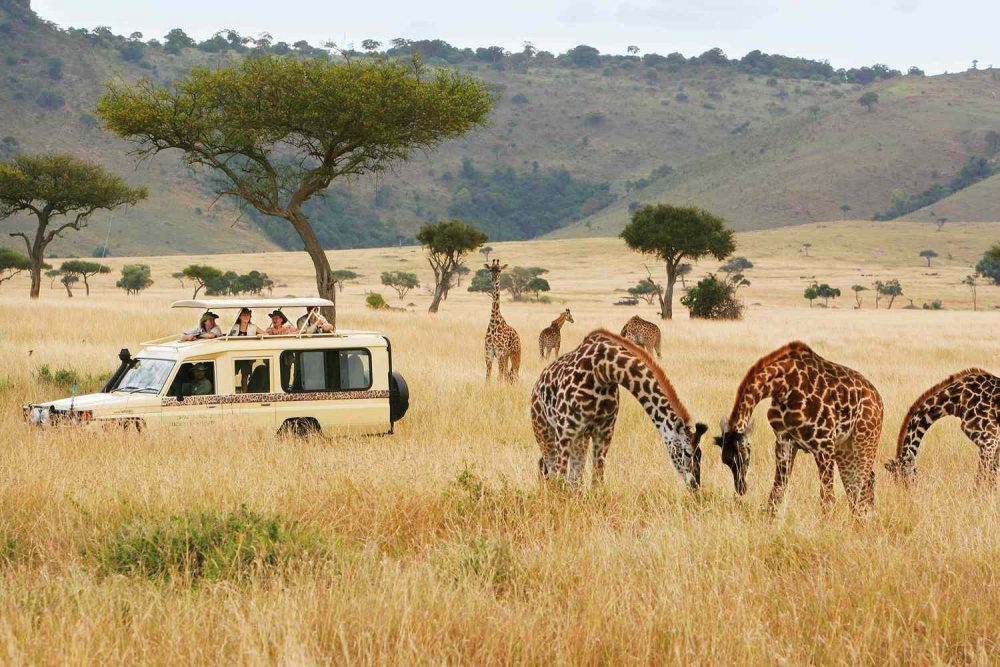
Emerging destinations like Malawi and Madagascar are quietly reshaping one of the world’s most beloved travel industries — and a new industry report suggests the African safari tourism sector is evolving faster than many travelers realize.
Go2Africa has released its 2025 State of Safari Travel Report, drawing on the company’s own search data alongside Google search volumes to map out where safari tourism is heading. The findings point to a sector in genuine transition: established destinations still dominate, but newer locations are gaining real traction, and the profile of the typical safari traveler is shifting in ways that operators can no longer ignore.
For anyone planning a trip to Africa — or simply watching where global travel trends are moving — the picture that emerges is worth paying attention to.
South Africa Still Leads, But the Map Is Expanding
According to the Go2Africa report, South Africa remains the most popular safari destination in 2025, with Tanzania and Kenya following as the second and third most sought-after locations. These three countries have long been the backbone of the safari tourism industry, and that hasn’t changed.
What has changed is the growing appetite for destinations that sit outside that traditional top tier. The report highlights Malawi and Madagascar as two countries that have seen notable growth in demand — a signal that travelers are increasingly willing to look beyond the familiar circuit in search of something less explored.
This shift matters for the broader industry. When interest spreads to newer destinations, it creates pressure on those locations to develop infrastructure, conservation frameworks, and hospitality offerings that can meet rising expectations. It also opens up economic opportunities for communities and ecosystems that have historically sat outside the main flow of safari tourism revenue.
What the 2025 Safari Travel Report Actually Found
The report covers several intersecting trends that together paint a picture of a more diverse and values-driven safari traveler. The key themes identified include:
- Destination diversification — growing interest in less-explored African locations beyond the traditional South Africa, Tanzania, and Kenya circuit
- Solo travel — an increase in individual travelers booking safari experiences independently, rather than as part of couples or family groups
- Conservation focus — travelers placing greater emphasis on sustainable and conservation-conscious travel choices when selecting operators and destinations
- Authentic experiences — demand shifting toward genuine, immersive encounters rather than purely luxury or tick-box wildlife viewing
- Sustainability as a deciding factor — the report notes sustainability is playing an increasingly prominent role in how travelers evaluate and choose safari products
The methodology behind the findings combines Go2Africa’s internal booking and search data with broader Google search volume trends, giving the report a dual lens on both revealed preferences and emerging interest.
Key Destinations at a Glance
| Destination | Status in 2025 Report |
|---|---|
| South Africa | Most popular safari destination |
| Tanzania | Second most popular |
| Kenya | Third most popular |
| Malawi | Emerging destination — notable growth in demand |
| Madagascar | Emerging destination — notable growth in demand |
Why Solo Travelers and Conservation Are Reshaping the Industry
Two of the report’s most telling trends are the rise of solo safari travel and the growing centrality of conservation values among travelers.
Solo travel has been a broader global phenomenon for years, but its arrival as a meaningful force within safari tourism is significant. Safari trips have traditionally been structured around couples, families, or small groups — both in terms of pricing models and the physical logistics of game drives and lodge accommodation. The growing share of solo travelers creates a real demand signal for operators to rethink how they package and price their offerings.
The conservation focus is perhaps even more consequential for the long-term shape of the industry. Travelers who factor conservation impact into their booking decisions are, in effect, rewarding operators and destinations that invest in sustainable practices — and applying indirect pressure on those that don’t. The report frames this not as a niche preference but as a genuine shift in how modern safari travelers define a worthwhile trip.
Authenticity runs alongside both of these trends. The demand for real, immersive experiences — rather than sanitized or purely luxury-focused itineraries — suggests travelers are arriving with more research, more intention, and more specific expectations than previous generations of safari tourists.
What This Means for Anyone Planning a Safari
For travelers, the report’s findings carry practical implications. The dominance of South Africa, Tanzania, and Kenya means those destinations will continue to offer the most developed infrastructure and the widest range of operators — but they also come with the highest levels of competition for bookings and, in some cases, higher visitor volumes in peak areas.
The growing interest in Malawi and Madagascar points toward a genuine alternative for travelers who want something less crowded and more off the beaten path. These destinations are earlier in their development as safari tourism markets, which means the experience can feel more raw and less packaged — appealing to exactly the kind of authentic-experience seeker the report identifies as a growing segment.
For solo travelers specifically, the trend data suggests the industry is beginning to respond to demand, though the degree to which individual operators have adapted their offerings will vary considerably.
Where African Safari Tourism Goes From Here
The 2025 State of Safari Travel Report presents a sector that is responding to the same forces reshaping travel globally — sustainability consciousness, the desire for genuine experiences, and a more individualistic approach to trip planning.
The established destinations are not under threat. South Africa, Tanzania, and Kenya will almost certainly remain the dominant draw for the foreseeable future. But the emergence of Malawi, Madagascar, and the broader push toward less-explored locations suggests the industry’s center of gravity is slowly — and meaningfully — shifting.
Operators, destinations, and conservation organizations that position themselves ahead of these trends are likely to find a growing and increasingly engaged audience. For travelers, that means more options, more variety, and — if the conservation emphasis holds — potentially a more responsible industry overall.
Frequently Asked Questions
Which country is the most popular safari destination according to the Go2Africa 2025 report?
South Africa ranks as the most popular safari destination in 2025, followed by Tanzania in second place and Kenya in third.
Which new destinations are seeing growing interest in safari tourism?
The report highlights Malawi and Madagascar as emerging destinations that have seen notable growth in demand, outside the traditional top-tier safari markets.
What data sources did Go2Africa use for the 2025 State of Safari Travel Report?
The report draws on Go2Africa’s own internal search data combined with broader Google search volumes to identify trends across the industry.
Is solo travel becoming more common in safari tourism?
Yes — the report identifies solo travel as one of the key trends shaping safari tourism in 2025, reflecting a broader shift in how individuals are approaching the experience.
How important is conservation to today’s safari travelers?
According to the report, conservation focus is one of the defining trends of 2025, with sustainability playing an increasingly prominent role in how travelers choose operators and destinations.
Are the traditional safari destinations like Kenya and Tanzania losing popularity?
Not according to the report — Tanzania and Kenya remain firmly in the top three most popular destinations, though newer locations are gaining ground alongside them.



Leave a Reply