
▶ Read transcript
Here’s what you need to know about Grenada’s bold move into Guyana’s travel market. Grenada pulled in 548 million dollars in tourist spending in 2018, a nearly 14 percent jump from the year before — impressive for a country of just 113,000 people. Now, Grenada’s Tourism Authority is targeting Guyana as its next big source of visitors. Why Guyana? The country’s massive offshore oil discovery has created a wealthier middle class and a growing appetite for international travel, especially in the business and corporate events space. Grenada recently completed a focused four-day sales mission in Georgetown, pitching directly to corporate decision-makers, travel agents, and event planners. The focus was heavily on MICE travel — meetings, incentives, conferences, and exhibitions — a segment where travelers spend more and often return for leisure later. If you’re a travel or events professional, Grenada is worth a closer look right now, before the competition catches up.
In 2018, Grenada pulled in $548 million USD in tourist spending — a 13.69% jump from the year before. For a country of roughly 113,000 people, that number is staggering. Now, Grenada’s tourism leaders are eyeing a new source of travelers who could push those figures even higher.
The target? Guyana. A country sitting on one of the world’s largest recent oil discoveries, experiencing an economic transformation that is reshaping its middle class, its business culture, and its appetite for international travel.
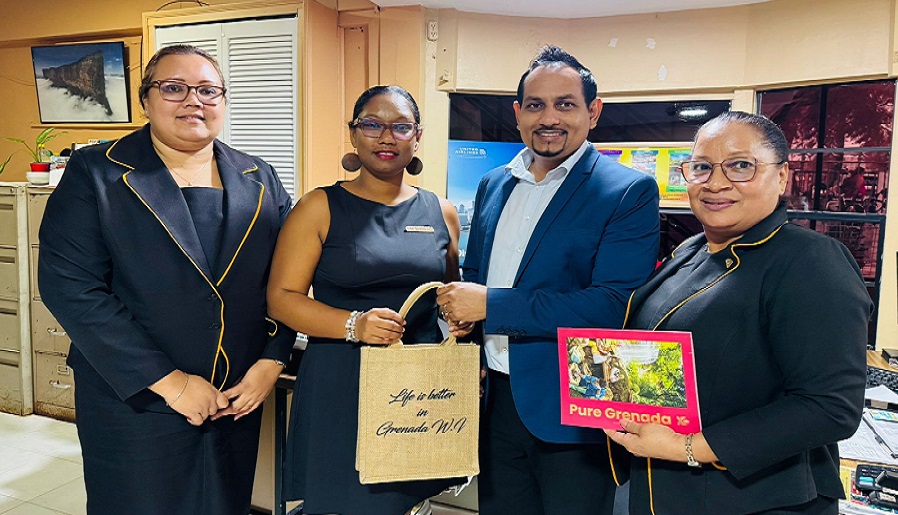
Following a focused four-day engagement, the Grenada Tourism Authority concluded what it describes as a successful Sales Mission in Georgetown and beyond. The mission wasn’t just about handing out brochures. It was a calculated move to plant Grenada’s flag in an emerging market before competitors do.
Guyana’s Travel Market Is Maturing Faster Than Most Realize
Guyana doesn’t make many international tourism headlines. But behind the scenes, it’s quietly becoming one of the Caribbean region’s most interesting outbound travel markets. The country’s oil boom, which accelerated dramatically after ExxonMobil’s 2015 offshore discovery, has created a new class of business travelers and a growing leisure-spending demographic.
November is officially Tourism Awareness Month in Guyana, a government-designated period that signals how seriously the country takes travel as both an industry and a cultural value. That civic investment in tourism culture matters. It means Guyanese travelers are primed to think about destinations deliberately.
The Grenada Tourism Authority recognized this window early. Rather than waiting for Guyanese travelers to discover Grenada organically, the GTA brought the pitch directly to the market. That proactive approach is what distinguishes a strategic tourism body from a passive one.
What the Four-Day MICE Mission Actually Covered
MICE stands for Meetings, Incentives, Conferences, and Exhibitions. It’s the business-travel segment that often gets overlooked in favor of splashy leisure campaigns. But MICE travelers spend significantly more per trip than leisure tourists, stay longer, and often return with their families afterward.
Grenada’s pitch to Guyana leaned hard into this sector. The island has been quietly building its conference and incentive infrastructure, and the GTA used the Guyana mission to showcase that capacity to corporate decision-makers, travel trade partners, and event planners who are actively looking for Caribbean venues.
| Traveler Type | Primary Motivation | Grenada’s Offer |
|---|---|---|
| MICE Business Traveler | Conferences, incentive trips, corporate events | Growing conference infrastructure, island exclusivity |
| Leisure Traveler | Beaches, culture, culinary experiences | Spice Island identity, eco-tourism, Grenadian cuisine |
| Investment-Minded Visitor | Real estate, citizenship-by-investment programs | Established CBI program, stable governance |
| Trade Partner | B2B relationships, distribution channels | GTA direct engagement, co-marketing opportunities |
The mission also targeted travel agents and tour operators directly. These are the gatekeepers who steer Guyanese clients toward specific destinations. Winning their confidence means winning a pipeline of bookings that extends well beyond any single promotional event.
CEO Stacey Liburd’s Vision for Grenada’s Global Narrative
Stacey Liburd, CEO of the Grenada Tourism Authority, has been vocal about repositioning Grenada’s story on the world stage. Speaking to Canadian media earlier this year, she emphasized that Grenada is actively redefining its global narrative, urging travel advisors to pay attention now rather than later.
“Guyana is an emerging market for leisure, investment and trade, and this mission allowed us to continue to deepen this meaningful relationship.”
— Grenada Tourism Authority, on the Guyana Sales Mission
That framing is deliberate. Liburd and her team aren’t just selling beach vacations. They’re positioning Grenada as a sophisticated destination that serves the full spectrum of modern traveler needs, from incentive retreats for oil executives to honeymoons on Grand Anse Beach.
The Guyana mission fits squarely within that broader strategy. Guyana’s emerging professional class wants destinations that signal status and substance. Grenada, with its UNESCO-listed underwater sculpture park, its rum and chocolate heritage, and its reputation as the “Spice Isle,” offers exactly that combination.
Strategic Timing and What “Deepening the Relationship” Really Means
The GTA’s language around the mission is careful and revealing. Officials described the goal as deepening a “meaningful relationship” rather than simply generating bookings. That distinction matters enormously in how Caribbean tourism diplomacy actually works.
Tourism ties between small nations are rarely just commercial. They involve airline route negotiations, visa policy alignment, joint marketing agreements, and the cultivation of personal relationships between tourism boards, hoteliers, and trade partners. A four-day sales mission is the visible tip of a much larger diplomatic and commercial iceberg.
The four-day engagement included meetings with key stakeholders across Guyana’s travel industry. These conversations set the groundwork for formal collaboration agreements that could include co-branded marketing campaigns, preferential packages for Guyanese travelers, and dedicated MICE pricing structures.
Grenada is also watching connectivity closely. Direct or convenient air links between Georgetown and St. George’s are essential for converting interest into actual arrivals. Any deepening of tourism ties typically comes with parallel conversations about flight routes and airline partnerships.
Why This Matters Beyond Two Small Nations
On the surface, this is a story about two Caribbean and South American neighbors building commercial bridges. But the implications stretch further than Georgetown to St. George’s flight paths.
Guyana’s oil wealth is already reshaping regional power dynamics. Countries that establish strong bilateral relationships now, in tourism, trade, and investment, will be better positioned as Guyana’s influence grows. The GTA’s decision to prioritize Guyana as a target market reflects an understanding that tourism diplomacy and economic diplomacy are increasingly the same thing.
For travelers, the practical implication is straightforward. As Grenada courts Guyanese visitors more aggressively, expect new travel packages, promotional fares, and curated itineraries designed specifically for the Guyanese market to emerge. That competition for Guyanese travelers will likely produce better deals and more tailored experiences for anyone flying that route.
For the broader Caribbean tourism sector, Grenada’s move signals a shift in how smaller island destinations compete. Rather than relying solely on traditional North American and European source markets, forward-thinking tourism authorities are diversifying their outreach toward intra-regional and South American markets that are growing faster than legacy sources.
The GTA’s mission to Guyana is a reminder that in tourism, the most consequential moves often happen quietly, in meeting rooms and trade presentations, long before travelers ever book a flight.
Grenada planted a flag in Guyana’s travel market this week. Whether that flag becomes a landmark depends on what gets built around it now.
Frequently Asked Questions

You Might Also Like
Blue Innovation Sent Drones Into a Night Fire on Mount Ogi — And It Worked
When a forest fire breaks out on a mountain at night, the challenges multiply fast.…
Marriott Bonvoy and MGM Just Paired Las Vegas With the World
What if your next vacation could take you from the neon-lit spectacle of Las Vegas…
Brilliant Lady Just Brought Virgin Voyages to LA and It Changes West Coast Cruising
For the first time in its history, Virgin Voyages is sailing from the West Coast…
Leave a Reply