
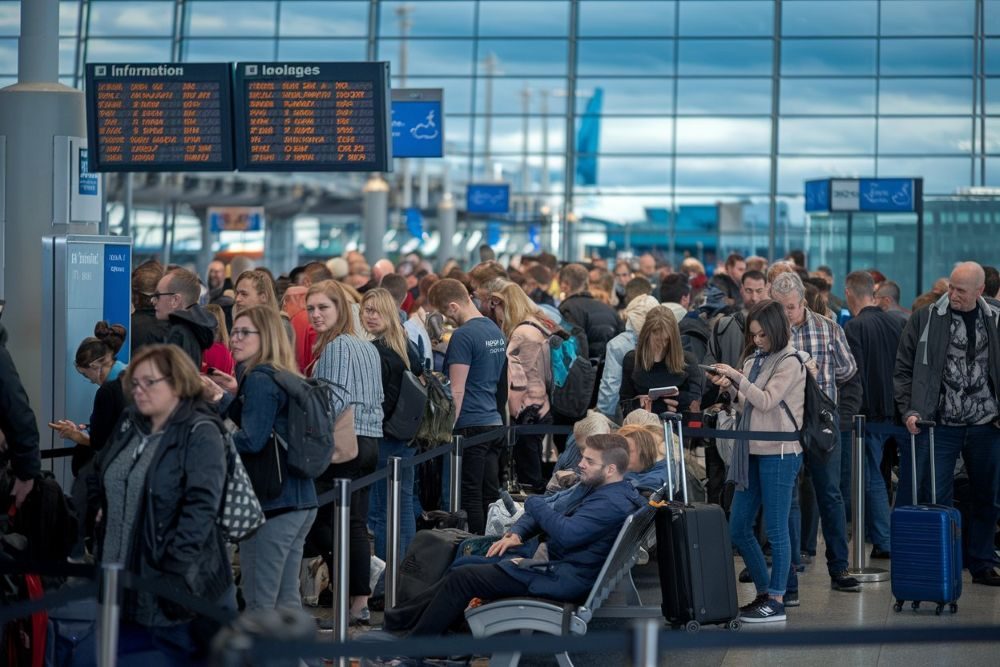
More than 300 flights across Canada were thrown into chaos on March 29, 2026, as a wave of cancellations and delays hit passengers at airports from Vancouver to the remote Arctic communities of Nunavik. At least 21 flights were cancelled outright and 280 new delays were recorded in a single day — leaving hundreds of travelers stranded with few options and little clarity on when they might reach their destinations.
The disruptions stretched far beyond the country’s busiest hubs. While major cities like Toronto and Montreal saw significant knock-on effects, the situation was especially dire for passengers traveling to and from isolated northern communities including Quaqtaq and Kangirsuk — places where a cancelled flight isn’t just an inconvenience. For many of those travelers, there is no road, no train, and no easy alternative.
Airlines caught up in the disruptions include Air Canada, Air Inuit, Jazz, and Endeavor, among others — a spread that signals this was not an isolated mechanical issue at a single carrier, but a broader operational breakdown affecting the Canadian aviation network on multiple fronts.
(function(){var wrp=document.getElementById(“paap_stat_69cae1acb97cb5.42222228”);if(!wrp)return;var ids=[“paap_stat_69cae1acb97cb5.42222228_c0″,”paap_stat_69cae1acb97cb5.42222228_c1”];var dur=1800;function ease(t){return 1-Math.pow(1-t,3);}function anim(){ids.forEach(function(id){var el=document.getElementById(id);if(!el)return;var tgt=parseFloat(el.getAttribute(“data-target”))||0;var pfx=el.getAttribute(“data-prefix”)||””;var sfx=el.getAttribute(“data-suffix”)||””;var dec=parseInt(el.getAttribute(“data-decimals”))||0;var st=null;function step(ts){if(!st)st=ts;var p=Math.min((ts-st)/dur,1);var v=ease(p)*tgt;el.textContent=pfx+v.toFixed(dec)+sfx;if(p<1)requestAnimationFrame(step);}requestAnimationFrame(step);});}if("IntersectionObserver" in window){var obs=new IntersectionObserver(function(e){e.forEach(function(en){if(en.isIntersecting){anim();obs.disconnect();}});},{threshold:0.2});obs.observe(wrp);}else{anim();}})();
Why This Disruption Hit So Many Airlines at Once
When a single airline cancels flights, passengers can often rebook on a competitor. When multiple carriers across the country face simultaneous disruptions, that safety net disappears quickly. The fact that Air Canada — Canada’s largest carrier — was among those affected meant that rebooking options dried up fast, particularly on high-demand routes out of Vancouver, Toronto, and Montreal.
Air Inuit’s involvement added a particularly serious dimension to the crisis. The airline is one of the only carriers serving the remote Nunavik region of northern Quebec, where communities like Quaqtaq and Kangirsuk depend entirely on air travel for access to medical care, supplies, and connection to the rest of the country. A cancelled Air Inuit flight doesn’t just mean a missed meeting — it can mean a family stranded far from home with no realistic alternative for days.
Jazz and Endeavor, which operate regional and connector routes on behalf of larger carriers, saw their delays ripple outward, compounding problems at already-stressed hub airports and affecting passengers who had no idea their connection was at risk.
The Scale of the Disruptions: What the Numbers Show
The breakdown of affected airlines and locations tells a story about how deeply interconnected — and how vulnerable — Canada’s aviation network can be during a major disruption event.
| Airline | Type of Operation | Key Affected Routes/Locations |
|---|---|---|
| Air Canada | National carrier | Vancouver, Toronto, Montreal |
| Air Inuit | Remote northern routes | Quaqtaq, Kangirsuk (Nunavik, QC) |
| Jazz | Regional connector | Multiple Canadian hubs |
| Endeavor | Regional connector | Multiple Canadian hubs |
The 21 cancellations represent flights that simply did not operate. The 280 delays — the larger and often more frustrating figure — represent flights that technically departed or arrived, but left passengers waiting at gates, missing connections, and scrambling to rearrange plans that may have taken months to organize.
Who Feels This the Most
For travelers at Vancouver International, Toronto Pearson, or Montreal-Trudeau, a delay is miserable but manageable. There are hotels nearby, rental car options, and usually another flight the next morning. Frustrating? Absolutely. But survivable.
The picture looks very different for passengers stranded in or trying to reach Quaqtaq or Kangirsuk. These are fly-in communities in northern Quebec. There are no highways connecting them to southern Canada. Air Inuit is not one of several options — it is often the only option. When a flight is cancelled, the next available seat might be days away, and accommodation in these communities is extremely limited for unexpected overnight stays.
Families separated across provinces, workers unable to reach job sites, patients missing medical appointments, and tourists with non-refundable bookings all felt the weight of these 301 combined disruptions in very different ways. Airlines in this situation typically advise passengers to monitor their booking status, contact customer service for rebooking options, and check whether travel insurance coverage applies — though in practice, getting through to an airline during a mass disruption event can take hours.
What Travelers Should Do Right Now
If you have a flight booked with any of the affected carriers in the coming days, the most important step is to check your booking status directly through the airline’s app or website rather than waiting for a notification that may not come promptly.
Airlines facing mass disruption events are generally required under Canadian passenger rights regulations to communicate clearly about delays and cancellations and to offer rebooking or refunds depending on the circumstances. Passengers whose flights were cancelled are typically entitled to options — but knowing your rights before you call makes the conversation significantly more productive.
For those traveling to or from northern communities served exclusively by Air Inuit, the advice is to contact the airline directly as early as possible. Seats on alternative dates fill quickly during disruption events, and waiting means fewer options.
Travel insurance policyholders should review their coverage terms carefully. Many policies include provisions for trip interruption or delay caused by airline operational issues, but the claim process requires documentation — so save every notification, confirmation, and expense receipt from this period.
Frequently Asked Questions
Which airlines were affected by the cancellations and delays?
Air Canada, Air Inuit, Jazz, and Endeavor were among the airlines caught up in the disruptions, along with other carriers operating in Canada on March 29, 2026.
How many flights were cancelled or delayed?
A total of 21 flights were cancelled and 280 new delays were recorded across the Canadian aviation network on the day in question.
Which airports and destinations were most affected?
Major hubs including Vancouver, Toronto, and Montreal were affected, as were remote northern communities including Quaqtaq and Kangirsuk in the Nunavik region of Quebec.
Why are the northern community disruptions considered more serious?
Communities like Quaqtaq and Kangirsuk have no road access and rely entirely on air travel, meaning a cancelled flight can leave passengers stranded for days with limited alternative options.
What should affected passengers do?
Travelers are advised to check their booking status directly with their airline, contact customer service about rebooking options, and review their travel insurance coverage for potential claims.
Are passengers entitled to compensation for these disruptions?
Canadian passenger rights regulations generally require airlines to offer rebooking or refunds for cancellations, though the specific entitlements can vary depending on the cause of the disruption and the airline’s policies.



Leave a Reply