
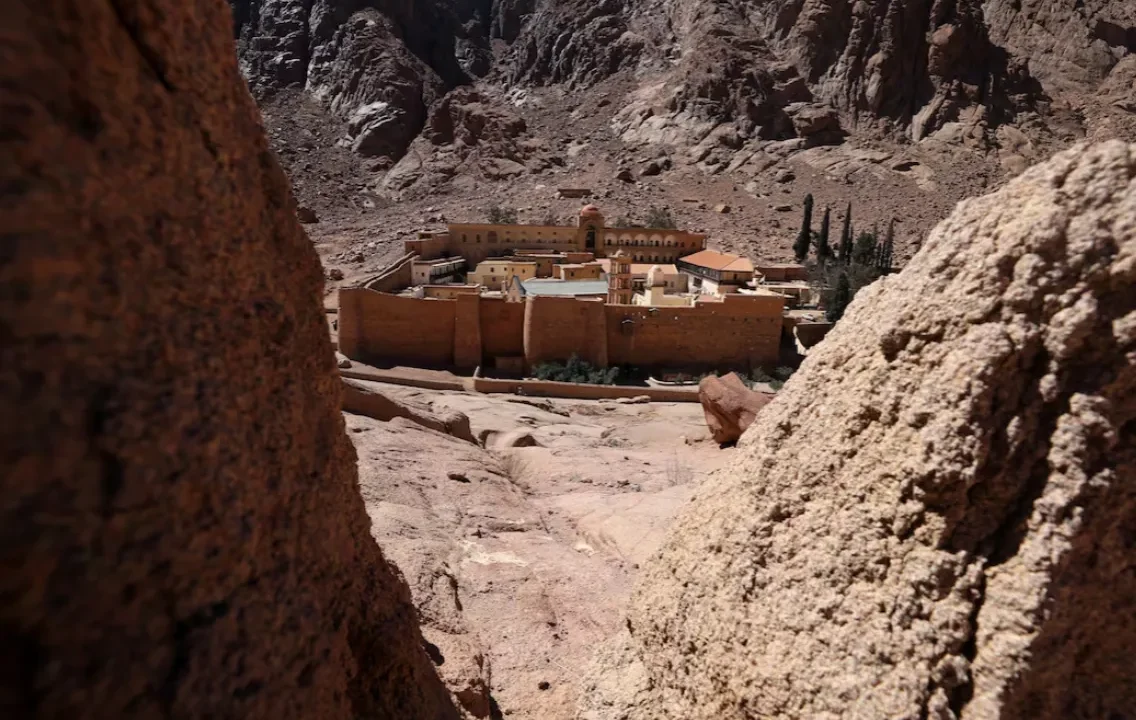
Egypt’s tourism leadership is making a direct push into South Sinai — and the message is clear: the region is open for business, and officials want the world to know it.
Sherif Fathy, Egypt’s Minister of Tourism and Antiquities, recently traveled to Sharm El-Sheikh to meet with Ismail Kamal, the Governor of South Sinai. The high-level visit signals a coordinated effort between national and local authorities to accelerate inbound tourism growth across one of the country’s most strategically important coastal regions.
The timing matters. Egypt is moving in step with a broader regional wave — Morocco, Jordan, Saudi Arabia, the UAE, Oman, and other Middle Eastern and North African nations are all doubling down on tourism investment, each competing to capture a larger share of international travelers. Egypt’s South Sinai push is its answer to that regional momentum.
What the Sharm El-Sheikh Meeting Was Actually About
The meeting between Minister Fathy and Governor Kamal was focused on more than ceremony. According to confirmed reporting, discussions centered on concrete strategies to boost inbound tourist arrivals, attract new investment into the region, and improve the overall visitor experience across South Sinai’s key destinations.
Officials addressed actionable proposals aimed at strengthening cooperation between the national Ministry of Tourism and Antiquities and local South Sinai authorities. The goal is a more unified, coordinated approach — one that allows the region to compete more effectively for international visitors rather than relying on domestic momentum alone.
The broader intent is to make South Sinai not just a beach destination, but a fully realized tourism ecosystem capable of drawing travelers year-round from multiple source markets.
South Sinai Tourism: The Destinations at the Center of Egypt’s Strategy
South Sinai is home to some of Egypt’s most recognized international travel destinations. The ministry’s current focus spans several distinct locations, each with its own appeal and development potential.
- Sharm El-Sheikh — Egypt’s flagship Red Sea resort city, known for its luxury hotels, world-class diving, and established international flight connections
- Dahab — A laid-back coastal town popular with divers, backpackers, and long-stay travelers drawn to its relaxed atmosphere and the famous Blue Hole
- Taba — A border town with unique strategic value, sitting at the crossroads of Egypt, Israel, and Jordan, with access to nature reserves and desert landscapes
- Nuweiba — A quieter coastal destination offering ferry connections to Jordan and a more off-the-beaten-path experience for travelers seeking something beyond the resort circuit
Each of these destinations plays a different role in South Sinai’s overall tourism picture. Officials appear to be treating them not as isolated spots but as an interconnected network that, when strengthened together, makes the entire region more attractive to a wider range of international visitors.
| Destination | Primary Appeal | Strategic Role |
|---|---|---|
| Sharm El-Sheikh | Luxury resorts, diving, international events | Flagship gateway for mass international tourism |
| Dahab | Diving, adventure travel, long-stay visitors | Alternative market appeal, independent travelers |
| Taba | Desert, nature reserves, border crossing | Regional connectivity and multi-country itineraries |
| Nuweiba | Quiet beaches, ferry link to Jordan | Niche and off-the-beaten-path tourism growth |
Egypt’s Place in a Fast-Moving Regional Race
Egypt’s South Sinai initiative doesn’t exist in a vacuum. Across the Middle East and North Africa, governments are investing heavily in tourism infrastructure, international marketing, and regulatory reform to attract foreign visitors and the revenue they bring.
Saudi Arabia has made tourism a cornerstone of its Vision 2030 economic diversification plan. The UAE continues to expand Abu Dhabi and Dubai as global travel hubs. Jordan has long promoted Petra and Wadi Rum to international audiences. Morocco has invested in both cultural heritage tourism and coastal development. Oman has positioned itself as a quieter, nature-focused alternative in the Gulf.
Egypt’s move to strengthen South Sinai is a direct acknowledgment that the competition for international travelers in this part of the world is intensifying — and that standing still is not an option.
Officials have noted that attracting new investment alongside new visitors is central to the strategy. Infrastructure, hospitality capacity, and the overall quality of the visitor experience all require sustained capital, and the ministry appears to be treating private investment attraction as equally important as marketing campaigns.
Who Stands to Benefit — and How
For international travelers, the practical implication of this push is straightforward: South Sinai is likely to see improved facilities, broader marketing reach, and potentially new or expanded tourism offerings over the coming period. Destinations like Dahab and Nuweiba — which have historically flown under the radar compared to Sharm El-Sheikh — may receive more focused development attention as part of a diversified regional strategy.
For the Egyptian tourism industry — hotels, dive operators, tour companies, transport providers — stronger ministry and governorate coordination could translate into faster regulatory processes, better infrastructure support, and more effective promotion in international source markets.
Local communities in South Sinai also stand to benefit if increased investment translates into job creation and economic activity beyond the major resort zones.
What Comes Next for South Sinai Tourism
The meeting between Minister Fathy and Governor Kamal is described as the beginning of a coordinated effort rather than a one-time event. The focus on actionable proposals and strengthened ministry-governorate cooperation suggests that follow-up steps and implementation are expected to follow.
Specific timelines, investment figures, or policy announcements have not yet been confirmed from the available reporting. What is clear is that Egypt’s national tourism leadership is treating South Sinai as a priority region — and that the ministry is engaging directly at the local government level to make that priority actionable.
As the broader MENA tourism landscape continues to evolve, South Sinai’s next chapter will depend on how effectively Egypt can convert high-level meetings into on-the-ground improvements that international travelers can actually experience.
Frequently Asked Questions
Who attended the key meeting in Sharm El-Sheikh?
Egypt’s Minister of Tourism and Antiquities, Sherif Fathy, met with South Sinai Governor Ismail Kamal to discuss strategies for boosting inbound tourism and attracting investment to the region.
Which South Sinai destinations are part of Egypt’s tourism push?
The focus includes Sharm El-Sheikh, Dahab, Taba, and Nuweiba — four distinct coastal and border destinations each offering different experiences for international travelers.
How does Egypt’s strategy compare to other regional countries?
Egypt is moving alongside Morocco, Jordan, Saudi Arabia, the UAE, Oman, and others, all of which are actively investing in tourism growth across the Middle East and North Africa region.
What were the main goals of the Sharm El-Sheikh meeting?
Officials focused on boosting inbound tourist arrivals, attracting new investment into South Sinai, and improving the overall visitor experience across the region.
Are specific investment figures or timelines available?
Specific investment amounts or implementation timelines have not yet been confirmed in the available reporting from this meeting.
Will smaller destinations like Dahab and Nuweiba see development?
The strategy appears to treat South Sinai’s destinations as an interconnected network, suggesting that less prominent locations like Dahab and Nuweiba are included in the broader development focus alongside Sharm El-Sheikh.




Leave a Reply