
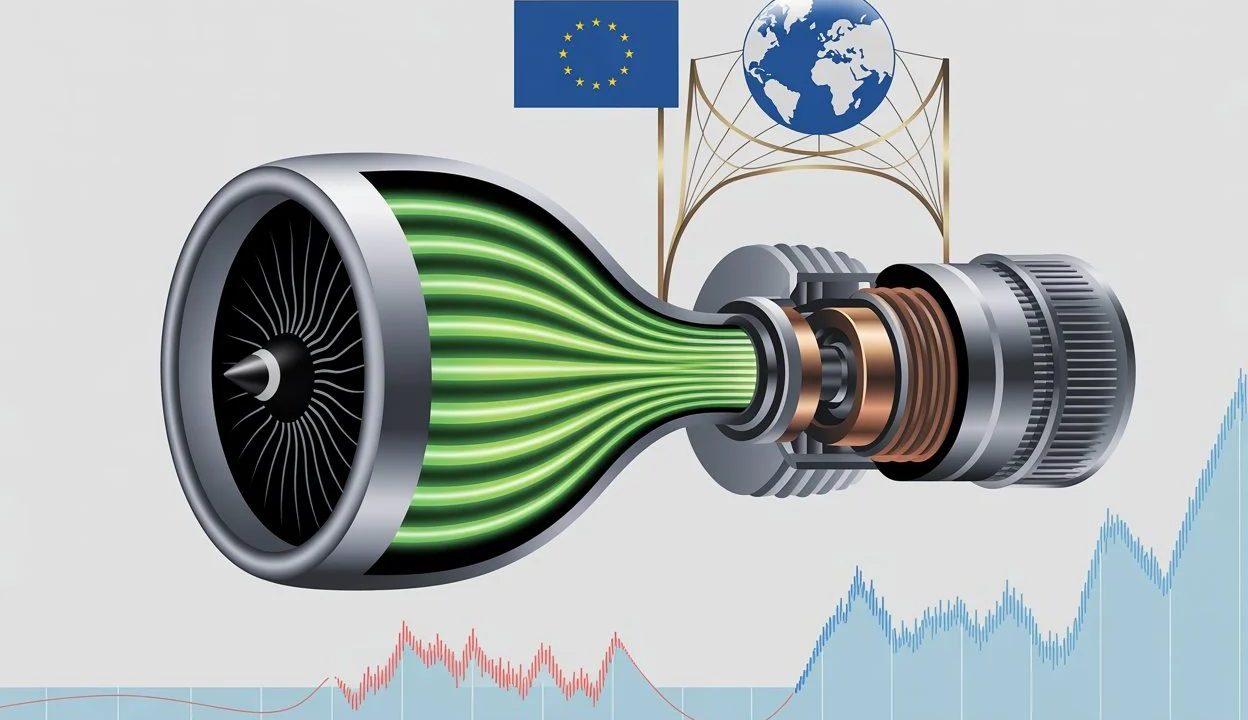
Can Europe keep its skies connected while also cleaning them up? That is the question sitting at the center of a growing dispute between the global aviation industry and European regulators — and the answer matters far beyond the boardrooms of major airlines.
The International Air Transport Association (IATA) has officially called for a comprehensive review of the European Union’s Emissions Trading System, known as the EU ETS. The organization warns that without meaningful adjustments to how the scheme operates, European aviation faces a serious threat to its competitiveness — even as the industry remains committed to reaching net zero emissions by 2050.
The stakes are high and the timing is urgent. New, more stringent EU ETS rules are taking effect in 2026, including the phasing out of free carbon allowances that airlines have relied on to manage costs. The result is a steep and sudden increase in operational expenses for carriers flying within and across Europe.
Why the EU ETS Is Under Pressure Right Now
The EU ETS is the European Union’s primary tool for reducing greenhouse gas emissions across industries, including aviation. Under the system, companies must hold carbon allowances for every tonne of CO2 they emit. When they exceed their allocation, they must purchase additional allowances on the open market.
For years, airlines received a portion of these allowances for free — a buffer designed to ease the transition toward greener operations. That buffer is now being removed. As 2026 brings stricter rules into force, airlines must purchase a much larger share of their allowances, directly inflating the cost of every flight they operate in European airspace.
IATA’s core argument is straightforward: aviation is a global industry, and it requires global solutions. When European carriers face carbon costs that their international competitors do not, the playing field tilts. Routes become less viable, ticket prices rise, and European hubs risk losing traffic to competitors operating under lighter regulatory frameworks elsewhere.
IATA Director General Willie Walsh has been clear on this point, stating that decarbonization must not come at the cost of the connectivity that binds Europe together. The concern is not that airlines want to avoid climate responsibility — it is that unilateral regional rules applied to a global industry create competitive distortions without necessarily delivering better environmental outcomes.
The Core Problem: A Fragmented Regulatory Sky
One of IATA’s central criticisms is what it describes as a fragmented regulatory environment. Airlines operating in Europe frequently find themselves caught between overlapping and sometimes conflicting sets of rules — EU ETS on one side, international carbon frameworks on the other.
The International Civil Aviation Organization (ICAO) has its own global carbon offsetting scheme, known as CORSIA, which is designed to address aviation emissions on a worldwide basis. Critics of the current EU approach argue that running two parallel carbon systems — one regional, one global — creates administrative complexity, added costs, and potential double-counting of emissions obligations.
The question IATA is raising is not whether aviation should pay for its carbon footprint. It is whether the mechanism being used is the right one, applied in the right way, at the right scale.
What Is Actually Changing in 2026 — At a Glance
| Factor | Previous Situation | 2026 Change |
|---|---|---|
| Free Carbon Allowances | Airlines received a portion free of charge | Free allowances are being phased out |
| Cost Impact | Partially offset by free allocations | Airlines must purchase a greater share at market price |
| Regulatory Scope | EU ETS applied with some flexibility | Stricter rules now in effect across European aviation |
| IATA Position | Engaged with process | Formally calling for comprehensive EU ETS review |
| Net Zero Commitment | Industry target of Fly Net Zero by 2050 | Commitment unchanged; mechanism under dispute |
Who Feels This — and How
If you fly regularly within Europe or book international routes that connect through European hubs, this debate has direct consequences for you. Higher carbon costs for airlines do not stay on the balance sheet — they flow through to ticket prices, route decisions, and the overall health of the aviation network.
Smaller European carriers are particularly exposed. Unlike large global airlines with the financial scale to absorb rising compliance costs, regional and mid-size operators face a harder choice: pass the costs on to passengers, reduce services, or exit routes altogether.
European hub airports also have a stake in the outcome. If airlines reroute traffic through non-European hubs to avoid the cost burden of EU ETS, the knock-on effect hits airports, ground crews, local economies, and the broader tourism sector that depends on accessible air connectivity.
For travelers, the concern is not abstract. Fewer affordable routes, higher base fares, and reduced frequency on thinner routes are the practical outcomes of a system that adds costs without a global counterbalance.
What IATA Wants to See Happen Next
IATA is not calling for the abandonment of carbon pricing or the industry’s climate commitments. The association has been explicit that its Fly Net Zero target — reaching net zero carbon emissions across the industry by 2050 — remains firm and non-negotiable.
What IATA is pushing for is a review process that brings the EU ETS into better alignment with the global CORSIA framework, reduces regulatory overlap, and ensures that European airlines are not placed at a structural disadvantage relative to international competitors who operate under different rules.
Advocates for reform argue that a well-designed carbon system should be ambitious on emissions reduction and neutral on competitiveness — and that the current EU ETS, as it stands in 2026, does not yet achieve both goals simultaneously.
Whether the European Commission responds with a formal review process, targeted amendments, or holds the current framework in place remains to be seen. What is clear is that the pressure from the industry is real, the costs are already landing, and the debate over how to decarbonize aviation without grounding European competitiveness is only going to intensify through the rest of this year.
Frequently Asked Questions
What is the EU ETS and why does it affect airlines?
The EU Emissions Trading System is the European Union’s carbon pricing mechanism. Airlines operating in European airspace must hold allowances for every tonne of CO2 they emit, and stricter 2026 rules are increasing the cost of those allowances significantly.
Why is IATA calling for a review of the EU ETS?
IATA argues that the current system places European airlines at a competitive disadvantage compared to international carriers operating under different frameworks, and that regional carbon rules applied to a global industry create distortions without necessarily improving environmental outcomes.
Does this mean airlines are backing away from climate commitments?
No. IATA has been explicit that the industry’s Fly Net Zero target — achieving net zero carbon emissions by 2050 — remains in place. The dispute is about the mechanism, not the destination.
What is CORSIA and how does it relate to EU ETS?
CORSIA is the International Civil Aviation Organization’s global carbon offsetting scheme for aviation. IATA argues that running two parallel systems — CORSIA globally and EU ETS regionally — creates overlap, complexity, and added costs for airlines.
What changed in 2026 under the EU ETS?
The phasing out of free carbon allowances is the most significant 2026 change, meaning airlines must now purchase a larger share of their carbon allowances at market prices, directly raising operational costs.
Will this affect airfare prices for passengers?
Higher compliance costs for airlines typically flow through to ticket prices and route decisions, meaning passengers — particularly on European routes — could see the impact in the form of higher fares or reduced service options.




Leave a Reply