
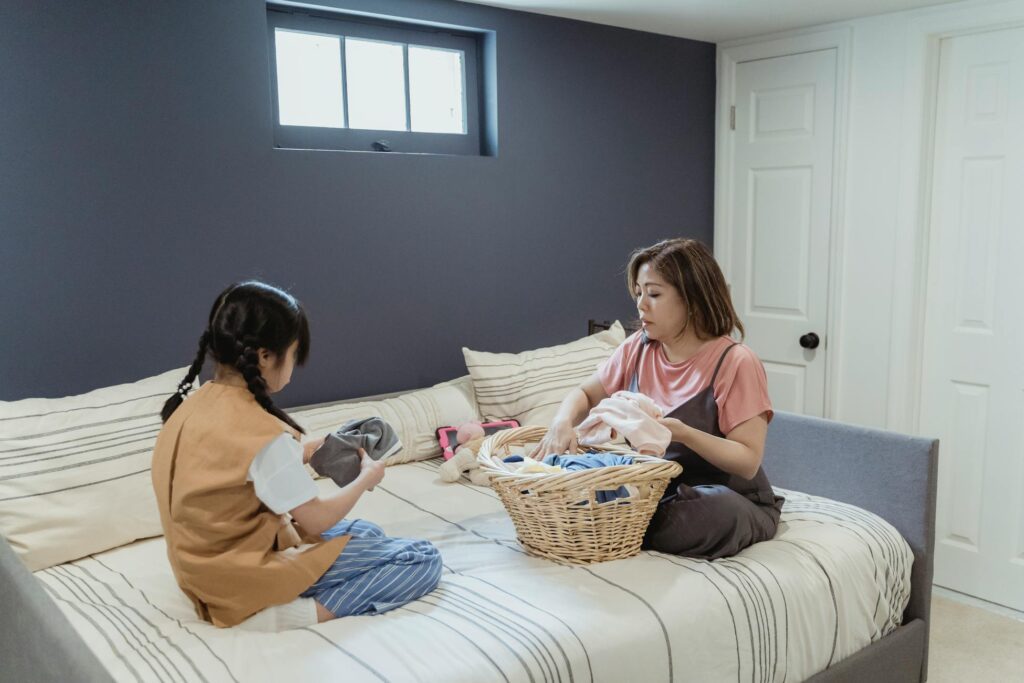
The loudest parents don’t always raise the most confident children. In fact, the opposite may be closer to the truth — adults who move through life with genuine steadiness, who don’t need applause to know their own worth, were often raised in homes where nobody was performing for an audience.
Modern parenting culture pushes hard in the other direction. Achievement boards on refrigerators, curated extracurricular schedules, public celebrations of every milestone — these are treated as markers of good parenting. But there’s a growing body of observation suggesting that this approach produces something that looks like confidence from the outside while operating as anxiety from within.
The children raised by quietly humble parents — parents who led by example rather than by announcement — often develop strengths that competitive parenting simply cannot manufacture.
What Quiet Humility in Parenting Actually Looks Like
Quiet humility in parenting isn’t passivity. It isn’t a lack of ambition or an absence of standards. It’s something more deliberate — a refusal to turn family life into a scoreboard.
Parents who model this approach tend to share recognizable qualities. They correct gently when correction is needed. They listen more than they lecture. They don’t compare their children to other people’s children. They don’t frame every family dinner around wins and losses. And crucially, they don’t perform their own achievements for their children’s benefit.
The contrast with competitive parenting is sharp. Where competitive parenting frames life as a series of contests to be dominated, quiet humility frames life as something to be navigated with integrity — where your value isn’t tied to how you rank.
The Hidden Cost of Achievement-Focused Parenting
Conventional wisdom says children need to see ambition modeled. That parents who broadcast their successes are handing their kids a blueprint for confidence. But the blueprint that actually gets built is often something different.
When achievement is the primary currency in a household, children learn to measure their worth by external validation. They become skilled at performing success — but less practiced at tolerating failure, sitting with uncertainty, or finding motivation that comes from within rather than from a leaderboard.
The result is adults who can hustle impressively but struggle to feel settled. They’ve been trained to chase the next win because the last one never felt like enough.
| Parenting Approach | What Children Learn | Adult Outcome |
|---|---|---|
| Quiet humility | Worth is not tied to performance or comparison | Genuine steadiness and self-assurance |
| Loud achievement | Success must be visible and validated by others | External confidence masking internal anxiety |
| Competitive parenting | Life is a series of contests to be dominated | Difficulty tolerating failure or uncertainty |
The Strengths That Competitive Parenting Cannot Replicate
Adults raised in quietly humble homes tend to display a cluster of strengths that are difficult to teach later in life. These aren’t soft skills in the dismissive sense — they’re foundational capacities that shape how a person relates to work, relationships, and themselves.
- Internal validation: They don’t require external applause to feel secure in a decision. Their sense of worth doesn’t collapse when recognition doesn’t arrive.
- Genuine listening: Because they were raised by parents who listened, they know how to be present in a conversation rather than waiting for their turn to perform.
- Tolerance for ordinariness: They’re comfortable in moments that aren’t remarkable. This makes them more resilient, not less ambitious.
- Absence of chronic comparison: They were never trained to measure themselves against others, so they’re less susceptible to the corrosive habit of constant self-ranking.
- Gentle self-correction: They learned from parents who corrected gently, so they tend to apply that same standard to themselves — accountability without self-destruction.
None of these qualities appear on a resume. But they shape the texture of a life in ways that achievement metrics simply don’t capture.
- Children learn their worth is not determined by how they rank against others or what they win.
- Parents model listening and gentle correction rather than broadcasting personal success.
- Adults develop internal validation that does not depend on outside recognition or applause.
- Children learn to measure their value through visible success and external validation from others.
- Family culture frames meals and milestones around wins, losses, and competitive comparisons.
- Adults can perform confidence outwardly while experiencing persistent anxiety and restlessness within.
Why This Matters for How We Think About Parenting Now
The pressure on modern parents to raise visibly successful children is real and relentless. Social media has turned parenting into something that can be broadcast, rated, and compared. The parent whose child wins the spelling bee posts about it. The parent whose child quietly helps a classmate without being asked probably doesn’t.
But the research on long-term wellbeing consistently points toward internal resources — self-regulation, intrinsic motivation, secure attachment — as better predictors of adult flourishing than early achievement. Quiet humility in parenting builds exactly those internal resources.
The families that produce genuinely grounded adults often don’t look impressive from the outside. There’s no trophy shelf visible in the background of their photos. What they have instead is something harder to photograph: children who grow up knowing they are enough without needing to prove it constantly.
What Parents Can Take From This
None of this means ambition is harmful or that celebrating children’s real accomplishments is wrong. The distinction is between celebrating a child and performing that celebration — between genuine encouragement and a parenting style built around visible wins.
Parents who want to model quiet humility don’t need a program or a framework. The behaviors are simple, if not always easy:
- Correct mistakes without comparison to others
- Listen to children the way you’d want to be listened to
- Let your own ordinary days be visible — not just your highlights
- Resist the pull to frame family life as a competition
- Acknowledge your own mistakes openly and without drama
Children are watching how their parents move through the world. The parent who handles disappointment with steadiness, who helps without announcing it, who doesn’t need to win every room — that parent is teaching something that no enrichment program can replicate.
Frequently Asked Questions
What is quiet humility in parenting?
Quiet humility in parenting refers to modeling steady, unpretentious behavior — listening, correcting gently, and avoiding comparisons — rather than centering family life on visible achievement and public success.
Does competitive parenting actually harm children?
Observers note that competitive parenting can produce adults who appear confident outwardly but experience persistent internal anxiety, because their sense of worth has been built on external validation rather than inner stability.
What strengths do children of humble parents develop?
These children tend to grow into adults who are capable of genuine listening, comfortable with ordinary moments, less driven by chronic comparison, and able to self-correct without self-destruction.
Is it wrong to celebrate children’s achievements?
The distinction drawn is between genuine encouragement and performing celebration for an external audience — the former supports children, while the latter can teach them to tie their worth to visibility and applause.
Can these qualities be taught later in life if someone missed them in childhood?
How does social media affect this dynamic?
Social media has intensified pressure on parents to make success visible and shareable, which reinforces achievement-focused parenting styles and makes the quieter, less photographable approach harder to sustain.




Leave a Reply