
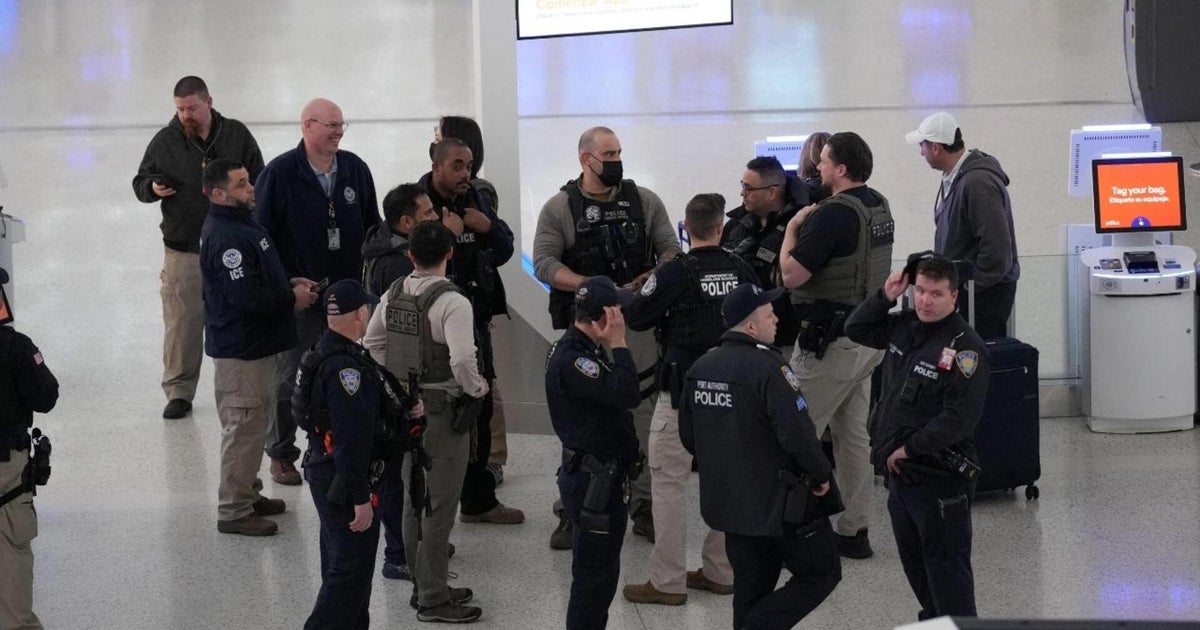
Over 400 TSA officers have been affected by staffing shortages stemming from a partial government shutdown — and now, ICE agents are being sent to some of the busiest airports in the United States to fill the gap.
The Trump administration has directed U.S. Immigration and Customs Enforcement to deploy personnel to major airports including Houston’s George Bush Intercontinental (IAH), New York’s John F. Kennedy (JFK), Atlanta’s Hartsfield-Jackson (ATL), and Los Angeles International (LAX). The move follows the ongoing partial shutdown of the Department of Homeland Security, which began on February 14, 2026, and has placed serious strain on airport security operations nationwide.
For anyone flying through one of these airports, this situation is already reshaping the experience on the ground — and the full scope of the deployment is still developing.
Why ICE Agents Are Now Working at U.S. Airports
The partial DHS shutdown, which began in mid-February 2026, has left the Transportation Security Administration struggling to maintain normal staffing levels. According to official White House statements, more than 400 TSA officers have been impacted, creating gaps in security coverage at some of the country’s highest-traffic airports.
ICE agents are being brought in specifically to assist TSA and help manage airport functions during this period. The deployment is framed by the administration as a practical operational response — not an escalation of immigration enforcement at airports, though the presence of ICE personnel in these spaces raises questions that many travelers and civil liberties advocates are already asking.
The scale of the shutdown’s impact on DHS operations makes this an unusual moment. TSA and ICE fall under the same department, but their roles are fundamentally different — and blending those functions, even temporarily, is a step that has no recent precedent.
Which Airports Are Affected and What We Know So Far
The deployment covers some of the most heavily traveled airports in the country. Here’s a breakdown of the confirmed locations and relevant context:
| Airport | Code | City | Status |
|---|---|---|---|
| George Bush Intercontinental | IAH | Houston, TX | ICE deployment confirmed |
| John F. Kennedy International | JFK | New York, NY | ICE deployment confirmed |
| Hartsfield-Jackson Atlanta International | ATL | Atlanta, GA | ICE deployment confirmed |
| Los Angeles International | LAX | Los Angeles, CA | ICE deployment confirmed |
- ICE’s assigned duties include assisting with airport functions where TSA staffing has fallen short due to the shutdown.
- The DHS partial shutdown began February 14, 2026, and remains ongoing with no confirmed end date.
- New York’s JFK is the most recent addition to the list of airports receiving ICE support, joining Houston, Atlanta, and Los Angeles.
- Over 400 TSA officers have been affected by the shutdown-related staffing crisis.
What This Means for Travelers Flying Through These Cities
If you have a flight booked through JFK, LAX, ATL, or IAH in the coming days or weeks, the situation on the ground may look and feel different than you’re used to. ICE agents performing airport support functions is a visible change — and one that could affect how security lines, checkpoints, and general airport operations run.
Travelers with immigration-related concerns — including visa holders, green card holders, and individuals with pending immigration cases — may find the presence of ICE personnel at security checkpoints particularly significant. Critics of the deployment contend that even when ICE agents are officially assigned to assist TSA, the line between airport support and immigration enforcement can blur quickly in practice.
Supporters of the move argue that keeping airports operational during a government shutdown requires flexibility, and that deploying available federal personnel — even from a different agency — is a reasonable short-term fix to a staffing emergency.
Flight delays and longer processing times remain a real possibility at affected airports while the transition is underway. Passengers are advised to arrive earlier than usual and check with their airlines for any operational updates tied to the situation.
What Happens Next as the DHS Shutdown Continues
The central variable in this story is the shutdown itself. As long as the DHS partial shutdown continues, TSA staffing gaps will persist — and the justification for keeping ICE agents at airports will remain in place.
There is currently no publicly confirmed timeline for when the shutdown will end or when TSA staffing will return to normal levels. Until that happens, the ICE deployment at major airports is expected to continue and potentially expand to additional locations.
The situation also sets a political and operational precedent. Using ICE to backstop TSA functions is a significant administrative decision, and how it plays out — both in terms of airport efficiency and immigration enforcement outcomes — will likely shape future policy debates about the roles these two agencies play in American travel infrastructure.
For now, travelers, airport workers, and immigration advocates are all watching closely. The coming weeks will reveal whether this is a short-term emergency measure or the beginning of a more lasting shift in how federal agencies operate inside U.S. airports.
Frequently Asked Questions
Why are ICE agents being deployed to U.S. airports?
The Trump administration directed the deployment to assist TSA, which has faced severe staffing shortages caused by the partial DHS shutdown that began February 14, 2026.
Which airports are affected by the ICE deployment?
Confirmed airports include Houston (IAH), New York (JFK), Atlanta (ATL), and Los Angeles (LAX), with additional locations also reported to be part of the deployment.
When did the DHS partial shutdown begin?
The partial shutdown of the Department of Homeland Security began on February 14, 2026, and was ongoing at the time of this report.
How many TSA officers have been affected by the shutdown?
According to official White House statements, over 400 TSA officers have been impacted by the staffing crisis caused by the partial shutdown.
Will ICE agents be conducting immigration enforcement at these airports?
The official stated purpose of the deployment is to assist with airport functions during the TSA staffing shortage. Whether immigration enforcement activities will occur alongside those duties has not been definitively confirmed in official statements reviewed for this report.
When will the situation return to normal?
No confirmed timeline for ending the DHS partial shutdown has been publicly announced, meaning the ICE deployment at affected airports is expected to continue for the foreseeable future.



Leave a Reply