
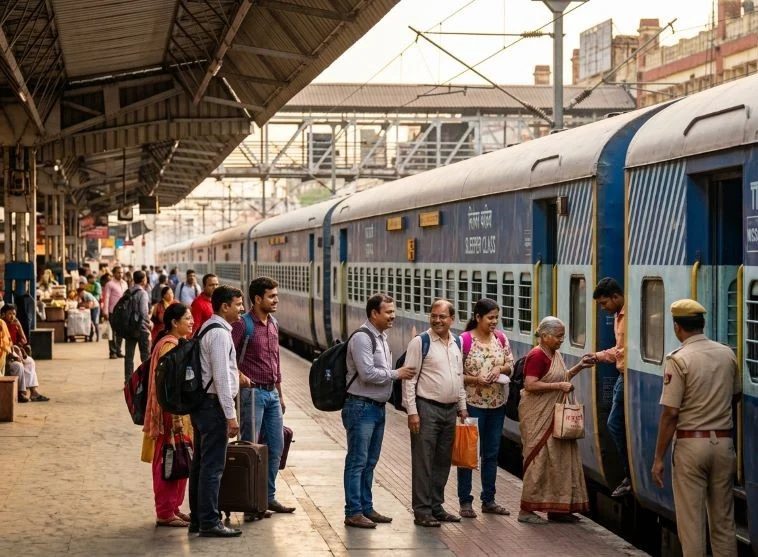
Tens of thousands of pilgrims from West Bengal, Jharkhand, and Bihar make the long journey north every Navratri — and this year, Indian Railways is making that trip a little easier. The Kolkata–Jammu Tawi Express is adding extra sleeper capacity specifically to ease the festive rush, creating approximately 72 to 80 additional confirmed berths on the route during the peak travel window.
For anyone sitting anxiously on a waitlisted ticket right now, that number matters. Every additional berth is a chance at a confirmed seat on one of the most heavily traveled pilgrimage corridors in the country.
The move is a direct response to the surge in demand that arrives every year with Navratri, when devotees head toward the northern frontiers in large numbers. Railways officials have recognized the pattern and acted ahead of the festival rather than scrambling after the fact.
Why the Kolkata–Jammu Tawi Express Matters to So Many Travelers
This isn’t just a popular train — for many families, it is the only realistic way to make the pilgrimage. The Kolkata–Jammu Tawi Express covers an extensive route connecting the eastern states of West Bengal, Jharkhand, and Bihar to India’s northern frontier. It remains the preferred choice for budget-conscious pilgrims who cannot afford air travel or more expensive rail options.
The route serves a dual purpose: it connects everyday commuters and it carries devotees on a journey that is, for many, deeply spiritual. During Navratri, the demand on this corridor intensifies sharply. Seats fill up weeks in advance, waitlists grow long, and the anxiety of uncertain travel plans compounds the stress of an already demanding journey.
Adding a sleeper carriage directly addresses that pressure point. The Railways isn’t just adding seats — it is adding certainty for passengers whose travel plans hinge on a confirmed berth.
What the Extra Sleeper Carriage Actually Means for Passengers
The additional carriage being added to the Kolkata–Jammu Tawi Express during the Navratri window brings a meaningful increase in available capacity. Here is what the change looks like in practical terms:
| Detail | Information |
|---|---|
| Train | Kolkata–Jammu Tawi Express |
| Additional Carriage Type | Sleeper Class |
| Additional Berths Added | Approximately 72 to 80 confirmed berths per day |
| Purpose | Navratri festive season capacity boost |
| Primary Beneficiaries | Passengers from West Bengal, Jharkhand, and Bihar |
| Timing | Covers peak festival period and return rush |
The strategic window covers both the peak of the festival and the subsequent return rush — the two moments when demand spikes hardest and waitlists grow the longest. That dual coverage is deliberate and reflects an understanding of how pilgrimage travel actually works. People don’t just need to get there; they need to get home too.
- Waitlisted passengers gain significantly improved chances of confirmation
- Budget travelers retain access to affordable sleeper-class travel
- Both outbound and return journey periods are covered
- Passengers from multiple eastern states benefit from the expanded capacity
The Pilgrimage Behind the Numbers
For thousands of devotees in West Bengal, the calling of the mountains during Navratri is more than a vacation — it is a sacred pilgrimage. Whether traveling for the first time or making an annual trek, the journey carries deep personal and religious significance.
That context matters when thinking about what a waitlisted ticket actually represents. It isn’t just an inconvenient travel uncertainty. For many passengers, it is the difference between completing a pilgrimage they have planned for months and missing it entirely. The anxiety of sitting on a long waitlist, unsure whether confirmation will come through, adds an unwanted layer of stress to what should be a meaningful journey.
By adding confirmed berths ahead of the festival rather than after complaints roll in, Railways is acknowledging the human dimension of this route. The Kolkata–Jammu Tawi Express isn’t just a transport service on this corridor — it functions as a lifeline for communities whose access to the northern pilgrimage routes depends almost entirely on affordable rail travel.
Who Should Act on This News Right Now
If you are currently holding a waitlisted ticket on the Kolkata–Jammu Tawi Express for the Navratri travel window, this development directly improves your situation. The addition of 72 to 80 berths per day means the waitlist pool becomes meaningfully smaller relative to available capacity.
Passengers who have not yet booked should treat this as a signal to move quickly. The additional berths will attract fresh bookings, and the festive window fills fast. Budget-conscious travelers in particular — the demographic this train primarily serves — should check current availability and act before the new capacity is absorbed.
Travelers returning after the festival should also note that the expanded capacity covers the post-festival return rush, not just outbound journeys. That is an important detail that often gets overlooked when festive travel announcements are made.
What Comes Next for This Route
The additional sleeper carriage is timed specifically to the Navratri festival period and the return travel window that follows.
Passengers planning travel on the Kolkata–Jammu Tawi Express during this period are advised to check updated availability on the Indian Railways booking platform, where the additional berths should be reflected once the enhanced capacity is formally active. Those already waitlisted should monitor their ticket status, as confirmation prospects have improved with this addition.
Whether this kind of festive capacity boost becomes a recurring feature for this route in future years will likely depend on passenger response and demand patterns — but for this Navratri, the message from Railways is clear: the journey north just got a little more manageable.
Frequently Asked Questions
How many extra berths is the Kolkata–Jammu Tawi Express adding for Navratri?
The additional sleeper carriage creates approximately 72 to 80 confirmed berths per day during the festive travel window.
Which passengers benefit most from this capacity increase?
Travelers from West Bengal, Jharkhand, and Bihar heading toward the northern frontiers are the primary beneficiaries, particularly budget-conscious pilgrims who rely on sleeper-class travel.
Does the extra capacity cover the return journey as well?
Yes. The enhanced capacity window is designed to cover both the peak of the Navratri festival and the subsequent return rush.
Will this help passengers currently on the waitlist?
According to the source, the additional berths significantly increase the chances of a confirmed journey for passengers currently holding waitlisted tickets on this route.
What class of travel is being added?
The additional carriage being added is sleeper class, keeping the expanded capacity accessible to budget-conscious travelers.
Is this a permanent change to the train’s composition?
This has not been confirmed as a permanent change — the additional carriage appears to be a targeted festive season measure aligned with peak Navratri travel demand.



Leave a Reply