
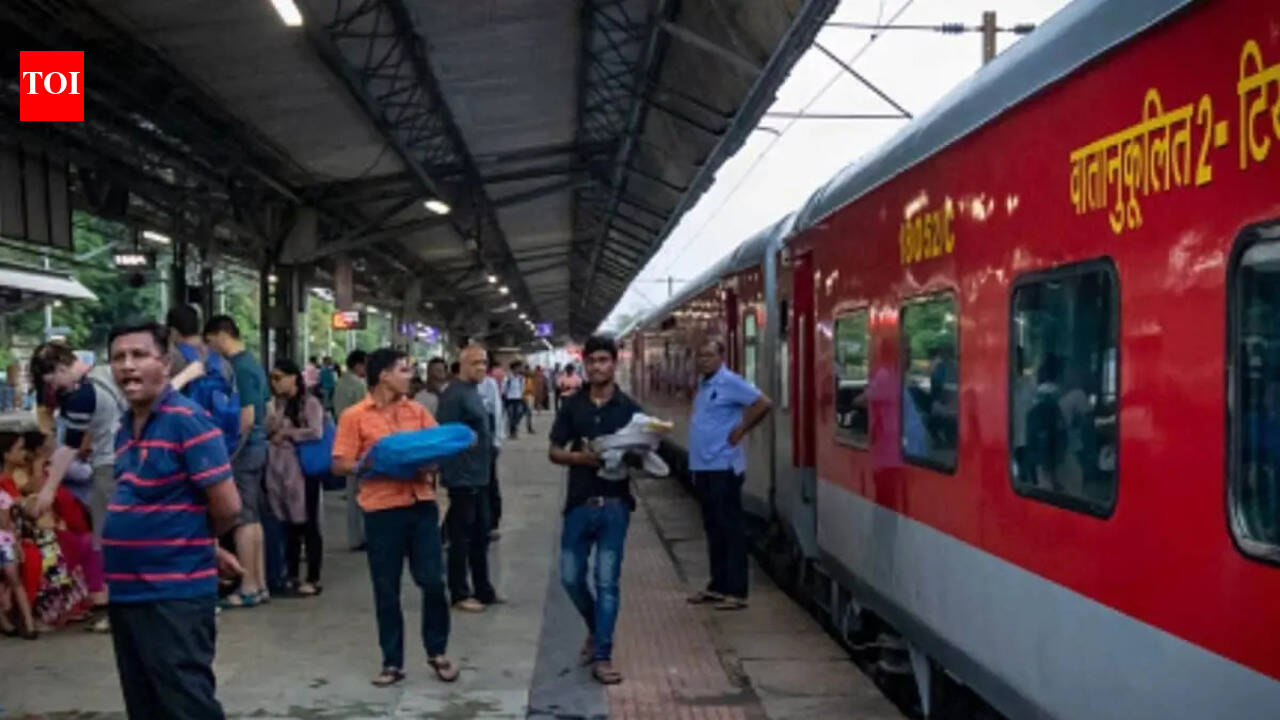
Millions of passengers traveling between Delhi, Bihar, and West Bengal are set to benefit from a significant expansion of rail services, as Indian Railways has confirmed the extension of special train operations through June 2026. The decision comes directly in response to a surge in summer travel demand — a seasonal pressure that strains the country’s rail network every year, particularly on high-traffic corridors connecting major population centers.
The move is being welcomed by the passengers who rely most heavily on these routes: students heading home after the academic year, migrant workers returning to their families, and households planning travel during school holidays. For many of them, the train isn’t just a convenient option — it’s the only affordable one.
East Central Railway (ECR) is leading the operational push, with extended services and additional coaches aimed at reducing congestion and giving passengers a noticeably more comfortable journey through the peak summer months.
Why Indian Railways Is Extending These Special Trains
Every summer, India’s rail network faces an enormous spike in demand. Schools close, temperatures rise, and tens of millions of people move across the country — many of them along the exact corridors that connect the national capital to the densely populated states of Bihar and West Bengal.
Without intervention, this seasonal surge leads to overcrowded coaches, long waiting lists, and unreliable journey times. The extension of special train services is Indian Railways’ direct response to that recurring challenge. By keeping these trains running through June 2026, the network is essentially building a buffer into its capacity at the most critical time of year.
East Central Railway’s decision to extend services reflects a broader strategic approach: rather than waiting for congestion to peak and then scrambling to respond, the railway is proactively locking in additional capacity ahead of the heaviest travel weeks.
What the Extended Services Actually Cover
The extended operations are focused on the high-demand routes linking Delhi, Bihar, and West Bengal — three of India’s most travel-intensive regions. The key elements of the expansion include:
- Extension of special train services operated by East Central Railway (ECR) through June 2026
- Additional coaches added to existing services to increase passenger capacity
- Services specifically designed to ease congestion on key intercity routes
- Coverage timed to align with the summer travel season and school holiday periods
- Targeted relief for students, migrant workers, and families traveling during peak months
| Category | Detail |
|---|---|
| Railways division involved | East Central Railway (ECR) |
| Regions covered | Delhi, Bihar, West Bengal |
| Extension period | Through June 2026 |
| Primary reason for extension | Increased summer passenger demand |
| Key passenger groups benefiting | Students, migrant workers, families |
| Capacity measure | Additional coaches on extended services |
Who This Decision Affects Most — and How
The practical impact of this extension falls hardest on three groups of passengers, each with their own urgent reasons for traveling during the summer season.
Students represent a significant share of summer rail traffic. As the academic year winds down, large numbers of students travel from cities like Delhi back to their home states of Bihar and West Bengal — journeys that can stretch across hundreds of kilometers. Without adequate train capacity, many face hours-long waits, overbooked coaches, or the expense of last-minute tickets at premium prices.
Migrant workers are another group for whom reliable rail access isn’t a convenience — it’s an economic necessity. Bihar and West Bengal are among India’s largest sources of migrant labor, with workers commuting to Delhi and other major cities for employment. The summer months often see large return movements as workers travel home for festivals, family events, or seasonal breaks.
Families traveling during school holidays round out the picture. Summer is peak family travel season across India, and the routes between Delhi, Bihar, and West Bengal carry some of the heaviest family passenger loads in the country.
By extending services and adding coaches, Indian Railways is directly addressing the journey quality concerns that affect all three groups — shorter wait times, better seat availability, and more predictable travel schedules.
What Travelers Should Expect as Summer Peak Approaches
With the extension confirmed through June 2026, passengers on these corridors can plan their summer travel with more confidence than in previous years. The combination of extended special trains and added coach capacity means the network is better positioned to absorb the seasonal surge without the worst of the overcrowding that typically defines summer rail travel in India.
Officials have indicated that the goal is to ensure smooth, comfortable journeys during the busy summer months and beyond — a signal that the railway is treating this not as a one-off fix but as part of a sustained effort to improve service reliability on these critical routes.
Passengers are advised to book early regardless, as demand on Delhi–Bihar and Delhi–West Bengal routes remains consistently high throughout the summer season, even with expanded capacity in place.
Frequently Asked Questions
Which railway division is responsible for the extended services?
East Central Railway (ECR) is the division overseeing the extension of special train services on these routes.
How long will the extended special trains run?
The special train services have been extended through June 2026, covering the full peak summer travel season.
Which routes are covered by this extension?
The extended services focus on key corridors connecting Delhi, Bihar, and West Bengal — some of India’s busiest intercity travel routes.
Who are the main passengers expected to benefit?
Students, migrant workers, and families traveling during school holidays are identified as the primary groups who will benefit from the expanded capacity.
What specific capacity improvements are being made?
Indian Railways is adding extra coaches to extended services to increase the number of available seats and reduce congestion on these high-demand routes.
Is early booking still recommended despite the expanded services?
Yes — demand on Delhi–Bihar and Delhi–West Bengal corridors remains very high during summer, so early booking is advisable even with additional capacity in place.


Leave a Reply