
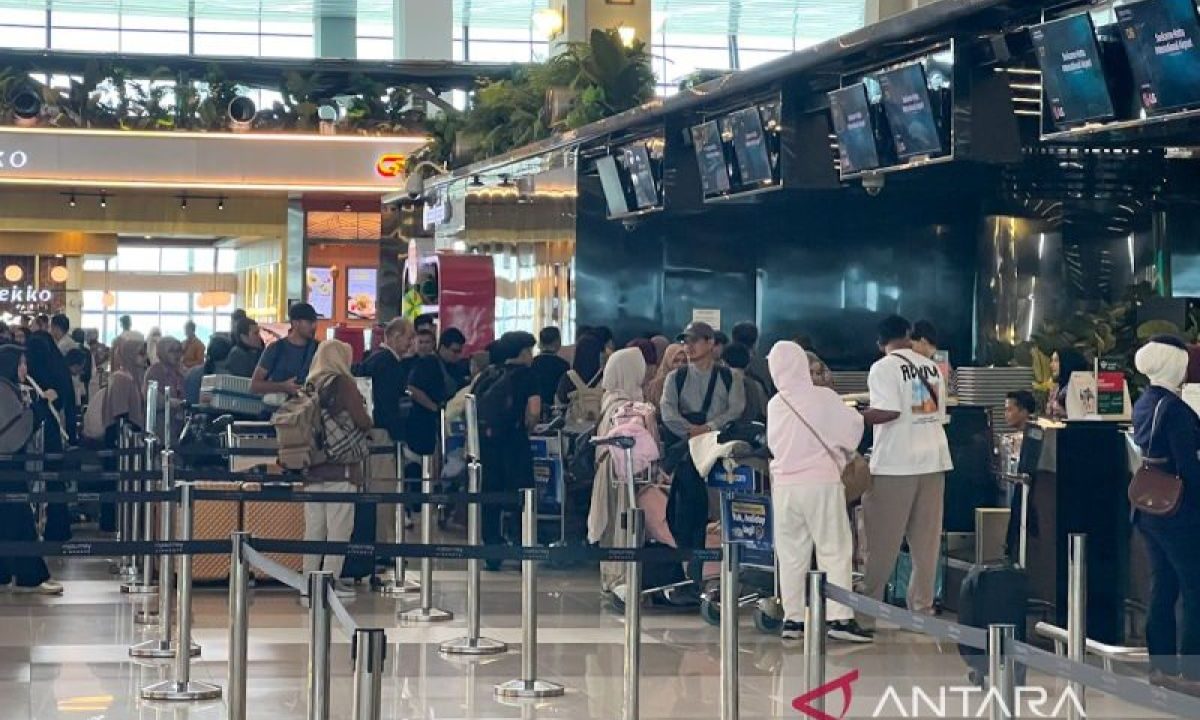
More than 4.41 million passenger movements were recorded across Indonesia’s airport network in just nine days — and that number tells only part of the story of what happened during the country’s biggest annual travel event.
Every year, tens of millions of Indonesians participate in Mudik, the deep-rooted cultural tradition of returning to one’s hometown ahead of Eid al-Fitr. It is one of the largest coordinated human migrations on the planet, and in 2026, the air travel component of that movement reached a new high-water mark that has drawn attention from aviation analysts and government officials alike.
The figures come from PT Angkasa Pura Indonesia — the state-owned airport operator better known as InJourney Airports — which manages a network of 37 airports across the archipelago. What the company recorded between March 13 and March 21, 2026, reflects not just a cultural moment, but a significant milestone in Indonesia’s post-pandemic aviation recovery.
What the Indonesia Eid Travel Surge Actually Looked Like
The window in question — referred to in Indonesia as D-7 to D-1 of Eid al-Fitr 1447 Hijriah — is the critical pre-holiday period when the bulk of homecoming travel takes place. Families race to reach their hometowns before the holiday begins, creating a concentrated rush that tests every part of the transportation system simultaneously.
According to Mohammad R. Pahlevi, the President Director of InJourney Airports, the 4.41 million passengers handled during that stretch represented a 3.7 percent increase compared to the same period in the previous year. That growth rate may sound modest, but across a network of 37 airports and millions of individual journeys, it translates into an enormous operational challenge.
The scale of this movement is hard to overstate. Indonesia is an archipelago of more than 17,000 islands, and for millions of families, air travel is not a luxury — it is the only practical way to get home in time for the holiday. That reality makes the performance of the airport network during Mudik season a matter of genuine public concern.
By the Numbers: How the 37-Airport Network Performed
| Detail | Figure |
|---|---|
| Total passenger movements recorded | 4.41 million |
| Period covered (D-7 to D-1) | March 13–21, 2026 |
| Year-over-year increase | 3.7% |
| Number of airports in the InJourney network | 37 |
| Eid al-Fitr year | 1447 Hijriah |
| Airport operator | PT Angkasa Pura Indonesia (InJourney Airports) |
What makes these numbers particularly meaningful is the context in which they were achieved. Managing a surge of this size requires months of preparation — staffing adjustments, coordination with airlines, real-time crowd management, and contingency planning for weather and delays. Officials have noted that the smooth handling of this volume reflects significant investment in operational readiness across the network.
- The passenger surge spanned all 37 airports in the InJourney Airports portfolio
- The D-7 to D-1 window is consistently the highest-pressure period for Indonesian aviation each year
- The 3.7 percent year-over-year growth signals continued expansion of air travel demand in Indonesia
- The Mudik tradition drives one of the most concentrated travel surges of any country in the world
Why This Matters Beyond the Holiday Season
For the average Indonesian traveler, the Eid homecoming surge is a personal experience — the stress of booking tickets months in advance, navigating crowded terminals, and hoping flights stay on schedule. But for the aviation sector, it is something more: a live stress test of the country’s infrastructure at its absolute peak.
The fact that InJourney Airports recorded a 3.7 percent increase in passenger volumes — while apparently maintaining operations across its full network — points to a system that is growing in both capacity and resilience. Officials have noted that the steady rise in air travel during Mudik season reflects the increasing mobility of ordinary Indonesian households, not just wealthy or business travelers.
Indonesia’s aviation market is one of the largest and fastest-growing in Southeast Asia. The country’s geographic reality — thousands of islands, many with limited road or sea connections — means that domestic aviation plays a social role that goes well beyond commercial convenience. When airports function well during Eid, millions of families reunite. When they don’t, the human cost is immediate and visible.
The 2026 figures also carry weight as a signal of broader economic recovery. Higher passenger volumes mean more revenue for airlines, airports, and the communities they serve. They reflect consumer confidence and disposable income. In that sense, the Mudik surge is not just a travel story — it is an economic indicator.
What Comes Next for Indonesian Airport Operations
The D-7 to D-1 window captures the outbound rush, but the post-Eid return period — when millions of travelers head back to cities like Jakarta, Surabaya, and Medan — creates its own surge that airport operators must manage with equal care.
Officials have indicated that the data gathered during each Mudik season informs planning for the next, with lessons learned about peak hour management, terminal flow, and airline coordination feeding directly into operational improvements. The consistent year-over-year growth in passenger numbers means that those improvements need to stay ahead of demand.
For InJourney Airports, the 4.41 million passenger milestone is both a point of pride and a baseline — a number that next year’s operation will need to meet and exceed, ideally with even smoother execution. The cultural importance of Mudik is not going to diminish, and neither, it appears, is the appetite of Indonesians to fly home for it.
Frequently Asked Questions
What is Mudik and why does it cause such a large travel surge?
Mudik is the Indonesian tradition of returning to one’s hometown ahead of Eid al-Fitr. It is one of the largest annual human migrations in the world, driving massive spikes in road, rail, sea, and air travel simultaneously.
How many passengers did InJourney Airports handle during the 2026 Eid period?
InJourney Airports recorded 4.41 million passenger movements across its 37-airport network between March 13 and March 21, 2026, covering the D-7 to D-1 period of Eid al-Fitr 1447 Hijriah.
How does the 2026 figure compare to the previous year?
According to InJourney Airports President Director Mohammad R. Pahlevi, the 4.41 million figure represents a 3.7 percent increase compared to the same period in the prior year.
How many airports does InJourney Airports operate in Indonesia?
InJourney Airports, formally known as PT Angkasa Pura Indonesia, manages a network of 37 airports across the country.
Does the 4.41 million figure include both departing and arriving passengers?
Will InJourney Airports release data for the post-Eid return travel period as well?
This has not yet been confirmed in the available source material, though post-holiday return surges are a standard part of Mudik season that operators routinely track.



Leave a Reply