
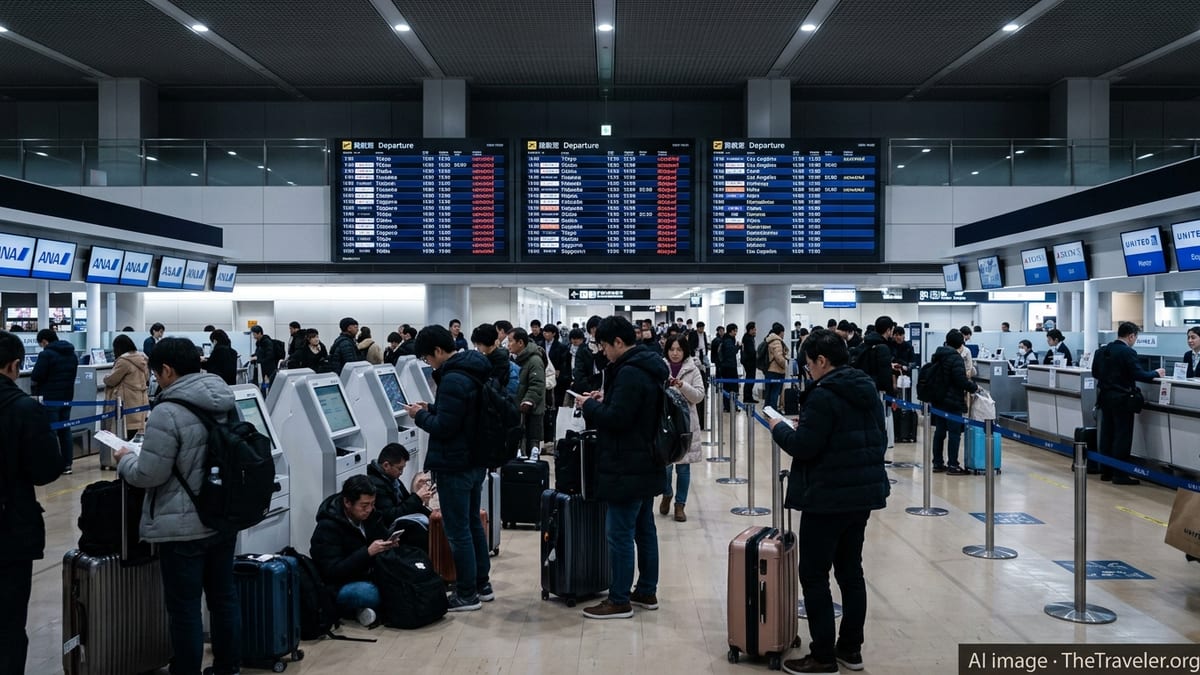
Twenty flights canceled across Japan’s major airports in a single wave of disruption — and the list of affected routes stretches from Tokyo to Tel Aviv, Los Angeles to Guam, and Honolulu to Sapporo. If you have travel plans touching Japan right now, this is the update you need.
The cancellations have hit both international and domestic services simultaneously, creating a cascading effect across the country’s aviation network. Airlines including Delta Air Lines, El Al, and United Airlines are among those with affected flights, and the disruption spans multiple major hubs rather than being contained to a single airport.
For passengers already in Japan or due to connect through Japanese airports, the scale of this event means delays and rebooking challenges are widespread — not isolated incidents.
What Is Actually Happening Across Japan’s Airports
The disruption is being described as widespread, with cancellations confirmed across multiple airports rather than one single hub. Tokyo’s Narita International Airport has been particularly affected, with several outbound services canceled — especially on long-haul routes.
The affected destinations cover an unusually broad geographic spread. International routes impacted include flights to and from Tel Aviv, Los Angeles, Atlanta, Honolulu, and Guam. Domestic routes within Japan have also been hit, with services to and from Sapporo (New Chitose), Nagoya, Aomori, and Kushiro all affected.
The combination of international and domestic cancellations at the same time is what makes this disruption particularly disruptive for travelers. Missing a domestic connection in Japan can easily unravel an entire international itinerary — and vice versa.
The Full Picture: Airlines and Routes Affected
Here is a breakdown of what is confirmed from the current disruption report:
- Total cancellations: 20 flights
- Airlines confirmed affected: Delta Air Lines, El Al, United Airlines, and additional carriers
- Primary international hub affected: Narita International Airport, Tokyo
- International routes impacted: Tel Aviv, Los Angeles, Atlanta, Honolulu, Guam
- Domestic routes impacted: Sapporo (New Chitose), Nagoya, Aomori, Kushiro
| Route Type | Destinations Affected | Airlines Confirmed Affected |
|---|---|---|
| International — Long-Haul | Los Angeles, Atlanta, Honolulu, Tel Aviv, Guam | Delta Air Lines, El Al, United Airlines |
| Domestic — Japan | Sapporo (New Chitose), Nagoya, Aomori, Kushiro | Multiple carriers |
Who Gets Hit Hardest by These Japan Flight Cancellations
The passengers most immediately affected fall into a few clear categories. Travelers on transpacific routes — particularly those flying between Japan and the United States — are facing some of the longest potential delays, given the limited frequency of those services and the difficulty of finding alternative same-day options across the Pacific.
El Al passengers on the Tel Aviv route face a particular challenge, as that is a long-haul service with limited backup alternatives on the same day. Being bumped from that route often means a wait of 24 hours or more before the next available departure.
Domestic travelers within Japan may face shorter absolute delays, but the knock-on effects can be significant. Anyone using a domestic leg to connect to an international departure at Narita or another hub could find their entire outbound journey unraveling from a single cancellation in Sapporo, Aomori, or Kushiro.
Business travelers, families with fixed hotel bookings, and anyone on a tightly scheduled itinerary are most vulnerable. Flexible travelers with open return dates are in a better position to absorb the disruption.
What Affected Passengers Should Do Right Now
If you are traveling through Japan and your flight is on one of the affected routes, the first step is to check directly with your airline for rebooking options. Major carriers like Delta and United typically open up no-fee rebooking windows during large-scale disruption events, so it is worth contacting them before assuming you are stuck with a penalty fare.
For those connecting through Narita on a long-haul route, it is worth asking your airline whether they can reroute you through an alternative Japanese hub — such as Haneda — if your final destination is still reachable. This is not guaranteed, but it is a legitimate request in disruption situations.
Travelers on domestic Japanese routes should also check whether bullet train (Shinkansen) alternatives exist for their destination. For routes like Tokyo to Nagoya or other Honshu cities, rail can be a practical backup when flights are grounded.
Keep all receipts for any additional expenses incurred as a direct result of the cancellation. Depending on your airline’s policies and your travel insurance coverage, some of those costs may be recoverable.
Frequently Asked Questions
How many flights have been canceled in Japan during this disruption?
A total of 20 flights have been confirmed canceled across Japan’s major airports, affecting both international and domestic routes.
Which airlines are affected by these Japan flight cancellations?
Delta Air Lines, El Al, and United Airlines are among the confirmed affected carriers, along with additional airlines not yet individually named in the disruption report.
Which international destinations are impacted?
Confirmed international routes affected include Tel Aviv, Los Angeles, Atlanta, Honolulu, and Guam.
Are domestic flights within Japan also canceled?
Yes — domestic routes to Sapporo (New Chitose), Nagoya, Aomori, and Kushiro are all confirmed as affected by the disruption.
Is Tokyo’s Narita Airport the only hub affected?
Narita International Airport is specifically confirmed as a major point of disruption, particularly for long-haul outbound services, though the disruption is described as affecting multiple airports across Japan’s network.
What is causing the cancellations?
The specific cause of the cancellations has not been confirmed in the available information — passengers should contact their airline directly for the most current explanation and rebooking options.




Leave a Reply