
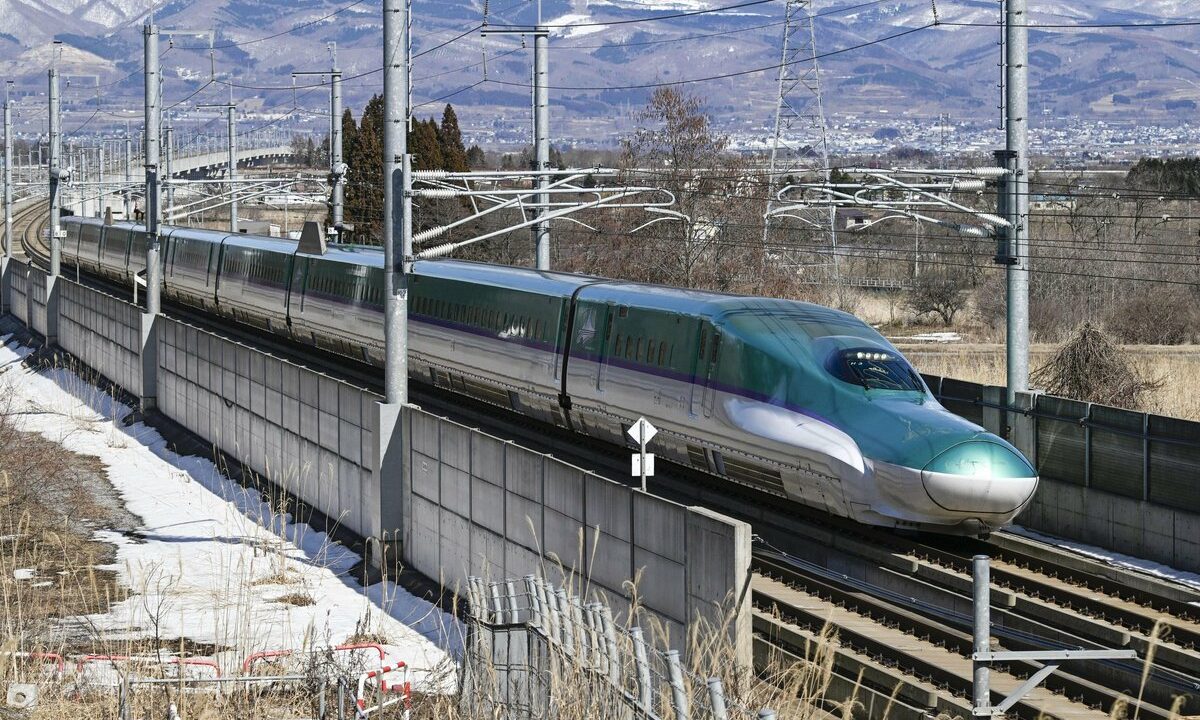
▶ Read transcript
Here’s what you need to know about the Japan Rail Pass price increase coming this fall. Starting October 1st, 2026, the JR Group is raising Japan Rail Pass prices by roughly 6 percent for international travelers buying through overseas agents. That means the popular seven-day ordinary pass jumps from 50,000 yen to 53,000 yen, and the premium Green Class version rises to 74,000 yen. This comes on top of a massive 70 percent increase back in 2023, so the cumulative cost climb is significant. The key thing to understand is that the pass isn’t automatically a good deal for everyone. It pays off if you’re traveling between multiple cities on the Shinkansen, but if you’re staying in one region, individual tickets might actually be cheaper. Your actionable takeaway is this: if you’re planning a multi-city Japan trip for late 2026 or beyond, run the numbers on your specific itinerary now, and if the math works in your favor, buy through an authorized overseas agent before October 1st to lock in today’s pricing.
The clock is running. On October 1, 2026, the Japan Rail Pass will become measurably more expensive for every international traveler who hasn’t already locked in current pricing. The JR Group has confirmed the fare revision, and the numbers are specific, official, and unavoidable.
This isn’t speculation or rumor. It is a confirmed policy change affecting one of the most iconic travel products in the world. If Japan is on your itinerary for late 2026 or beyond, the decision you make in the next few weeks could save you real money.
The Confirmed October 2026 Price Increases for Every Pass Tier
The JR Group announced that prices for the Japan Rail Pass will rise by approximately 6% starting October 1, 2026. The revision applies only to passes purchased through overseas sales agents, which is how the vast majority of international tourists buy them.
The increases are not symbolic. An adult seven-day pass for ordinary carriages will rise by 3,000 yen, bringing the new total to 53,000 yen. The seven-day Green Class pass, which covers premium seating, will increase by 4,000 yen to reach 74,000 yen.
| Pass Type | Current Price (Yen) | New Price (Oct 2026) | Increase |
|---|---|---|---|
| 7-Day Ordinary | 50,000 yen | 53,000 yen | +3,000 yen (~$19) |
| 7-Day Green Class | 70,000 yen | 74,000 yen | +4,000 yen (~$26) |
| Local Train Fares | Varies by line | +4.4% to 5.2% | Line-dependent |
| Monthly Season Tickets | Varies | +7.2% | Steepest increase |
According to Kyodo News, the revision reflects fare adjustments made by JR member companies since the last major revision. It is a structural realignment, not a temporary surcharge.
Why This Increase Stings More Than the Numbers Suggest
To understand why this moment matters, you need to remember what happened in October 2023. That was when the JR Group last revised Japan Rail Pass prices, and the increase was not 6%. It was approximately 70 percent.
That 2023 hike was seismic. Travelers who had planned Japan trips based on pre-2023 pricing found themselves recalculating entire budgets. Travel forums erupted. Many visitors quietly concluded that the pass no longer made mathematical sense for shorter itineraries.
Now comes a second revision, smaller in percentage but significant in context. Each increase narrows the margin between the pass and individual ticket pricing. For some travelers, that margin has already disappeared.
The Math Problem at the Heart of the Japan Rail Pass
Here is the uncomfortable truth that the travel industry rarely advertises plainly: the Japan Rail Pass is not automatically a good deal. It never was. It depends entirely on your itinerary.
A seven-day ordinary pass currently costs 50,000 yen. That breaks down to roughly 7,143 yen per day. If your daily rail spending across Shinkansen rides and local JR lines doesn’t exceed that threshold, you are paying a premium for convenience rather than savings.
A round-trip Shinkansen ticket from Tokyo to Kyoto costs approximately 27,000 to 28,000 yen. That single trip alone accounts for more than half the cost of a seven-day pass. Add Osaka, Hiroshima, or Nagasaki, and the math shifts firmly in the pass’s favor for travelers covering significant distances.
But travelers who stay in one region, use subways and buses, or book budget accommodation near city centers may find individual tickets cheaper. The October 2026 increase tightens that calculation further.
Who Should Buy Before October 1 and Who Should Recalculate
Not every traveler should rush to buy a JR Pass before the deadline. The right move depends on your specific travel plans.
If you are planning a multi-city journey across Japan’s main island of Honshu, covering Tokyo, Kyoto, Osaka, and points west or north, the pass likely makes financial sense even at the new price. The Shinkansen network is fast, reliable, and expensive when purchased individually.
If your trip is concentrated in one metro area, say, Tokyo or Osaka, with limited intercity travel, the pass may not recoup its cost. Subway systems in both cities operate on separate fare structures not covered by the JR Pass.
The Broader Shift in Japan’s Rail Pricing Strategy
The October 2026 revision is not happening in isolation. According to Japan Experience, local train fares across Japan will increase by 4.4% to 5.2% depending on the line. Monthly season tickets for commuters will rise by 7.2%, the steepest category increase of all.
| Pass Type | Current Price (¥) | New Price from Oct 2026 (¥) | Price Increase (¥) | Increase (USD approx.) | Best For |
|---|---|---|---|---|---|
| 7-Day Ordinary | ¥50,000 | ¥53,000 | ¥3,000 | ~$19 | First-time visitors, standard travel |
| 7-Day Green Class | ¥70,000 | ¥74,000 | ¥4,000 | ~$26 | Comfort-focused travelers, long routes |
| 14-Day Ordinary | ¥80,000 | ¥84,800 | ¥4,800 | ~$31 | Extended itineraries, multi-region trips |
| 14-Day Green Class | ¥110,000 | ¥116,600 | ¥6,600 | ~$43 | Premium long-stay travelers |
| 21-Day Ordinary | ¥100,000 | ¥106,000 | ¥6,000 | ~$39 | Month-long Japan explorations |
This reflects a structural reality facing Japanese rail operators: decades of fare suppression combined with rising labor costs, infrastructure maintenance demands, and post-pandemic ridership shifts. The JR Group is not uniquely aggressive. It is responding to the same pressures reshaping rail economics globally.
“JR Group companies last revised prices for its Japan Rail Pass in October 2023, when they were hiked by around 70 percent. The companies said the latest revision reflects fare adjustments made by some of its member companies since then.”
— Kyodo News
For foreign tourists, the implication is clear. The era of the deeply subsidized Japan Rail Pass, priced to incentivize international visitors at a significant discount to market rates, is receding. Each revision brings the pass closer to reflecting actual rail costs rather than promotional pricing.
That doesn’t make the pass obsolete. Japan’s Shinkansen network remains one of the fastest and most punctual rail systems on the planet. Traveling from Tokyo to Hiroshima in under four hours, in a quiet, clean, reserved seat, with no check-in or security theater, is an experience that has no equivalent in most of the world.
But travelers who treat the JR Pass as an automatic purchase, a ritual souvenir of Japan travel planning, without running the numbers first, are increasingly likely to overpay.
What the October Deadline Really Means for Your Travel Budget
Three thousand yen is roughly nineteen US dollars at current exchange rates. That is not a life-altering sum. But the significance of this deadline extends beyond the immediate price difference.
Buying before October 1 is also a signal about the direction of travel. If the JR Group has revised prices twice in three years, with a 70% jump followed by a 6% follow-up, there is no reason to assume pricing will stabilize or reverse. Each revision makes the next one easier to justify.
Travelers who plan to visit Japan in 2027 or 2028 face a reasonable question: will the pass be even more expensive by then? Based on recent history, the answer is probably yes.
The window before October 1, 2026 is not just about saving nineteen dollars. It is about acting while the known price is still the current price, before the next unknown revision becomes the new baseline.
Japan’s trains will keep running on time. The question is what you’ll pay to ride them.
Frequently Asked Questions

You Might Also Like

Every Major Canadian Province Is Now Driving Tourism Growth Together
From the Rocky Mountains of Alberta to the historic streets of Quebec City, Canada’s provinces…
Gulf Air Keeps Flying to Paris and Manila While Bahrain Stays Closed
Bahrain’s national airline is refusing to let an airspace closure ground its global ambitions. With…

Agoda Names Asia’s Top Diving Spots and Malaysia Made the List
Asia sits at the center of the underwater world — and travelers are increasingly making…
Leave a Reply