
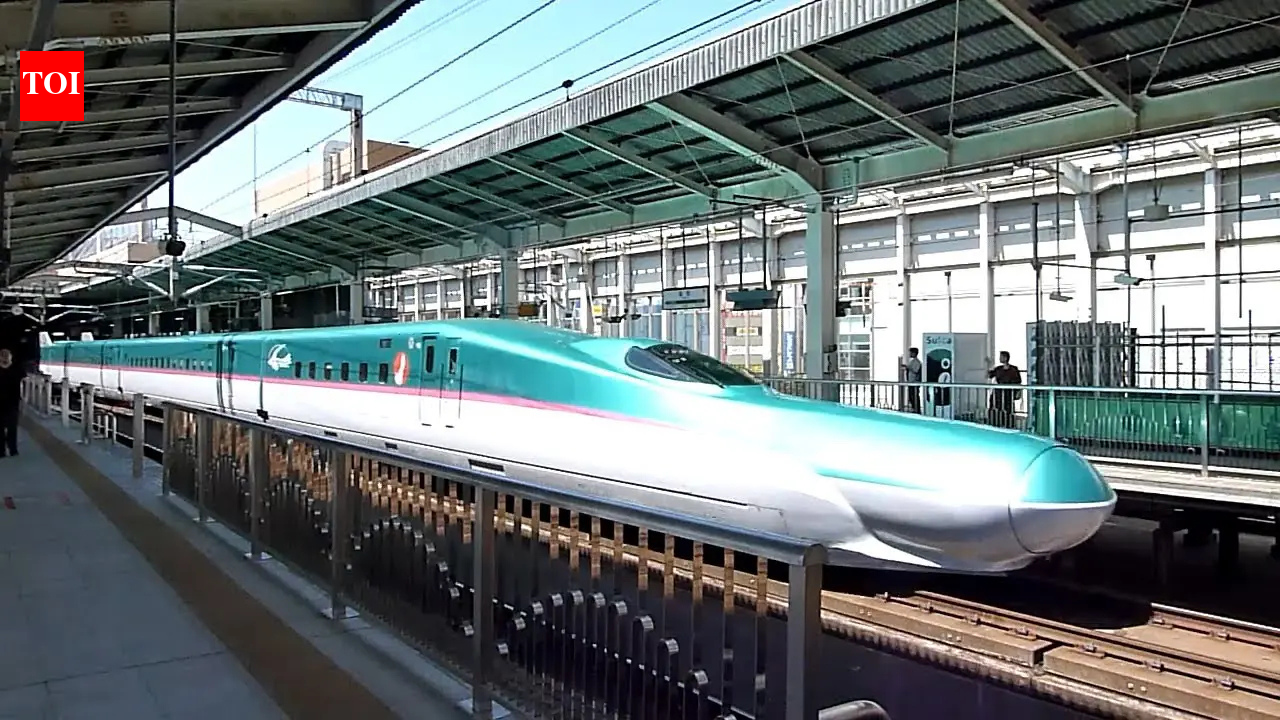
Japan’s most iconic train network is being quietly reimagined — and the consequences could ripple far beyond its borders. East Japan Railway Company, known as JR East, has begun a strategic transition to allow freight cargo to share the famous Shinkansen tracks alongside millions of annual passengers. It is a shift that few people outside the logistics industry have been watching, but one that could fundamentally change how goods move across one of the world’s most densely connected rail systems.
The Shinkansen has carried passengers at speeds exceeding 300 kilometers per hour for more than six decades. Now, for the first time, those same sleek trains and tracks are being repurposed to carry cargo — not as a novelty experiment, but as a direct response to mounting pressure on Japan’s traditional delivery infrastructure.
The timing is deliberate. Japan’s logistics sector has been struggling under the weight of labor shortages, aging truck drivers, and rising delivery demand. The Shinkansen freight initiative is being positioned as a structural answer to a problem that road-based transport alone can no longer solve.
What JR East Is Actually Doing — and Why Now
According to JR East, the core strategy involves optimizing underutilized space during off-peak hours and on specific routes that currently run below full passenger capacity. Rather than running empty or half-empty carriages, the railway is converting designated sections of trains into dedicated cargo zones.
The logic is straightforward: the infrastructure already exists, the trains are already running, and the energy costs are already being paid. Using that capacity for freight during low-demand windows is, as officials have noted, a pragmatic response to a growing national challenge rather than a radical reinvention of the rail system.
Supporters of the approach argue that this model avoids the enormous capital expenditure that would normally be required to build a parallel freight rail network from scratch. The Shinkansen tracks, signals, and stations are already among the most advanced in the world. Adapting them for dual use is significantly more cost-effective than building new.
The Logistics Crisis Driving This Decision
Japan’s delivery sector has been under strain for years. The country faces a well-documented shortage of truck drivers, a problem that is expected to worsen as its workforce ages. At the same time, e-commerce growth has pushed parcel volumes to record levels, creating a widening gap between delivery demand and available capacity.
Road freight, which handles the vast majority of domestic goods movement in Japan, is increasingly seen as a system approaching its limits. Traffic congestion, driver fatigue regulations, and rising fuel costs have all compressed the efficiency of road-based logistics in recent years.
The Shinkansen freight integration is being framed by JR East not as a supplementary option but as a vital necessity — a structural intervention designed to ensure that the flow of goods remains uninterrupted as road-based alternatives come under greater strain.
Key Features of the Shinkansen Freight Program
| Feature | Detail |
|---|---|
| Operator | East Japan Railway Company (JR East) |
| Primary Approach | Repurposing passenger carriages into dedicated cargo zones |
| Target Windows | Off-peak hours and under-capacity routes |
| Infrastructure Used | Existing Shinkansen high-speed rail network |
| Core Problem Addressed | Mounting pressure on Japan’s traditional road-based delivery systems |
| Automation Element | Automated rail cargo systems being introduced alongside integration |
- Freight is being integrated into the existing Shinkansen network, not a separate parallel system
- Passenger services are not being displaced — cargo uses space that would otherwise sit empty
- Automated cargo handling is part of the broader operational shift
- The transition is described as a strategic, phased execution rather than an overnight overhaul
Who This Affects — and Why It Matters Beyond Japan
For consumers inside Japan, the most immediate effect is the potential stabilization of delivery times and costs at a moment when the road freight system is under significant pressure. If the initiative performs as intended, it could prevent the kind of delivery delays and price increases that logistics crises have produced in other countries.
For businesses that depend on reliable, fast domestic shipping — particularly in sectors like food, pharmaceuticals, and e-commerce — a functioning high-speed freight alternative offers a meaningful buffer against road network disruptions.
The broader significance, however, extends well beyond Japan’s borders. Countries across Europe, Southeast Asia, and North America have been watching Japan’s rail infrastructure model for years. A successful integration of freight into a high-speed passenger network could serve as a proof of concept for other railway operators grappling with the same logistics pressures.
Officials have noted that the automated rail cargo component of this program is particularly significant. As labor costs rise globally and driver shortages spread beyond Japan, the appeal of automating freight movement through existing rail infrastructure becomes increasingly relevant to transport planners worldwide.
What Comes Next for the Shinkansen Freight Initiative
JR East has described this as a strategic transition currently being executed across the Japanese archipelago, suggesting the rollout is already underway rather than still in a planning phase. The conversion of passenger carriages into cargo zones and the introduction of automated rail cargo systems represent the two clearest near-term steps confirmed by the railway company.
Whether this model expands to other regional rail operators in Japan, or serves as a template for international adoption, remains to be seen. What is clear is that JR East is treating this not as a temporary workaround but as a long-term operational philosophy — a fundamental rethinking of what a passenger rail network can and should do.
The Shinkansen was already one of the most watched rail systems in the world. Its next chapter may prove to be its most consequential one yet.
Frequently Asked Questions
What is JR East doing with the Shinkansen?
JR East is executing a strategic transition to allow bullet train freight to share the Shinkansen network alongside passengers, converting designated carriage space into dedicated cargo zones.
Will freight trains replace passenger services on the Shinkansen?
No — the initiative focuses on using underutilized space during off-peak hours and on under-capacity routes, meaning passenger services are not being displaced.
Why is Japan introducing freight onto its bullet train network?
Japan’s traditional road-based delivery systems are under mounting pressure from driver shortages, aging workforce demographics, and rising delivery demand, making rail freight a practical alternative.
Is automation part of the Shinkansen freight program?
Yes. JR East has confirmed that automated rail cargo systems are being introduced as part of the broader freight integration initiative.
Has this kind of high-speed rail freight been done before?
When will the Shinkansen freight program be fully operational?
JR East describes the transition as currently being executed across Japan, though a specific completion timeline has not been confirmed in available reporting.



Leave a Reply